


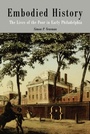
Embodied History
The Lives of the Poor in Early Philadelphia
1st Edition
Published on 1. March 2013
224 pages
978-0-8122-0292-2 (ISBN)
Description

Offering a new view into the lives and experiences of plebeian men and women, and a provocative exploration of the history of the body itself, Embodied History approaches the bodies of the poor in early national Philadelphia as texts to be read and interpreted. Through a close examination of accounts of the bodies that appeared in runaway advertisements and in seafaring, almshouse, prison, hospital, and burial records, Simon P. Newman uses physical details to paint an entirely different portrait of the material circumstances of the poor, examining the ways they became categorized in the emerging social hierarchy, and how they sought to resist such categorization.
The Philadelphians examined in Embodied History were members of the lower sort, a social category that emerged in the early modern period from the belief in a society composed of natural orders and ranks. The population of the urban poor grew rapidly after the American Revolution, and middling and elite citizens were frightened by these poor bodies, from the tattooed professional sailor, to the African American runaway with a highly personalized hairstyle and distinctive mannerisms and gestures, to the vigorous and lively Irish prostitute who refused to be cowed by the condemnation of others, to the hardworking laboring family whose weakened and diseased children played and sang in the alleys. In a new republic premised on liberty and equality, the rapidly increasing ranks of unruly bodies threatened to overwhelm traditional notions of deference, hierarchy, and order.
Affluent Philadelphians responded by employing runaway advertisements, the almshouse, the prison, and to a lesser degree the hospital to incarcerate, control, and correct poor bodies and transform them into well-dressed, hardworking, deferential members of society. Embodied History is a compelling and accessible exploration of how poverty was etched and how power and discipline were enacted upon the bodies of the poor, as well as how the poor attempted to transcend such discipline through assertions of bodily agency and liberty.
The Philadelphians examined in Embodied History were members of the lower sort, a social category that emerged in the early modern period from the belief in a society composed of natural orders and ranks. The population of the urban poor grew rapidly after the American Revolution, and middling and elite citizens were frightened by these poor bodies, from the tattooed professional sailor, to the African American runaway with a highly personalized hairstyle and distinctive mannerisms and gestures, to the vigorous and lively Irish prostitute who refused to be cowed by the condemnation of others, to the hardworking laboring family whose weakened and diseased children played and sang in the alleys. In a new republic premised on liberty and equality, the rapidly increasing ranks of unruly bodies threatened to overwhelm traditional notions of deference, hierarchy, and order.
Affluent Philadelphians responded by employing runaway advertisements, the almshouse, the prison, and to a lesser degree the hospital to incarcerate, control, and correct poor bodies and transform them into well-dressed, hardworking, deferential members of society. Embodied History is a compelling and accessible exploration of how poverty was etched and how power and discipline were enacted upon the bodies of the poor, as well as how the poor attempted to transcend such discipline through assertions of bodily agency and liberty.
Reviews / Votes
"Newman has ably probed the limited representations of the bodies of the poor in the public records-glimpses of lives otherwise unrecorded-and has given us a useful and readable account of the ways in which the poor were regulated by the emergent disciplinary power of the modern state, even as some poorer individuals were able in limited ways to resist that power." (William and Mary Quarterly) "A well-researched, well-written, and compelling study of citizens who have, until now, been overlooked by historians. . . . Newman vividly recreates the experiences of the impoverished men and women who found themselves in the city's almshouse, prisons, or hospitals. He also uses primary sources to explore the lives of the African Americans (many of them runaways) and sailors who, more or less, made the city their home. The work concludes with an exploration of the role death played in the lives of the urban poor. . . . Provocative and intellectually satisfying." (Choice) "Nobody can give the long-dead poor a voice, but Newman has come very close indeed." (Journal of the Early Republic) "Brilliantly conceived and executed. This fascinating, truly significant book is required reading for anyone interested in the early Republic and is a natural for use in both graduate and undergraduate courses." (Pennsylvania Magazine of History and Biography) "Embodied History's interpretations are bold and imaginative. They ought to inspire additional investigations of the poor, their coping strategies in the lives in which they found themselves, and their own perspectives on those lives." (International Journal of Maritime History)All prices
More details
Series
Language
English
Place of publication
Pennsylvania
United States
Target group
College/higher education
Illustrations
14 illus.
14 illus.
ISBN-13
978-0-8122-0292-2 (9780812202922)
Copyright in bibliographic data and cover images is held by Nielsen Book Services Limited or by the publishers or by their respective licensors: all rights reserved.
Schweitzer Classification
Other editions
Additional editions
Book
05/2003
University of Pennsylvania Press
€28.50
Shipment within 10-20 days
Person
Simon P. Newman is Sir Denis Brogan Professor of American Studies, University of Glasgow, and author of Parades and the Politics of the Street: Festive Culture in the Early American Republic, also available from the University of Pennsylvania Press.
Content
List of Illustrations
Introduction
Chapter One: Almshouse Bodies
Chapter Two: Villainous Bodies
Chapter Three: Hospitalized Bodies
Chapter Four: Runaway Bodies
Chapter Five: Seafaring Bodies
Chapter Six: Dead Bodies
Afterword
Bibliography
Index
Acknowledgments
Introduction
Chapter One: Almshouse Bodies
Chapter Two: Villainous Bodies
Chapter Three: Hospitalized Bodies
Chapter Four: Runaway Bodies
Chapter Five: Seafaring Bodies
Chapter Six: Dead Bodies
Afterword
Bibliography
Index
Acknowledgments
