

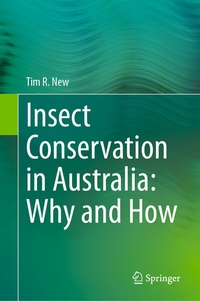
Insect Conservation in Australia: Why and How
Description

The fundamental ecological, cultural and economic roles of insects give them central importance in functioning of terrestrial and inland water ecosystems worldwide. Insect declines, from a variety of anthropogenic threats, erode these services and dictate the need for insect conservation, but the consequences of insect losses are poorly recognised. In Australia, insect conservation must proceed from a very uncertain and incomplete knowledge of insect identifications and diversity, and also from a generally poor public appreciation of their central ecological roles and relevance to human welfare and other biota. These impediments occupy much of this book, in which cases of insect conservation across the world are used to provide lessons for Australia, where a combination of large numbers of insect species and small numbers of entomologists and citizen participants necessitates clear appreciation of insect importance, and focussed conservation priorities. Low public sympathy and inadequate scientific information can hinder progress because uncertainty, imprecision and ignorance are difficult to explain to policymakers and funding agencies whose interest and support may be pivotal. Understanding and overcoming those impediments is a vital component of insect conservation.
This book is intended as an introduction to the needs, rationale and practice of insect conservation in Australia for students in conservation biology, managers and other concerned people who are not specialists in entomology, to whom the daunting variety and complexity of insect life may deter involvement, and for whom an Appendix aid to recognising insect orders is included. The text is based on conservation needs of Australia's insects and shows how progress necessitates effective communication, clear priorities, and plans for action within a realistic and practical framework of aims and needs for practical conservation. A suggested 'Agenda' for advancing insect conservation in Australia encompasses many of these needs and activities.
More details
Other editions
Additional editions
Person
Prof. Tim New is an entomologist with broad interests in systematics, ecology and conservation, and has published extensively in these areas. He is acknowledged widely as a leading advocate for insect conservation, and his books include several dealing with insect conservation in Australia. He is a past Editor-in-Chief of Journal of Insect Conservation and past Regional Editor of Biological Conservation , and has received several prestigious awards for his insect conservation work.
Content
Chapter 1: Insect diversity, distribution and abundance.- Chapter 2: Insect declines.- Chapter 3: Causes of concern: the main threats to insects.- Chapter 4: Consequences of insect declines and losses.- Chapter 5: Human perceptions of insects.- Chapter 6: The reasons for insect conservation.- Chapter 7: Need for understanding and conservation.- Chapter 8: Involving the wider community.- Chapter 9: Towards an agenda for insect conservation in Australia.
