

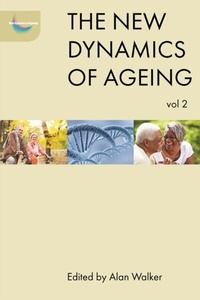
The New Dynamics of Ageing Volume 2
Policy Press
1st Edition
Published on 25. July 2018
256 pages
978-1-4473-1481-3 (ISBN)
Description

This volume and its companion, The new dynamics of ageing volume 1, provide comprehensive multi-disciplinary overviews of the very latest research on ageing. Together they report the outcomes of the most concerted investigation ever undertaken into both the influence shaping the changing nature of ageing and its consequences for individuals and society.
This book concentrates on four major themes: autonomy and independence in later life, biology and ageing, food and nutrition and representation of old age. Each chapter provides a state of the art topic summary as well as reporting the essential research findings from New Dynamics of Ageing research projects. There is a strong emphasis on the practical implications of ageing and how evidence-based policies, practices and new products can produce individual and societal benefits.
This book concentrates on four major themes: autonomy and independence in later life, biology and ageing, food and nutrition and representation of old age. Each chapter provides a state of the art topic summary as well as reporting the essential research findings from New Dynamics of Ageing research projects. There is a strong emphasis on the practical implications of ageing and how evidence-based policies, practices and new products can produce individual and societal benefits.
Reviews / Votes
"This book brings together some of the major findings of one of the most important recent research programmes on ageing. It is highly recommended." Anthea Tinker, King's College London "I welcome the emphasis given to the important theme of maintaining the dignity and respect older people deserve, if we are to fully draw on the knowledge they build up throughout their lives." Baroness Greengross OBE, Former Chair of the Advisory Group of New Dynamics of Ageing "Anyone with an interest in ageing will find this book engaging and insightful. Contributors break new ground in offering a more rounded and dynamic view of later life that fundamentally challenges traditional ways of thinking about ageing." Thomas Scharf, Professor of Social Gerontology, Newcastle UniversityMore details
Series
Edition
First Edition
Language
English
Place of publication
Bristol
United Kingdom
Publishing group
Bristol University Press
Target group
College/higher education
Illustrations
Not illustrated
ISBN-13
978-1-4473-1481-3 (9781447314813)
DOI
https://doi.org/10.51952/9781447314813
Copyright in bibliographic data and cover images is held by Nielsen Book Services Limited or by the publishers or by their respective licensors: all rights reserved.
Schweitzer Classification
Other editions
Additional editions
Book
07/2018
1st Edition
Policy Press
€101.10
Shipment within 15-20 days
Book
07/2018
1st Edition
Policy Press
€43.20
Shipment within 15-20 days
E-Book
07/2018
1st Edition
Policy Press
€47.99
Available for download
Persons
Alan Walker is Professor of Social Policy and Social Gerontology at The University of Sheffield. He is a Fellow of the British Academy, holds lifetime achievement awards from the British Gerontological Society and the Social Policy Association and was the ESRC's first Impact Champion (2013). He directed the New Dynamics of Ageing Programme 2005-14.
Content
Introduction ~ Alan Walker;
Part 1: Autonomy and independence in later life;
Sleep and autonomy in later life ~ Sara Arber, Susan Venn and Ingrid Eyers;
Negotiating unfamiliar environments ~ Judith Phillips, Nigel Walford, Ann Hockey, Mike Lewis and Nigel Foreman;
Financial elder abuse ~ Mary Gilhooly, Deborah Cairns, Miranda Davies, Kenneth Gilhooly and Priscilla Harries;
Maintaining dignity and independence ~ Liz Lloyd, Michael Calnan, Ailsa Cameron, Jane Seymour, Randall Smith and Kate White;
Families and caring in South Asian communities ~ Christina Victor, Maria Zubair and Wendy Martin;
Part 2: Biological perspectives;
Understanding Immunesenescence ~ Anna Whittaker, Niharika Arora Duggal, Jan Oyebode and Janet Lord;
Towards understanding the biological drivers of cell ageing ~ Lynne Cox and Penelope Mason;
Nutrition and ageing ~ Arlene Astell, Claire Timon, Faustina Hwang, Tom Smith, Tim Adlam, Hassan Khadra, Linda Maclean, Laura Brown and Elizabeth Williams;
Combating malnutrition in hospitals ~ Paula Moynihan, Lisa Methven, Gemma Teal, Claire Bamford and Alastair Macdonald;
Migration and nutrition ~ Janice Thompson, Joy Merrell, Barry Bogin, Hannah Jennings, Michael Heinrich, Vanja Garaj, Diane Harper, Gablin Molik and Jasmin Chowdhury;
Part 3: Representations of old age;
Representing self - Representing ageing ~ Lorna Warren;
Ageing, fiction, narrative exchange and everyday life ~ Philip Tew and Nick Hubble;
Narrative representations of the self: Encounters with contemporary visual art ~ Andrew Newman and Anna Goulding;
The place of theatre in representations of ageing ~ Miriam Bernard, David Amigoni, Ruth Basten, Lucy Munro, Michael Murray, Jackie Reynolds, Jill Rezzano and Michelle Rickett;
Conclusion ~ Alan Walker.
Part 1: Autonomy and independence in later life;
Sleep and autonomy in later life ~ Sara Arber, Susan Venn and Ingrid Eyers;
Negotiating unfamiliar environments ~ Judith Phillips, Nigel Walford, Ann Hockey, Mike Lewis and Nigel Foreman;
Financial elder abuse ~ Mary Gilhooly, Deborah Cairns, Miranda Davies, Kenneth Gilhooly and Priscilla Harries;
Maintaining dignity and independence ~ Liz Lloyd, Michael Calnan, Ailsa Cameron, Jane Seymour, Randall Smith and Kate White;
Families and caring in South Asian communities ~ Christina Victor, Maria Zubair and Wendy Martin;
Part 2: Biological perspectives;
Understanding Immunesenescence ~ Anna Whittaker, Niharika Arora Duggal, Jan Oyebode and Janet Lord;
Towards understanding the biological drivers of cell ageing ~ Lynne Cox and Penelope Mason;
Nutrition and ageing ~ Arlene Astell, Claire Timon, Faustina Hwang, Tom Smith, Tim Adlam, Hassan Khadra, Linda Maclean, Laura Brown and Elizabeth Williams;
Combating malnutrition in hospitals ~ Paula Moynihan, Lisa Methven, Gemma Teal, Claire Bamford and Alastair Macdonald;
Migration and nutrition ~ Janice Thompson, Joy Merrell, Barry Bogin, Hannah Jennings, Michael Heinrich, Vanja Garaj, Diane Harper, Gablin Molik and Jasmin Chowdhury;
Part 3: Representations of old age;
Representing self - Representing ageing ~ Lorna Warren;
Ageing, fiction, narrative exchange and everyday life ~ Philip Tew and Nick Hubble;
Narrative representations of the self: Encounters with contemporary visual art ~ Andrew Newman and Anna Goulding;
The place of theatre in representations of ageing ~ Miriam Bernard, David Amigoni, Ruth Basten, Lucy Munro, Michael Murray, Jackie Reynolds, Jill Rezzano and Michelle Rickett;
Conclusion ~ Alan Walker.
