


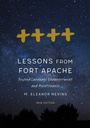
Lessons from Fort Apache
Beyond Language Endangerment and Maintenance
Published on 1. January 2024
284 pages
978-1-4962-3767-5 (ISBN)
Description

Lessons from Fort Apache is an ethnography of Indigenous language dynamics on the Fort Apache reservation in Arizona with North American and global implications concerning language endangerment. Moving beyond a narrow focus on linguistic documentation, M. Eleanor Nevins examines how the linguistics and cultural identities of Indigenous populations are attributed with meaning against other sociocultural concerns and interests. While affirming the value of language documentation and maintenance, Nevins also provides a much-needed appraisal of the potential conflicts in authority claims and language practices between community members and the educators and scholars who research their linguistic heritage.
Nevins argues that the debates surrounding the revitalization of Indigenous languages need broadening to include larger questions of social mediation, shifting cultural identities, and the politics intrinsic to the relationship between Indigenous community members and university-accredited experts such as language researchers and educators. This engaging ethnography examines these questions and investigates the language dynamics of the Fort Apache Reservation, including the unintended challenges that standardized textual models sometimes pose to local interests. Nevins reveals the community's historical and contemporary concerns for language documentation, maintenance, and revitalization.
Lessons from Fort Apache demonstrates the need for language maintenance programs and for flexibility in finding politically sustainable forms of collaboration and exchange between researchers, teachers, and those community members who base their claims to an Indigenous language in alternate terms.
Nevins argues that the debates surrounding the revitalization of Indigenous languages need broadening to include larger questions of social mediation, shifting cultural identities, and the politics intrinsic to the relationship between Indigenous community members and university-accredited experts such as language researchers and educators. This engaging ethnography examines these questions and investigates the language dynamics of the Fort Apache Reservation, including the unintended challenges that standardized textual models sometimes pose to local interests. Nevins reveals the community's historical and contemporary concerns for language documentation, maintenance, and revitalization.
Lessons from Fort Apache demonstrates the need for language maintenance programs and for flexibility in finding politically sustainable forms of collaboration and exchange between researchers, teachers, and those community members who base their claims to an Indigenous language in alternate terms.
Reviews / Votes
"Lessons from Fort Apache is an important book for people, both Native and non-Native, who are involved with language preservation, maintenance, and strengthening programs. Those working for language and culture revitalization will recognize many of the issues, problems, and glimmers of hope described. Those seeking to establish or become involved with such processes may find the insights of this work a welcome buffer against the first onslaughts of angst and self-doubt."-Judith M. Maxwell, Journal of Linguistic Anthropology "This is a beautifully crafted ethnography that tells the reader much about the complicated terrain upon which contemporary Indigenous language practices subsist. It challenges the reader to question her everyday assumptions about language, American Indianness, and survival. It also demands that the reader reconsider ideas of advantage and salvation that underscore mainstream, institutionally driven interventions and to ask, what are we saving and for whom?"-Barbra A. Meek, Language in Society "Nevins argues persuasively that linguists who hope to propagate an endangered language through documentation and the creation of teaching materials must find ways of partnering with centers of linguistic and pedagogical authority that already exist inside the community, and not expect to replace those voices with their own. . . . This realistic, thoughtful study should be regarded as obligatory reading for any linguist genuinely concerned with endangered language maintenance and revitalization."-Edward Vajda, Choice "[Nevins] brings renewed relevance to Apache texts collected in an earlier era by Harry Hoijer. . . . [This is] an extended ethnographic analysis of Apache interactions with non-Apache people and practices that has implications for cultural interventions of any kind in Apache communities. At its highest level, the book is a demonstration of 'the generativity of otherness.'"-Lise Dobrin, associate professor of anthropology at the University of VirginiaMore details
Edition
New Edition
Language
English
Place of publication
Lincoln
United States
Target group
Professional and scholarly
Illustrations
2 illustrations, 1 table, 2 appendixes, index
ISBN-13
978-1-4962-3767-5 (9781496237675)
Copyright in bibliographic data and cover images is held by Nielsen Book Services Limited or by the publishers or by their respective licensors: all rights reserved.
Schweitzer Classification
Other editions
Additional editions
Book
01/2024
University of Nebraska Press
€34.00
Shipment within 15-20 days
Persons
M. Eleanor Nevins is an associate professor of anthropology at Middlebury College, Vermont. She is the editor of World-Making Stories: Maidu Language and Community Renewal on a Shared California Landscape (Nebraska, 2017).
Content
Acknowledgments
1. Introduction
2. Indigenous Languages and the Mediation of Communities
3. Learning to Listen: Coming to Terms with Conflicting Meanings of Language Loss
4. They Live in Lonesome Dove: English in Indigenous Places
5. Stories in the Moment of Encounter: Documentation Boundary Work
6. What No Coyote Story Means: The Borderland Genre of Traditional Storytelling
7. "Some 'No No' and Some 'Yes'": Silence, Agency, and Traditionalist Words
8. Sustainability: Possible Socialities of Documentation and Maintenance
Appendix A: Lawrence Mithlo
Appendix B: Eva Lupe on Her Early Life
Index
1. Introduction
2. Indigenous Languages and the Mediation of Communities
3. Learning to Listen: Coming to Terms with Conflicting Meanings of Language Loss
4. They Live in Lonesome Dove: English in Indigenous Places
5. Stories in the Moment of Encounter: Documentation Boundary Work
6. What No Coyote Story Means: The Borderland Genre of Traditional Storytelling
7. "Some 'No No' and Some 'Yes'": Silence, Agency, and Traditionalist Words
8. Sustainability: Possible Socialities of Documentation and Maintenance
Appendix A: Lawrence Mithlo
Appendix B: Eva Lupe on Her Early Life
Index
