

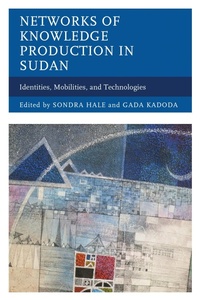
Networks of Knowledge Production in Sudan
Identities, Mobilities, and Technologies
Lexington Books (Publisher)
1st Edition
Published on 14. September 2016
318 pages
979-8-216-32474-4 (ISBN)
Description

This is the first book of its kind on Sudan, and arguably one of the first in North Africa. We are part of an emerging, more cosmopolitan approach that calls for a reassessment of ideas about not only the concept of identities, but also about migration and technology, especially social media. Our essayists engage in redefinitions, the broadening of our key variables, the linking and intersecting of concepts, and the investigations of methods and ethics, and opt for an approach that is, at once, culturally specific to Sudan (one of the most fluid social landscapes in the world) and transnational. Our essays address the narrowness of studies of migration and note the almost total neglect in the broader Sudan literature of the rise of technology-mobile telephony and social media, in particular.
Furthermore, our essayists address the near neglect in the Sudan literature of certain categories of people, such as youth, or certain diverse spaces, such as neighborhoods or gold mines. We have also been attempting to move away from the nearly stereotypic descriptions of Sudan to deal with topics that align Sudan with transnational issues and themes, knowledge production among them. This multidisciplinary collection of essays is the first comprehensive work to grapple explicitly with the question of knowledge production in such a diverse social landscape. We discuss the impact of current trends in information technology and contemporary forms of identity and mobility on knowledge production. These issues are pertinent for different sectors such as academia, government or business, and, as we demonstrate, reveal a myriad of possibilities for studying diverse population groups like youth, women, diaspora, or specific political contexts such as conflict or oppression.
Furthermore, our essayists address the near neglect in the Sudan literature of certain categories of people, such as youth, or certain diverse spaces, such as neighborhoods or gold mines. We have also been attempting to move away from the nearly stereotypic descriptions of Sudan to deal with topics that align Sudan with transnational issues and themes, knowledge production among them. This multidisciplinary collection of essays is the first comprehensive work to grapple explicitly with the question of knowledge production in such a diverse social landscape. We discuss the impact of current trends in information technology and contemporary forms of identity and mobility on knowledge production. These issues are pertinent for different sectors such as academia, government or business, and, as we demonstrate, reveal a myriad of possibilities for studying diverse population groups like youth, women, diaspora, or specific political contexts such as conflict or oppression.
More details
Edition
1. Auflage
Language
English
Place of publication
United States
Publishing group
Bloomsbury Publishing Plc
Target group
Professional and scholarly
ISBN-13
979-8-216-32474-4 (9798216324744)
Copyright in bibliographic data and cover images is held by Nielsen Book Services Limited or by the publishers or by their respective licensors: all rights reserved.
Schweitzer Classification
Other editions
Additional editions
Sondra Hale | Gada Kadoda
Networks of Knowledge Production in Sudan
Identities, Mobilities, and Technologies
Book
09/2016
Lexington Books
€143.40
Shipment within 15-20 days
Persons
Sondra Hale is research professor and professor emerita of anthropology and gender studies at the University of California, Los Angeles.
Gada Kadoda is lecturer of computer science at the University of Khartoum.
Gada Kadoda is lecturer of computer science at the University of Khartoum.
Content
Foreword, Nancy Gallagher
Part I. Introductory Section
Introduction: Identities Evolving, Mobilities Expanding, and Technologies Intervening-Things Come Together, Sondra Hale and Gada Kadoda
Chapter 1. Mobilities and Identities: The Fluid Social Landscape of Sudan, Sondra Hale
Chapter 2. The Consequences of Technological Innovation for Mobility and Identity, Gada Kadoda
Part II. Perceptions and Values
Chapter 3. Ethical Challenges for Social Media and Social Marketing in Sudan, Ellen Gruenbaum
Chapter 4. Circuits of Knowledge Production on Darfur, Rogaia Mustafa Abusharaf
Chapter 5. Informatics of Domination in Peripheral Capitalist Societies of North Africa and Middle East: Exploring the Link between Politics and Social Media, Atta El-Battahani
Chapter 6. Towards a Holistic Perception of Health: The Interrelationships with Identity and Mobility, Asma Elsony, Sara Hassanain, and Pindai Sithole
Chapter 7. Eritrean Migratory Trajectories of Adolescence in Khartoum: (Im)mobility, Identities, and Social Media, Katarzyna Grabska
Part III. Expressions and Spaces
Chapter 8. Conflict and Displacement: Threatened Masculinity in Sudan, Asha K.A. Elkarib
Chapter 9. "Neighborhood is our Native Culture": Translocal Neighborhoods in Khartoum and Juba, Margret Otto and Ulrike Schultz
Chapter 10. Engendering Change: New Information Technologies and the Dynamics of Gender in Northern Sudan, Janice Boddy
Chapter 11. Navigating Musical Identities, Knowledge Production and "Authenticity" in the Diaspora: A Conversation with Alsarah, Anita Fábos and Alsarah
Part IV. Borders and Resources
Chapter 12. Nuba Community Mobility in a Conflict Situation: Seeking Alternative Identities
Chapter 13. Unpacking My Identity: The Myth of Being Privileged, Asma Mohamed Abdel Halim
Chapter 14. Conflicting Identities: Gender Migration and Reimaging Sudan, Amina Alrasheed Nayel
Chapter 15. Technology, Infrastructure and the Making of Value in Gold Prospection, Sandra Calkins and Richard Rottenburg
Part I. Introductory Section
Introduction: Identities Evolving, Mobilities Expanding, and Technologies Intervening-Things Come Together, Sondra Hale and Gada Kadoda
Chapter 1. Mobilities and Identities: The Fluid Social Landscape of Sudan, Sondra Hale
Chapter 2. The Consequences of Technological Innovation for Mobility and Identity, Gada Kadoda
Part II. Perceptions and Values
Chapter 3. Ethical Challenges for Social Media and Social Marketing in Sudan, Ellen Gruenbaum
Chapter 4. Circuits of Knowledge Production on Darfur, Rogaia Mustafa Abusharaf
Chapter 5. Informatics of Domination in Peripheral Capitalist Societies of North Africa and Middle East: Exploring the Link between Politics and Social Media, Atta El-Battahani
Chapter 6. Towards a Holistic Perception of Health: The Interrelationships with Identity and Mobility, Asma Elsony, Sara Hassanain, and Pindai Sithole
Chapter 7. Eritrean Migratory Trajectories of Adolescence in Khartoum: (Im)mobility, Identities, and Social Media, Katarzyna Grabska
Part III. Expressions and Spaces
Chapter 8. Conflict and Displacement: Threatened Masculinity in Sudan, Asha K.A. Elkarib
Chapter 9. "Neighborhood is our Native Culture": Translocal Neighborhoods in Khartoum and Juba, Margret Otto and Ulrike Schultz
Chapter 10. Engendering Change: New Information Technologies and the Dynamics of Gender in Northern Sudan, Janice Boddy
Chapter 11. Navigating Musical Identities, Knowledge Production and "Authenticity" in the Diaspora: A Conversation with Alsarah, Anita Fábos and Alsarah
Part IV. Borders and Resources
Chapter 12. Nuba Community Mobility in a Conflict Situation: Seeking Alternative Identities
Chapter 13. Unpacking My Identity: The Myth of Being Privileged, Asma Mohamed Abdel Halim
Chapter 14. Conflicting Identities: Gender Migration and Reimaging Sudan, Amina Alrasheed Nayel
Chapter 15. Technology, Infrastructure and the Making of Value in Gold Prospection, Sandra Calkins and Richard Rottenburg
