

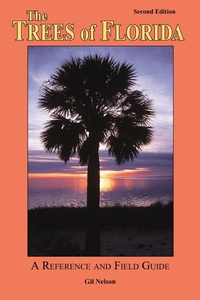
Trees of Florida
2nd Edition
Published on 2. March 2023
528 pages
978-1-68334-365-3 (ISBN)
Description

This book is the first comprehensive guide to Florida's amazing variety of tree species: from scrub oak on the high central ridges to mangroves stretching along the southern coasts, from mighty live oaks to the delicate and diminutive hawthornes, from bald cypress with their knees poking up from the swamps to the coppery-colored gumbo limbo found in tropical hammocks of the Everglades and Keys, from the sabal palm found all over the state to the rare and endangered yew found only along the banks of the Apalachicola River in northern Florida. Florida, unique among the states, has both tropical and temperate forests. The early Florida visitor was awed by miles of unending pine flatwoods. Most modern Florida visitors are amazed by the lush tropical trees planted in cities, suburbs, and public gardens. This book covers both natives and exotics and includes suggested field sites for observing the species described.
Divided into two sections, this book serves as both a reference and a field guide. Both sections help the reader answer the question "What tree is that?" by focusing on the families of Florida's trees. The line drawings show a combination of typical leaves, fruits, and flowers, and while accurate in detail, capture an overall impression, so helpful when trying to identify a species in the field. The color photos, all taken in Florida, are useful where color is important in identification.
The first edition was very popular with both professionals and laypeople alike-it was heralded as accurate, comprehensive, and organized and written in an easy-to-understand way. This edition will be even more useful, as it adds about 140 more tree accounts for a total of more than 480 species. There are almost 600 color photos and many drawings and range maps. And now included is a key to tree families that will help with field identification.
Divided into two sections, this book serves as both a reference and a field guide. Both sections help the reader answer the question "What tree is that?" by focusing on the families of Florida's trees. The line drawings show a combination of typical leaves, fruits, and flowers, and while accurate in detail, capture an overall impression, so helpful when trying to identify a species in the field. The color photos, all taken in Florida, are useful where color is important in identification.
The first edition was very popular with both professionals and laypeople alike-it was heralded as accurate, comprehensive, and organized and written in an easy-to-understand way. This edition will be even more useful, as it adds about 140 more tree accounts for a total of more than 480 species. There are almost 600 color photos and many drawings and range maps. And now included is a key to tree families that will help with field identification.
More details
Edition
2nd Edition
Language
English
Place of publication
New York
United States
Publishing group
Rowman & Littlefield
File size
109,38 MB
ISBN-13
978-1-68334-365-3 (9781683343653)
Copyright in bibliographic data and cover images is held by Nielsen Book Services Limited or by the publishers or by their respective licensors: all rights reserved.
Schweitzer Classification
Other editions
Additional editions
Gil Nelson
The Trees of Florida
Book
11/2010
2nd Edition
Pineapple Press Inc.,U.S.
€37.50
Shipment within 3-4 weeks
Gil Nelson
The Trees of Florida
Book
11/2010
2nd Edition
Pineapple Press Inc.,U.S.
€28.50
Shipment within 3-4 weeks
Person
By Gil Nelson
Content
- Intro
- Half Title
- Title
- Dedication
- Copyright
- Table of Contents
- Acknowledgments
- Introduction
- Florida's Tree Diversity
- What is a Tree?
- Native, Non-native, Invasive, Endangered
- How To Use This Book
- The Language of Botany
- Glossary of Common Botanical Terms
- Keys to Families, Genera, and Some Species
- Species Accounts
- GYMNOSPERMS (CONIFERS)
- Araucaria Family (Araucariaceae)
- Cedar Family (Cupressaceae)
- Pine Family (Pinaceae)
- Podocarpus Family (Podocarpaceae)
- Yew Family (Taxaceae)
- ANGIOSPERMS - MONOCOTS
- Palm Family (Arecaceae or Palmae)
- ANGIOSPERMS - DICOTS
- Acanthus Family (Acanthaceae)
- Moschatel Family (Adoxaceae)
- Sweetgum Family (Altingiaceae)
- Cashew Family (Anacardiaceae)
- Pawpaw or Custard Apple Family (Annonaceae)
- Oleander Family (Apocynaceae)
- Holly Family (Aquifoliaceae)
- Ginseng Family (Araliaceae)
- Aster Family (Asteraceae or Compositae)
- Birch Family (Betulaceae)
- Bignonia Family (Bignoniaceae)
- Borage Family (Boraginaceae)
- Gumbo Limbo Family (Burseraceae)
- Cactus Family (Cactaceae)
- Wild Cinnamon Family (Canellaceae)
- Hemp or Hackberry Family (Cannabaceae)
- Caper Family (Capparaceae)
- Papaya Family (Caricaceae)
- Beefwood Family (Casuarinaceae)
- Crecropia Family (Cecropiaceae)
- Staff Tree Family (Celastraceae)
- Coco Plum Family (Chrysobalanaceae)
- Garcinia Family (Clusiaceae)
- Combretum Family (Combretaceae)
- Dogwood Family (Cornaceae)
- Titi Family (Cyrillaceae)
- Ebony Family (Ebenaceae)
- Heath Family (Ericaceae)
- Spurge Family (Euphorbiaceae)
- Legume Family (Fabaceae or Leguminosae)
- Beech or Oak Family (Fagaceae)
- Flacourtia Family (Flacourtiaceae)
- Witch Hazel Family (Hamamelidaceae)
- St. John's-wort Family (Hypericaceae)
- Star Anise Family (Illiciaceae)
- Hickory or Walnut Family (Juglandaceae)
- Mint Family (Lamiaceae or Labiatae)
- Laurel Family (Lauraceae)
- Corkwood Family (Leitneriaceae)
- Loosestrife Family (Lythraceae)
- Magnolia Family (Magnoliaceae)
- Malpighia Family (Malpighiaceae)
- Mallow Family (Malvaceae)
- Melastome Family (Melastomataceae)
- Mahogany Family (Meliaceae)
- Mulberry Family (Moraceae)
- Horseradishtree Family (Moringaceae)
- Muntingia Family (Muntingiaceae)
- Myoporum Family (Myoporaceae)
- Bayberry Family (Myricaceae)
- Myrsine Family (Myrsinaceae)
- Myrtle Family (Myrtaceae)
- Four-o'clock Family (Nyctaginaceae)
- Tupelo Family (Nyssaceae)
- Olive Family (Oleaceae)
- Princesstree Family (Paulowniaceae)
- Phyllanthus Family (Phyllanthaceae)
- Bitterbush Family (Picramniaceae)
- Pittosporum Family (Pittosporaceae)
- Planetree Family (Platanaceae)
- Buckwheat Family (Polygonaceae)
- Protea Family (Proteaceae)
- Putranjiva Family (Putranjivaceae)
- Buckthorn Family (Rhamnaceae)
- Red Mangrove Family (Rhizophoraceae)
- Rose Family (Rosaceae)
- Madder Family (Rubiaceae)
- Citrus Family (Rutaceae)
- Willow Family (Salicaceae)
- Sandalwood Family (Santalaceae)
- Soapberry Family (Sapindaceae)
- Sapodilla Family (Sapotaceae)
- Schoepfia Family (Schoepfiaceae)
- Quassia Family (Simaroubaceae)
- Nightshade Family (Solanaceae)
- Bladdernut Family (Staphyleaceae)
- Storax Family (Styracaceae)
- Bay Cedar Family (Surianaceae)
- Sweetleaf Family (Symplocaceae)
- Tamarisk Family (Tamaricaceae)
- Tea Family (Theaceae)
- Joewood or Theophrasta Family (Theophrastaceae)
- Elm Family (Ulmaceae)
- Vervain Family (Verbenaceae)
- Ximenia Family (Ximeniaceae)
- Caltrop Family (Zygophyllaceae)
- Florida Native Plant Society
- Florida Exotic Pest Plant Council
- References
- Drawing Credits
