

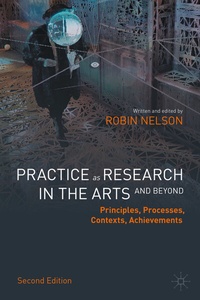
Practice as Research in the Arts (and Beyond)
Description

This project addresses the contexts of Practice as Research and how to undertake it. This second iteration updates thinking and practices but sustains a direct and clear approach on how to become a practitioner-researcher. New features include an extension of range "beyond" the arts and a case for intra-disciplinarity in Practice Research as an influence in the formation of the "future university". A comparison is made between Artistic Research and Practice Research recognizing that research through practices with being-doing-knowing is central to both. Acknowledging the current crisis in legitimation, a broad view is taken of how things might be known by an onto-epistemology for the twenty-first century foregrounding the bodymind but sustaining rationality and community by way of Other/other dialogic exchange. Perspectives from around the world in Part II offset the more Eurocentric emphasis in Part I.
Reviews / Votes
"An excellent book. This second edition offers a timely re-examination, critically reflecting on new understandings of the role of practice in doctoral-level research, new directions of travel and the ever-shifting terrain in a diverse array of global research contexts. Essential reading for prospective/ extant PhD candidates and supervisors embarking on Practice Research". (Dr Liam Jarvis, Co-Director of the Centre for Theatre Research and Senior Lecturer, University of Essex, UK)"The first edition of this book was like a Rosetta Stone, an academic text which I felt was actually "speaking to me"". (Park Stickney, Jazz Harp Tutor at the Royal Academy of Music, UK, and doctoral candidate at the Trinity Laban Conservatoire of Music and Dance, UK)
More details
Other editions
Additional editions
Person
Formerly Director of Research, and Professor of Theatre and Intermedial Performance, (2010 - 2015) at University of London, Royal Central School of Speech & Drama, Robin Nelson (in semi-retirement) is now an Emeritus Professor. He is also an Emeritus Professor of Manchester Metropolitan University where for many years he was Head of the practice-based, interdisciplinary Department of Contemporary Arts. Robin has published widely on the performing arts and media and is still occasionally engaged in intermedial theatre practice.
Content
1. Introduction; Robin Nelson.- 2. Lineages and principles: the what, where, when and why of PaR; Robin Nelson.- 3. How to be both: from practitioner to practitioner-researcher; Robin Nelson.- 4. Concepts in Contexts; Robin Nelson.- 5. Process: documentation and publication; Robin Nelson.- 6. PaR doctorates - a guideline/clew to a successful outcome for all (candidates, examiners, supervisors, administrators, regulators); Robin Nelson.- 7. Asia(s); Maiya Murphy.- 8. Australasia; Suzanne Little.- 9. Nordic Contexts; Stefan Östersjö.- 10. North America; Bruce Barton.- 11. South Africa; Kat Lowe & Alex Halligey.- 12. South America; Ciane Fernandes & Melina Scialom.
