

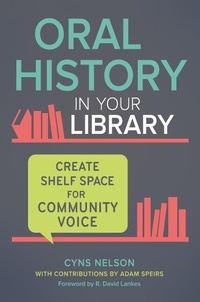
Oral History in Your Library
Create Shelf Space for Community Voice
1st Edition
Published on 6. July 2018
136 pages
979-8-216-12527-3 (ISBN)
Description

Discover the true value and exciting possibilities of oral history in the library: learn new and compelling ways to engage your patrons by sharing personal and community history with them.
Have you thought about creating a collection to capture the experiences of your community? Perhaps you already have an oral history collection, but it's gathering dust. In either case, this book can help. After outlining what it means to effectively create oral history content, the author discusses how to establish public access to your collection, how to promote the content to your community, and how to use oral history in your library programs. Collaborating with other organizations, working with volunteers, and funding initiatives are a few of the other topics covered.
Brimming with ideas and practical advice, the guide is meant to inspire and empower, taking the hassle out of oral history and replacing it with embracing oral history's power and the tools to bring it into your library. If you have an oral history collection, this book will help you to maximize its potential. If you don't have one, this book will show you how your library could benefit from one, what it can help your library to accomplish, and how to get started. If you're seeking a path to community engagement, start here.
Have you thought about creating a collection to capture the experiences of your community? Perhaps you already have an oral history collection, but it's gathering dust. In either case, this book can help. After outlining what it means to effectively create oral history content, the author discusses how to establish public access to your collection, how to promote the content to your community, and how to use oral history in your library programs. Collaborating with other organizations, working with volunteers, and funding initiatives are a few of the other topics covered.
Brimming with ideas and practical advice, the guide is meant to inspire and empower, taking the hassle out of oral history and replacing it with embracing oral history's power and the tools to bring it into your library. If you have an oral history collection, this book will help you to maximize its potential. If you don't have one, this book will show you how your library could benefit from one, what it can help your library to accomplish, and how to get started. If you're seeking a path to community engagement, start here.
More details
Edition
1. Auflage
Language
English
Place of publication
New York
United States
Publishing group
Bloomsbury Publishing Plc
Target group
Interest Age: From 7 to 17 years
Illustrations
10 bw illus
ISBN-13
979-8-216-12527-3 (9798216125273)
Copyright in bibliographic data and cover images is held by Nielsen Book Services Limited or by the publishers or by their respective licensors: all rights reserved.
Schweitzer Classification
Other editions
Additional editions
Book
07/2018
Libraries Unlimited Inc
€58.80
Shipment within 10-20 days
Persons
Cynthia "Cyns" Nelson manages the Maria Rogers Oral History Program (MROHP) at Boulder Public Library's Carnegie Branch for Local History. She has more than 10 years of experience contributing to oral history projects.
Adam Speirs manages the oral history collection for Douglas County Libraries in Colorado. He has worked in academic, private, and public archives since 2007.
Adam Speirs manages the oral history collection for Douglas County Libraries in Colorado. He has worked in academic, private, and public archives since 2007.
Content
- Cover
- Half Title
- Title Page
- Copyright
- Contents
- Foreword
- Preface
- Introduction: Library Science, Not Rocket Science
- Chapter One: Recognize = Collection Development
- Vision
- Oral History: Explanation of Centrality
- Source: Where Does Oral History Come From?
- How Is It Dealt With?
- Use: How Is Oral History Made Useful? How Is It Used?
- Product: What Is Created from Oral History?
- Identifying Need and Opportunity
- Using Oral Sources to Complement or Illuminate Holdings
- Using Collaborations and Partnerships
- Engaging Community
- Finishing Thoughts
- Chapter Two: Record = Preservation
- Capturing Voice
- Format Options and Equipment
- Participants Identified
- Staging the Interview
- Becoming a Steward of the Recording
- Release Forms
- Documentation
- File Structuring
- Continuity of Collection (LOCKSS)
- Finishing Thoughts
- Appendix: Would You Make a Good Interviewer?
- Chapter Three: Represent = Organization
- Creating Access Points to the Audio
- Transcription
- Further Description
- Metadata
- Working with Catalogs/Info Retrieval Systems
- Bib Records and Items
- Beyond Catalogs
- Finishing Thoughts
- Chapter Four: Reach = Dissemination
- Delivering Content
- Virtual Portals
- Physical/Tactile Portals
- Building Bridges to the Community
- Explanation and Promotion
- Programming
- Presentations and (Social) Media
- Finishing Thoughts
- Chapter Five: Reflect
- Touchstones
- Information versus Entertainment
- Maximum Accessibility
- Content Grows in Meaning through Relationships
- Threads
- Knowledge
- Facilitation
- Improving Society
- Finishing Thoughts
- Chapter Six: Reality and Rewards
- Collection Development: Recognize
- Need and Opportunity
- Complementing Other Resources
- Collaborations and Partnerships
- Engaging Community
- Preservation: Record
- Capturing Voice
- Becoming a Steward of the Recording
- Organization: Represent
- Creating Access Points to the Audio
- Working with Catalogs/Information Retrieval Systems
- Dissemination: Reach
- Delivering Content
- Building Bridges to the Community
- Finally: Rewards
- Unpaid Staff Are Library Champions
- Relation Building and Cross Promotion
- Funding and In-Kind Support
- Final Finishing Thoughts
- Appendix: Colorado Voice Preserve
- References
- Index
