

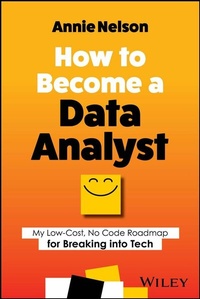
How to Become a Data Analyst
My Low-Cost, No Code Roadmap for Breaking into Tech
1st Edition
Published on 23. November 2023
288 pages
978-1-394-20225-6 (ISBN)
Description

Start a brand-new career in data analytics with no-nonsense advice from a self-taught data analytics consultant
In How to Become a Data Analyst: My Low-Cost, No Code Roadmap for Breaking into Tech, data analyst and analytics consultant Annie Nelson walks you through how she took the reins and made a dramatic career change to unlock new levels of career fulfilment and enjoyment. In the book, she talks about the adaptability, curiosity, and persistence you'll need to break free from the 9-5 grind and how data analytics--with its wide variety of skills, roles, and options--is the perfect field for people looking to refresh their careers.
Annie offers practical and approachable data portfolio-building advice to help you create one that's manageable for an entry-level professional but will still catch the eye of employers and clients. You'll also find:
* Deep dives into the learning journey required to step into a data analytics role
* Ways to avoid getting lost in the maze of online courses and certifications you can find online--while still obtaining the skills you need to be competitive
* Explorations of the highs and lows of Annie's career-change journey and job search--including what was hard, what was easy, what worked well, and what didn't
* Strategies for using ChatGPT to help you in your job search
A must-read roadmap to a brand-new and exciting career in data analytics, How to Become a Data Analyst is the hands-on tutorial that shows you exactly how to succeed.
In How to Become a Data Analyst: My Low-Cost, No Code Roadmap for Breaking into Tech, data analyst and analytics consultant Annie Nelson walks you through how she took the reins and made a dramatic career change to unlock new levels of career fulfilment and enjoyment. In the book, she talks about the adaptability, curiosity, and persistence you'll need to break free from the 9-5 grind and how data analytics--with its wide variety of skills, roles, and options--is the perfect field for people looking to refresh their careers.
Annie offers practical and approachable data portfolio-building advice to help you create one that's manageable for an entry-level professional but will still catch the eye of employers and clients. You'll also find:
* Deep dives into the learning journey required to step into a data analytics role
* Ways to avoid getting lost in the maze of online courses and certifications you can find online--while still obtaining the skills you need to be competitive
* Explorations of the highs and lows of Annie's career-change journey and job search--including what was hard, what was easy, what worked well, and what didn't
* Strategies for using ChatGPT to help you in your job search
A must-read roadmap to a brand-new and exciting career in data analytics, How to Become a Data Analyst is the hands-on tutorial that shows you exactly how to succeed.
More details
Other editions
Additional editions
Book
12/2023
Wiley
€24.00
Shipment within 15-20 days
Person
ANNIE NELSON is a self-taught data analyst and Tableau consultant, as well as a popular commentator on TikTok (@anniesanalytics) where she shares her experiences and journey through the world of data analytics. She works remotely, balancing her self-scheduled work with frequent trips abroad and growing her substantial following on social media.
Content
- Cover Page
- Title Page
- Copyright Page
- Contents
- Preface
- Introduction
- How Do I Know If Data Is a Good Fit for Me?
- Who This Is Book For
- Part I The Fun Part
- Chapter 1 Is Data Analytics Right for Me?
- What Does a Data Analyst Do Every Day?
- Hours/Time
- In-Person Data Jobs
- What Makes a Good Analyst?
- Planning
- Organization
- Critical Thinking/Strategy
- Collaboration/Communication
- What Tools Should I Learn?
- Excel/Google Sheets
- SQL
- Tableau/Power BI
- Python
- Which Entry-Level Tech Job Is Right for Me?
- What's Next
- Chapter 2 Understanding the Paths into Data
- How Hard Is It to Become a Data Analyst?
- What Are My Options for Getting into Data Analytics?
- Transitioning from an Analyst-Adjacent Role
- Getting a Degree
- Boot Camps
- DIY Approach
- How I Decided on the DIY Approach
- Chapter 3 Designing Your Data Analyst Roadmap
- Can You Shows Me Your Data Analyst Roadmap?
- Building Your Roadmap
- Step 1: Skill Development
- Step 2: Building a Portfolio
- Step 3: Getting Yourself Ready to Job Search
- How Do I Choose the Best Course?
- What Makes a Good Course
- Getting Started for Free
- When Not to Pick a Course: How to Avoid Course Hopping
- Chapter 4 My Experience with Data Analytics Courses
- The Beginning
- The Google Certificates Course
- What Came Next
- Changing Careers
- Course Hopping: When Is Taking Another Course Worth It?
- Part II The Scary Part
- Chapter 5 Introduction to Portfolios
- What Is a Data Analytics Portfolio?
- Can I See an Example?
- Why Do I Need a Portfolio?
- As an Analyst
- As a Job Seeker
- If I Have Experience from Another Job, Do I Still Need a Portfolio?
- Chapter 6 Portfolio Project FAQ
- How Do I Find Free Data?
- Maven Analytics
- Real World Fake Data
- Your Data
- Data from Me!
- SQL Practice
- Other Places
- Can You Tell Me More about Completing Projects?
- How Do I Get Started on Projects?
- Does My Project Need to Be Original and Industry Specific?
- How Do I Know When a Project Is Ready?
- Where Do I Publish and Store My Work?
- How Many Projects Do I Need?
- Should I Share My Work Publicly?
- Project Time!
- Chapter 7 Portfolio Project Handbook
- Project Levels: What Separates a Beginner from an Intermediate Project?
- First Project
- Beginner Project
- Intermediate Project
- Regular Tableau User
- Guided Projects
- New Year's Eve Resolutions Project
- Help Desk Project
- Pizza Sales Project
- SQL Project Creation Advice
- From the Portfolio to the Job Search
- Getting in the Mindset for Projects
- Part III The Hard Part
- Chapter 8 Starting Your Job Search
- How Do I Know When I Am Ready to Start My Job Search?
- Where and How Should I Look for Jobs?
- Searching Posts
- Job Titles
- Where Can I Find Salary Information?
- What Is the Data Analyst Career Progression?
- Chapter 9 Résumé Building and Setting Your Public Image
- How Do I Write a Résumé?
- Length
- Technical Skills
- Relevant History
- Formatting
- Use Metrics
- How Do I Optimize My LinkedIn?
- History
- Connections
- Headline
- Profile Photo
- Can You Tell Me How to Network?
- What Is Networking (and What Is It Not)?
- Networking and Messaging on LinkedIn
- Messaging Jobs Directly
- Networking Events
- Interviewing
- Bonus Tip: An Idea for Your First LinkedIn Post
- Chapter 10 Stages of Data Interviews
- Why Do Interviews Take So Long?
- Can You Tell Me More about the Interview Stages?
- Phone Screen
- Meeting the Hiring Manager
- Behavioral Interview
- Technical Interview
- Panel Interview
- Culture Fit
- Follow-up
- How I Handled Some Common How-Tos
- Resources
- Teal
- Maven Analytics
- Content Creators/Small Businesses
- Working with Data Creators
- Using AI
- Chapter 11 How to Use ChatGPT to Aid Your Job Search
- Writing a Résumé
- Writing Cover Letters
- Practicing for Interviews
- Phone Screen
- Technical Interview
- Behavioral Interview
- Writing Follow-Up Emails
- Be Specific
- Chapter 12 My Job Search
- "Open to Work?"
- Beginning to Search
- Getting Reponses (and Rejections)
- Pivoting
- Interviewing
- Decision Day
- Part IV The Bonus Part
- Chapter 13 After the Job Offer
- Starting the Job
- Dealing with Imposter Syndrome
- Steps to Success
- What It's Like Working Remotely
- Some Things About Tech That Surprised Me
- 121s
- Home Office Stipend
- Company Party/Offsites
- Meetings
- Referrals
- Layoffs
- Problem-Solving
- Travel
- Data Has Changed My Life
- Chapter 14 Preparing for/Recovering from a Layoff
- Don't Ignore Red Flags
- Resumes and Networking-Restarting the Job Search
- Updating My Portfolio
- The Layoff
- Adjusting for Your Situation
- Closing Thoughts
- Appendix A Data Analytics Roadmap Checklist
- Appendix B Tableau Tips
- What I Use Tableau For
- The Why
- The What
- The How
- The Where
- The Why
- Final Checklist
- Appendix C My Data Analyst Journey
- January
- February
- March
- April
- May
- June
- July
- August-December
- Acknowledgments
- About the Author
- Index
- EULA
