

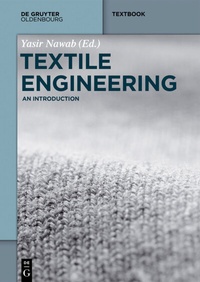
Textile Engineering
Description

Currently, most of the textile industry and textile institutions are located in South Asia. The textile industry leads to the development of clothing from fibres, yarns, and fabrics. The industry is growing in this area as it has already been shifted from Europe and is being shifting from China. As the textile industry is growing, many new textile intuitions are being established to provide for quality textile education. This introductory level textbooks is geared towars them.
This book will provide all necessary information from fibres to fabrics and their conversion to clothing. The importance of textiles in the current era along with the raw materials needed for the textiles are given. After that, it is explained how the yarn is made from fibres. Then the fabrics manufacturing, the printing and dyeing of textiles and the conversion of fabrics into the garments is discussed. Also, the testing of fibres, yarns and fabrics along with the description of technical textiles is mentioned.
This book is beneficial for all readers who are going to start their career in textiles or are going to start the engineering degree in textiles. The present book is designed for the first year students (especially for the National Textile University Faisalabad) of textile engineering.
More details
Other editions
New editions
Additional editions
Persons
Content
- Intro
- Foreword
- Contents
- 1 Introduction
- 1.1 What is Textile?
- 1.2 History of Textiles
- 1.3 Status of Textiles in World Exports
- 2 Textile Raw Materials
- 2.1 Classification
- 2.2 Natural Fibers
- 2.2.1 Cotton Fibers
- 2.2.2 Flax
- 2.2.3 Jute
- 2.2.4 Other Vegetable Fibers
- 2.2.5 Wool
- 2.2.6 Silk
- 2.3 Man-made Fibers
- 2.3.1 Spinning of Man-made Fibers
- 2.4 Regenerated Fibers
- 2.4.1 Viscose Fiber
- 2.4.2 Acetate Fiber
- 2.5 Synthetic Fibers
- 2.5.1 Nylon
- 2.5.2 Polyester
- 2.5.3 Other Synthetic Fibers
- 2.5.4 Glass Fiber
- 2.5.5 Carbon Fiber
- 3 Yarn Manufacturing
- 3.1 Introduction
- 3.1.1 Yarn
- 3.1.2 Spun Yarn
- 3.1.3 Yarn Number
- 3.2 Yarn Production
- 3.2.1 Lap
- 3.2.2 Sliver
- 3.2.3 Roving
- 3.3 Basic Preparatory Processes for Spinning Operations
- 3.3.1 Preparation of Cotton to Feed the Blow Room
- 3.3.2 Blow Room
- 3.3.3 Card
- 3.3.4 Difference Between Blow Room and Card Cleaning
- 3.3.5 Drawing
- 3.3.6 Lap Former
- 3.3.7 Comber
- 3.3.8 Roving Machine
- 3.4 Spinning Operations
- 3.4.1 Ring Spinning
- 3.4.2 Winding
- 3.4.3 Open End Rotor Spinning
- 3.4.4 Air Jet Spinning
- 3.5 Types of Yarns
- 3.5.1 Staple Spun Yarn
- 3.5.2 Monofilament Yarn
- 3.5.3 Multifilament Yarn
- 4 Fabric Manufacturing
- 4.1 Weaving
- 4.2 Warp Preparation Steps
- 4.2.1 Winding
- 4.2.2 Warping
- 4.2.3 Sizing
- 4.2.4 Drawing In
- 4.3 Weaving Mechanisms
- 4.3.1 Primary Motions
- 4.3.2 Secondary Motions
- 4.3.3 Stop Motions
- 4.4 Types of Shedding Mechanism
- 4.4.1 Tappet Shedding
- 4.4.2 Dobby Shedding
- 4.4.3 Jacquard Shedding
- 4.5 Types of Picking Mechanism
- 4.5.1 Shuttle Picking
- 4.5.2 Projectile Picking
- 4.5.3 Rapier Picking
- 4.5.4 Water Jet Picking
- 4.5.5 Air Jet Picking
- 4.6 Weave Design
- 4.6.1 Plain
- 4.6.2 Twill
- 4.6.3 Satin / Sateen
- 4.7 Specialty Weaving
- 4.8 Knitting
- 4.9 Comparison of Woven and Knitted Fabrics
- 4.10 Types of Knitting
- 4.10.1 Weft Knitting
- 4.10.2 Weft Knitting Machine Elements
- 4.11 Loop Formation Cycle with Latch Needle
- 4.12 Principle Stitches in Weft Knitting
- 4.13 Knitting Terms and Definition
- 4.13.1 Loop Parts
- 4.13.2 Technical Face and Back
- 4.13.3 Wales and Courses
- 4.13.4 Stitch Density
- 4.13.5 Stitch Length
- 4.14 Warp Knitting
- 4.14.1 Classification of Warp Knitting Machine
- 4.15 Applications of Knitted Fabrics
- 4.16 Nonwoven
- 4.16.1 Definitions
- 4.16.2 Nonwoven Products
- 4.16.3 Raw Materials for Nonwovens
- 4.17 Manufacturing of Nonwoven
- 4.17.1 Web Formation
- 4.17.2 Dry Laid Web
- 4.17.3 Wet Laid Web
- 4.17.4 Polymer Laid Web
- 4.18 Web Bonding
- 4.18.1 Thermal Bonding
- 4.18.2 Chemical Bonding
- 4.18.3 Mechanical Bonding
- 4.19 Finishing
- 4.20 Characterization of Nonwoven
- 5 Textile Processing
- 5.1 Introduction
- 5.2 Textile Pre-treatments
- 5.3 Singeing
- 5.4 Desizing
- 5.5 Scouring
- 5.6 Bleaching
- 5.7 Mercerizing
- 5.8 Heat-setting
- 5.9 Textile Dyeing
- 5.10 Dyes and Pigments
- 5.10.1 Acid Dyes
- 5.10.2 Azoic Dyes
- 5.10.3 Basic Dyes
- 5.10.4 Direct Dyes
- 5.10.5 Disperse Dyes
- 5.10.6 Reactive Dyes
- 5.10.7 Sulphur Dyes
- 5.10.8 Vat Dyes
- 5.10.9 Pigments
- 5.11 Dyeing Methods
- 5.11.1 Exhaust Dyeing
- 5.11.2 Pad Dyeing
- 5.12 Dyeing Machinery
- 5.12.1 Exhaust Dyeing Machines
- 5.12.2 Pad Dyeing Machines
- 5.13 Blends Dyeing
- 5.14 Textile Printing
- 5.15 Common Styles of Textile Printing
- 5.15.1 Direct Printing
- 5.15.2 Transfer Printing
- 5.15.3 Discharge Printing
- 5.15.4 Resist Printing
- 5.16 Common Methods of Textile Printing
- 5.16.1 Block Printing
- 5.16.2 Screen Printing
- 5.16.3 Roller Printing
- 5.16.4 Digital Printing
- 5.17 Main Steps in Direct Printing
- 5.17.1 Fabric Preparation
- 5.17.2 Print-paste Preparation
- 5.17.3 Printing
- 5.17.4 Drying
- 5.17.5 Fixation
- 5.17.6 Washing-off
- 5.18 Textile Finishing
- 5.19 Chemical Finishing
- 5.19.1 Softening
- 5.19.2 Stiffening / Hand-building
- 5.19.3 Easy-care, Wrinkle Recovery and Durable Press Finishing
- 5.19.4 Water Repellent Finishing
- 5.19.5 Stain Resistance Finishing
- 5.19.6 Stain or Soil Release Finishing
- 5.19.7 Flame Retardant Finishing
- 5.19.8 Anti-microbial Finishing
- 5.19.9 Bio-polishing
- 5.19.10 Moisture Management Finishing
- 5.19.11 Anti-static Finishing
- 5.19.12 Optical Brightening
- 5.20 Mechanical Finishing
- 5.20.1 Napping
- 5.20.2 Shearing
- 5.20.3 Sueding / Emerising
- 5.20.4 Calendering
- 5.20.5 Compacting
- 5.20.6 Relaxation Drying
- 5.20.7 Decatising
- 6 Clothing
- 6.1 Introduction
- 6.2 What is Garment / Apparel / Clothing?
- 6.3 Types of Garments
- 6.4 Global Apparel Industry
- 6.5 Structure of an Apparel Firm
- 6.6 Marketing Division
- 6.7 Finance / Admin Division
- 6.8 Manufacturing Division
- 6.9 Operations Division
- 6.10 Clothing Production
- 6.11 Sampling
- 6.12 Order Planning
- 6.13 Lay Planning
- 6.14 Spreading
- 6.15 Cutting
- 6.16 Numbering and Bundling
- 6.17 Stitching
- 6.17.1 Interlacing
- 6.17.2 Intralooping
- 6.17.3 Interlooping
- 6.18 Finishing
- 6.19 Packing
- 7 Technical Textiles
- 7.1 Introduction
- 7.2 Functions of Technical Textile
- 7.3 Categories of Technical Textiles
- 7.3.1 Agrotech
- 7.3.2 Buildtech
- 7.3.3 Clothtech
- 7.3.4 Geotech
- 7.3.5 Hometech
- 7.3.6 Indutech
- 7.3.7 Medtech
- 7.3.8 Mobiltech
- 7.3.9 Oekotech
- 7.3.10 Packtech
- 7.3.11 Protech
- 7.3.12 Sporttech
- 8 Textile Testing
- 8.1 Introduction
- 8.2 Quality Control
- 8.3 Standardization of Testing
- 8.4 Repeatability and Reproducibility
- 8.5 Sampling
- 8.5.1 Consignment
- 8.5.2 Test Lot
- 8.5.3 Laboratory Sample
- 8.5.4 Test Specimen
- 8.5.5 Package
- 8.6 Moisture Content & Moisture Regain
- 8.7 Standard Atmospheric Conditions for Testing
- 8.8 Testing of Fibers
- 8.9 Testing of Yarn
- 8.9.1 Linear Density
- 8.9.2 Direct System
- 8.9.3 Indirect System
- 8.9.4 Evenness of Yarn
- 8.9.5 Visual Examination
- 8.9.6 Cut and Weigh Method
- 8.9.7 USTER Evenness Tester
- 8.9.8 Yarn Hairiness
- 8.9.9 Tensile Strength
- 8.10 Types of Tensile Strength Testing Machines
- 8.11 Fabric Tests
- 8.11.1 Strip Test
- 8.11.2 Grab Test
- 8.11.3 Tear Tests
- 8.11.4 Elmendorf Tear Tester
- 8.11.5 Bursting Strength of Fabric
- 8.11.6 Weight per Square Yard (GSM)
- 8.11.7 Color Fastness to Perspiration
- 8.11.8 Abrasion Resistance of Fabrics (Accelerator Method)
- 8.11.9 Water Repellency (Spray Test)
- 8.11.10 Water Resistance / Impact Penetration Test
- 8.11.11 Air Permeability
- 8.11.12 Moisture Management Test
- 8.11.13 Colour Fastness
- 8.11.14 Thermal Transmittance of Textile Materials
- 8.11.15 Effect of Repeated Home Laundering on Textiles
- 8.11.16 Colour Fastness to Perspiration
- 8.11.17 Seam Strength
- 9 Disposal and Recycling of Textiles
- 9.1 Introduction
- 9.2 Environmental Impacts of Textiles
- 9.2.1 Impact of Laundering
- 9.2.2 Impact of Dry Cleaning
- 9.2.3 Maintenance Chemicals
- 9.2.4 Emissions
- 9.3 Ecologically Beneficial Practices
- 9.4 Textile Recycling
- 9.4.1 Conversion to New Products
- 9.4.2 Wiping and Polishing Cloths
- 9.4.3 Landfill and Incineration for Energy
- 9.5 Methods of Recycling
- 9.5.1 Easy Recyclable Textile Products
- 9.5.2 Single Polymer Design
- 9.6 Easily Separable Components
- 9.7 Solid Waste Management
- 10 Quality Control and Quality Assurance
- 10.1 Introduction
- 10.2 Transcendental View of Quality
- 10.3 Product-based View
- 10.4 User-based View
- 10.5 Manufacturing-based View
- 10.6 Value-based View
- 10.7 Quality Control
- 10.7.1 On-line Quality Control System
- 10.7.2 Off-line Quality Control System
- 10.8 Quality Assurance
- 10.9 Quality Assurance Policies and Records
- 10.10 Need of Quality Assurance in Textile Industry
- 10.10.1 Main Objective
- 10.10.2 Major Responsibilities
- 10.10.3 Stimulate Research Effort
- 10.10.4 Identify and Address the Various Problems
- 10.11 Difference between Quality Assurance and Quality Control
- 11 Computer Applications in Textiles
- 11.1 Introduction
- 11.2 Industrial Applications
- 11.3 Enterprise Resource Planning (ERP)
- 11.3.1 CAD
- 11.3.2 CAM
- 11.3.3 Other Areas ERP Helping
- 11.3.4 Machine Monitoring
- 11.3.5 Report Generation
- 11.3.6 Production Plan
- 11.3.7 Inventory Management
- 11.3.8 Maintenance
- 11.3.9 Machine Setting
- 11.3.10 Quality Management
- 11.4 Image Analysis
- 11.5 Data Mining
- Index
