

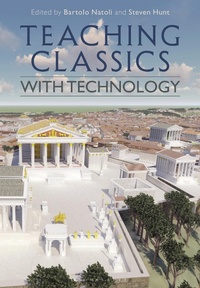
Teaching Classics with Technology
1st Edition
Published on 13. June 2019
264 pages
978-1-350-08626-5 (ISBN)
Description

The impact of ICT on the teaching of classical languages, literature and culture has not until now been extensively described and evaluated. Nevertheless, educational technology has made a huge difference to the ways in which Classics is taught at junior, senior and college level. The book brings together twenty major approaches to the use of technology in the classroom and presents them for a wide, international audience. It thus forms a record of current and developing practice, promotes further discussion and use among practitioners (teachers, learners and trainers) and offers suggestions for changes in pedagogical practices in the teaching of Classics for the better.
The many examples of practice from both UK and US perspectives are applicable to countries throughout the world where Classics is being taught. The more traditional curricula of high-school education in the UK and Europe are drawing more and more on edutech, whereas educational jurisdictions in the US are increasingly expecting high-school students to use ICT in all lessons, with some actively dissuading schools from using traditional printed textbooks. This book presents school teachers with a vital resource as they adapt to this use of educational technology in Classics teaching. This is no less pertinent at university level, in the UK and US, where pedagogy tends to follow traditionalist paradigms: this book offers lecturers frameworks for understanding and assimilating the models of teaching and learning which are prevalent in schools and experienced by their students.
The many examples of practice from both UK and US perspectives are applicable to countries throughout the world where Classics is being taught. The more traditional curricula of high-school education in the UK and Europe are drawing more and more on edutech, whereas educational jurisdictions in the US are increasingly expecting high-school students to use ICT in all lessons, with some actively dissuading schools from using traditional printed textbooks. This book presents school teachers with a vital resource as they adapt to this use of educational technology in Classics teaching. This is no less pertinent at university level, in the UK and US, where pedagogy tends to follow traditionalist paradigms: this book offers lecturers frameworks for understanding and assimilating the models of teaching and learning which are prevalent in schools and experienced by their students.
More details
Edition
1. Auflage
Language
English
Place of publication
London
United Kingdom
Publishing group
Bloomsbury Publishing PLC
Target group
College/higher education
Illustrations
30 bw illus
ISBN-13
978-1-350-08626-5 (9781350086265)
Copyright in bibliographic data and cover images is held by Nielsen Book Services Limited or by the publishers or by their respective licensors: all rights reserved.
Schweitzer Classification
Other editions
Additional editions
Bartolo Natoli | Steven Hunt
Teaching Classics with Technology
Book
06/2019
Bloomsbury Academic
€41.10
Shipment within 15-20 days
Persons
Bartolo Natoli is Lecturer in Classics at Randolph-Macon College, USA. As well as his PhD in Classics, he holds a Masters in Education with an emphasis in educational technology and distance learning, and is editor for the Classical Journal Forum, a peer-reviewed and pedagogically focused publication. He has served on the American Council for the Teaching of Foreign Languages steering committee for the refashioning of US national standards for Classical language instruction with an emphasis on technology.
Steven Hunt is Subject Lecturer of the PGCE in Classics at the University of Cambridge, UK. He has taught Classics for over twenty years in state comprehensive schools and is author of Starting to Teach Latin (Bloomsbury Academic, 2016) and an Editor of Forward with Classics (Bloomsbury Academic, 2018). Steve is Editor of the Journal of Classics Teaching, contributes regularly to CPD events at national and international levels, and is a consultant and trainer for the UK charity Classics for All.
Steven Hunt is Subject Lecturer of the PGCE in Classics at the University of Cambridge, UK. He has taught Classics for over twenty years in state comprehensive schools and is author of Starting to Teach Latin (Bloomsbury Academic, 2016) and an Editor of Forward with Classics (Bloomsbury Academic, 2018). Steve is Editor of the Journal of Classics Teaching, contributes regularly to CPD events at national and international levels, and is a consultant and trainer for the UK charity Classics for All.
Content
Contents
List of Figures
Editors and Contributors
Foreword Kenneth Kitchell, independent scholar, USA
Acknowledgements
Introduction Bartolo Natoli, Randolph-Macon College, USA and Steven Hunt, University of Cambridge, UK
Part I Blended and Distance Models
1 Flipping Romans: experiments in using technology for teaching in higher education Kate Gilliver, Cardiff University, UK
2 Auream quisquis mediocritatem diligit: The Joyful Learning Community Model for Learning Latin Online Justin Schwamm, independent scholar, USA
3 Distance Learning Latin Verity Walden, independent scholar, UK
4 Making IT Count: Measuring Student Engagement with Online Latin Resources at the Open University Mair Lloyd, independent scholar, UK and James Robson, Open University, UK
5 VLW, Latin Literature, and Student Voice Elizabeth Lewis, independent scholar, UK
6 Going Digital: The Principles behind CyberCaesar Alan Chadwick, independent scholar, UK
7 Una Vita: Exploring the Relationship between Play, Learning Science, and Cultural Competency Stephen Slota, University of Connecticut, USA and Kevin Ballestrini, independent scholar, USA
Part II Classics without Language: Literature, Culture, and Outreach Models
8 Using Virtual Learning Environments for Classics Outreach Emma Searle, independent scholar, UK
9 From Research on Roman History into Cartoons and Outreach to UK Schools Ray Laurence, Macquarie University, Australia
10 Vase Animations and Primary-Aged Learners Sonya Nevin, independent scholar, UK
11 Sketchup and digital modelling for Classics Matthew Nicholls, University of Reading, UK
12 iPad Technology and the Classics Classroom Caron Downes, independent scholar, UK
13 Just-in-time learning: Using handheld voting devices in the undergraduate lecture room Helen Lovatt, University of Nottingham, UK
14 Teaching the Geography of the Ancient World Scott Arcenas, Dartmouth College, USA
Part III Using Technology in the Ancient Language Classroom
15 Bridging the Gap between Students and Antiquity: Language Acquisition Videos with Minecraft and CI/TPRS Jessie Craft, independent scholar, USA
16 On Stage and Screen: 'Big Book' Latin and Dialogic Teaching Steven Hunt, University of Cambridge, UK
17 Using Annotations in Google Docs to Foster Authentic Classics Learning Roger Travis, University of Connecticut, USA
18 Project-Based Learning, Technology, and the Advanced Language Classroom Bartolo Natoli, Randolph-Macon College, USA
19 In the Classroom with Multi-Modal Teaching Lisa Hay, independent scholar, UK
Appendix I Glossary of terms
Appendix II Comparison of UK and US Educational Systems
Index
List of Figures
Editors and Contributors
Foreword Kenneth Kitchell, independent scholar, USA
Acknowledgements
Introduction Bartolo Natoli, Randolph-Macon College, USA and Steven Hunt, University of Cambridge, UK
Part I Blended and Distance Models
1 Flipping Romans: experiments in using technology for teaching in higher education Kate Gilliver, Cardiff University, UK
2 Auream quisquis mediocritatem diligit: The Joyful Learning Community Model for Learning Latin Online Justin Schwamm, independent scholar, USA
3 Distance Learning Latin Verity Walden, independent scholar, UK
4 Making IT Count: Measuring Student Engagement with Online Latin Resources at the Open University Mair Lloyd, independent scholar, UK and James Robson, Open University, UK
5 VLW, Latin Literature, and Student Voice Elizabeth Lewis, independent scholar, UK
6 Going Digital: The Principles behind CyberCaesar Alan Chadwick, independent scholar, UK
7 Una Vita: Exploring the Relationship between Play, Learning Science, and Cultural Competency Stephen Slota, University of Connecticut, USA and Kevin Ballestrini, independent scholar, USA
Part II Classics without Language: Literature, Culture, and Outreach Models
8 Using Virtual Learning Environments for Classics Outreach Emma Searle, independent scholar, UK
9 From Research on Roman History into Cartoons and Outreach to UK Schools Ray Laurence, Macquarie University, Australia
10 Vase Animations and Primary-Aged Learners Sonya Nevin, independent scholar, UK
11 Sketchup and digital modelling for Classics Matthew Nicholls, University of Reading, UK
12 iPad Technology and the Classics Classroom Caron Downes, independent scholar, UK
13 Just-in-time learning: Using handheld voting devices in the undergraduate lecture room Helen Lovatt, University of Nottingham, UK
14 Teaching the Geography of the Ancient World Scott Arcenas, Dartmouth College, USA
Part III Using Technology in the Ancient Language Classroom
15 Bridging the Gap between Students and Antiquity: Language Acquisition Videos with Minecraft and CI/TPRS Jessie Craft, independent scholar, USA
16 On Stage and Screen: 'Big Book' Latin and Dialogic Teaching Steven Hunt, University of Cambridge, UK
17 Using Annotations in Google Docs to Foster Authentic Classics Learning Roger Travis, University of Connecticut, USA
18 Project-Based Learning, Technology, and the Advanced Language Classroom Bartolo Natoli, Randolph-Macon College, USA
19 In the Classroom with Multi-Modal Teaching Lisa Hay, independent scholar, UK
Appendix I Glossary of terms
Appendix II Comparison of UK and US Educational Systems
Index
