

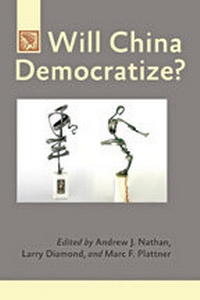
Will China Democratize?
Published on 27. October 2013
336 pages
978-1-4214-1244-3 (ISBN)
Description

This collection of articles from the Journal of Democracy considers the prospects for democracy in China.
While China has achieved extraordinary economic success as it has moved toward open markets and international trade, its leadership maintains an authoritarian grip, repressing political movements, controlling all internet traffic, and opposing any democratic activity. Because of its huge population, more than half the people in the world who lack political freedom live in China. Its undemocratic example is attractive to other authoritarian regimes. But can China continue its growth without political reform? In Will China Democratize?, Andrew J. Nathan, Larry Diamond, and Marc F. Plattner present valuable analysis for anyone interested in this significant yet perplexing question.
Since the Journal of Democracy's very first issue in January 1990, which featured articles reflecting on the then-recent Tiananmen Square massacre, the Journal has regularly published articles about China and its politics. By bringing together the wide spectrum of views that have appeared in the Journal's pages-from contributors including Fang Lizhi, Perry Link, Michel Oksenberg, Minxin Pei, Henry S. Rowen, and Nobel laureate Liu Xiaobo-Will China Democratize? provides a clear view of the complex forces driving change in China's regime and society.
Whether China will democratize-and if so, when and how-has not become any easier to answer today, but it is more crucial for the future of international politics than ever before.
While China has achieved extraordinary economic success as it has moved toward open markets and international trade, its leadership maintains an authoritarian grip, repressing political movements, controlling all internet traffic, and opposing any democratic activity. Because of its huge population, more than half the people in the world who lack political freedom live in China. Its undemocratic example is attractive to other authoritarian regimes. But can China continue its growth without political reform? In Will China Democratize?, Andrew J. Nathan, Larry Diamond, and Marc F. Plattner present valuable analysis for anyone interested in this significant yet perplexing question.
Since the Journal of Democracy's very first issue in January 1990, which featured articles reflecting on the then-recent Tiananmen Square massacre, the Journal has regularly published articles about China and its politics. By bringing together the wide spectrum of views that have appeared in the Journal's pages-from contributors including Fang Lizhi, Perry Link, Michel Oksenberg, Minxin Pei, Henry S. Rowen, and Nobel laureate Liu Xiaobo-Will China Democratize? provides a clear view of the complex forces driving change in China's regime and society.
Whether China will democratize-and if so, when and how-has not become any easier to answer today, but it is more crucial for the future of international politics than ever before.
More details
Series
Language
English
Place of publication
Baltimore
United States
Target group
College/higher education
Illustrations
1 s/w Photographie bzw. Rasterbild
1 Halftones, black and white
File size
2,13 MB
ISBN-13
978-1-4214-1244-3 (9781421412443)
DOI
10.1353/book.49246
Copyright in bibliographic data and cover images is held by Nielsen Book Services Limited or by the publishers or by their respective licensors: all rights reserved.
Schweitzer Classification
Other editions
Additional editions
Andrew J. Nathan | Larry Diamond | Marc F. Plattner
Will China Democratize?
Book
10/2013
Johns Hopkins University Press
€35.00
Article not available at the moment
Persons
Andrew J. Nathan is a professor of political science at Columbia University, specializing in Chinese politics, foreign policy, and human rights. Larry Diamond is senior fellow at the Hoover Institution and the Freeman Spogli Institute for International Studies at Stanford University, where he directs the Center on Democracy, Development, and the Rule of Law. Marc F. Plattner is vice president for research and studies at the National Endowment for Democracy. Plattner and Diamond are coeditors of the Journal of Democracy.
Content
Acknowledgments
Introduction
Prologue
Peering Over The Great Wall
Part I: Scenarios
Chapter 1. When Will the Chinese People Be Free?
Chapter 2. Confronting a Classic Dilemma
Chapter 3. A "Gray" Transformation
Chapter 4. The Halting Advance of Pluralism
Chapter 5. Top-Level Reform or Bottom-Up Revolution?
Chapter 6. Current Trends and Future Prospects
Chapter 7. Authoritarian Resilience
Chapter 8. The End of Communism
Chapter 9. The Rise of the Technocrats
Chapter 10. The Limits of Authoritarian Resilience
Chapter 11. Is CCP Rule Fragile or Resilient?
Chapter 12. The Taiwan Factor
Chapter 13. Foreseeing the Unforeseeable
Part II: Social Forces
Chapter 14. Authoritarianism and Contestation
Chapter 15. Rural Protest
Chapter 16. The Labor Movement
Chapter 17. The New Inequality
Chapter 18. The Troubled Periphery
Chapter 19. The Upsurge of Religion in China
Chapter 20. Classical Liberalism Catches On in China
Chapter 21. China's Constitutionalist Option
Chapter 22. The Massacre's Long Shadow
Chapter 23. Goodbye to Gradualism
Chapter 24. The Battle for the Chinese Internet
Chapter 25. From "Fart People" to Citizens
Chapter 26. China's "Networked Authoritarianism"
Chapter 27. The Turn Against Legal Reform
Chapter 28. The Rising Cost of Stability
Epilogue
Two Essays on China's Quest for Democracy
Index
Introduction
Prologue
Peering Over The Great Wall
Part I: Scenarios
Chapter 1. When Will the Chinese People Be Free?
Chapter 2. Confronting a Classic Dilemma
Chapter 3. A "Gray" Transformation
Chapter 4. The Halting Advance of Pluralism
Chapter 5. Top-Level Reform or Bottom-Up Revolution?
Chapter 6. Current Trends and Future Prospects
Chapter 7. Authoritarian Resilience
Chapter 8. The End of Communism
Chapter 9. The Rise of the Technocrats
Chapter 10. The Limits of Authoritarian Resilience
Chapter 11. Is CCP Rule Fragile or Resilient?
Chapter 12. The Taiwan Factor
Chapter 13. Foreseeing the Unforeseeable
Part II: Social Forces
Chapter 14. Authoritarianism and Contestation
Chapter 15. Rural Protest
Chapter 16. The Labor Movement
Chapter 17. The New Inequality
Chapter 18. The Troubled Periphery
Chapter 19. The Upsurge of Religion in China
Chapter 20. Classical Liberalism Catches On in China
Chapter 21. China's Constitutionalist Option
Chapter 22. The Massacre's Long Shadow
Chapter 23. Goodbye to Gradualism
Chapter 24. The Battle for the Chinese Internet
Chapter 25. From "Fart People" to Citizens
Chapter 26. China's "Networked Authoritarianism"
Chapter 27. The Turn Against Legal Reform
Chapter 28. The Rising Cost of Stability
Epilogue
Two Essays on China's Quest for Democracy
Index
