


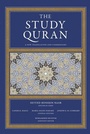
The Study Quran
Description

The Study Quran is a historic and groundbreaking work, produced by a distinguished team of Islamic studies scholars led by Seyyed Hossein Nasr, which offers:
A new English translation of the Quran that is accurate, accessible, and reliable in how it renders this sacred text
A wide-ranging verse-by-verse commentary that brings together the most respected and distinguished traditions of metaphysical, spiritual, theological, and legal interpretation of the Quran within Islam
A helpful introduction to each su¯rah that provides an overview and background of its teachings
Essays by fifteen internationally renowned scholars on how to read and understand the Quran and its role in shaping Islamic civilization
A beautiful two-color, two-column design that presents the sacred text and commentary in the spirit of traditional Quran manuscripts
Maps, a time line of historical events, comprehensive indexes, and other features to aid reading
The Study Quran provides a service never before available to readers of English: a scholarly yet accessible resource where one can quickly and easily explore how Muslims have interpreted the Quran through the centuries to the present day. An invaluable resource for scholars and students of all backgrounds, and especially to Muslims who want to deepen their understanding of their own tradition, The Study Quran is a much-needed guide in a time when confusion about the Quran and Islam is so prevalent.
An unparalleled resource for studying a sacred text
Renowned Muslim and Islamic scholar Seyyed Hossein Nasr and a team of editors provide a window into how the Quran has been understood by Muslims through the centuries. For the first time, scholars and students of all backgrounds have a clear and reliable resource in English for exploring the history of interpretation for any passage in the Quran.
?In our post-9/11 world, the Quran is becoming a more public document in the West than it has ever been throughout its history. Ultimately, this has the potential to validate misunderstanding as easily as it affords insight into the meaning of the text for Muslims. In this context, The Study Quran could not be more timely. This painstaking work will do much to enlighten and inform the reading strategies of all who seek to understand the Holy Writ of Islam, especially as it relates to the beliefs and practices of Muslims.??Sherman A. Jackson, King Faisal Chair in Islamic Thought and Culture at the University of Southern California
?A monument of religious literature in its own right, The Study Quran presents the sacred text in a meticulous new English rendering. One of this ambitious project's greatest strengths is the breadth and variety of exegetical sources and methods that inform the commentary throughout?most impressive.??John Renard, Professor of Medieval Islam at Saint Louis University
?A truly magisterial and the most comprehensive study of the Quran to date.??Asma Afsaruddin, Chair of the Department of Near Eastern Languages and Cultures at Indiana University, Bloomington
?By giving attention to a wide range of commentators, the editors capture the diversity and depth of the exegetical ideas that have been brought to the Quran?a useful resource.??Peter Adamson, Professor of Ancient and Medieval Philosophy at King's College London
?A huge and significant scholarly undertaking?a major service to Islamic studies.??Jonathan Brown, Associate Director of the Prince Alwaleed bin Talal Center for Muslim-Christian Understanding at Georgetown University
More details
Other editions
Additional editions

Persons
Seyyed Hossein Nasr is university professor of Islamic Studies at George Washington University. Author of over fifty books, Professor Nasr is a well-known and highly respected intellectual figure both in the West and in the Islamic world. Born in Tehran, raised from the age of twelve in the United States, and a graduate of MIT and Harvard University, Nasr is well qualified to explain Islam to a Western audience. He appears frequently on Meet the Press, as well as other national news shows.
Content
- Intro
- Maps
- Title Page
- Contents
- Editorial Board
- Editors' Contributions
- Abbreviations
- Arabic Transliteration and Pronunciation
- General Introduction, Seyyed Hossein Nasr
- Approaching The Study Quran
- Understanding the Citations in the Commentary
- Commentator Key
- The Quran: Translation and Commentary
- 1. The Opening, al-Fati?ah
- Commentary
- 2. The Cow, al-Baqarah
- Commentary
- 3. The House of ?Imran, Al ?Imran
- Commentary
- 4. Women, al-Nisa?
- Commentary
- 5. The Table Spread, al-Ma?idah
- Commentary
- 6. The Cattle, al-An?am
- Commentary
- 7. The Heights, al-A?raf
- Commentary
- 8. The Spoils, al-Anfal
- Commentary
- 9. Repentance, al-Tawbah
- Commentary
- 10. Jonah, Yunus
- Commentary
- 11. Hud, Hud
- Commentary
- 12. Joseph, Yusuf
- Commentary
- 13. The Thunder, al-Ra?d
- Commentary
- 14. Abraham, Ibrahim
- Commentary
- 15. ?ijr, al-?ijr
- Commentary
- 16. The Bee, al-Na?l
- Commentary
- 17. The Night Journey, al-Isra?
- Commentary
- 18. The Cave, al-Kahf
- Commentary
- 19. Mary, Maryam
- Commentary
- 20. ?a Ha, ?a Ha
- Commentary
- 21. The Prophets, al-Anbiya?
- Commentary
- 22. The Pilgrimage, al-?ajj
- Commentary
- 23. The Believers, al-Mu?minun
- Commentary
- 24. Light, al-Nur
- Commentary
- 25. The Criterion, al-Furqan
- Commentary
- 26. The Poets, al-Shu?ara?
- Commentary
- 27. The Ants, al-Naml
- Commentary
- 28. The Story, al-Qa?a?
- Commentary
- 29. The Spider, al-?Ankabut
- Commentary
- 30. The Byzantines, al-Rum
- Commentary
- 31. Luqman, Luqman
- Commentary
- 32. Prostration, al-Sajdah
- Commentary
- 33. The Parties, al-A?zab
- Commentary
- 34. Sheba, Saba?
- Commentary
- 35. The Originator, Fa?ir
- Commentary
- 36. Ya Sin, Ya Sin
- Commentary
- 37. Those Ranged in Ranks, al-?affat
- Commentary
- 38. ?ad, ?ad
- Commentary
- 39. The Throngs, al-Zumar
- Commentary
- 40. The Forgiver, Ghafir
- Commentary
- 41. Expounded, Fu??ilat
- Commentary
- 42. Counsel, al-Shura
- Commentary
- 43. Gold Ornaments, al-Zukhruf
- Commentary
- 44. Smoke, al-Dukhan
- Commentary
- 45. Upon Their Knees, al-Jathiyah
- Commentary
- 46. The Sand Dunes, al-A?qaf
- Commentary
- 47. Muhammad, Mu?ammad
- Commentary
- 48. Victory, al-Fat?
- Commentary
- 49. The Private Apartments, al-?ujurat
- Commentary
- 50. Qaf, Qaf
- Commentary
- 51. The Scatterers, al-Dhariyat
- Commentary
- 52. The Mount, al-?ur
- Commentary
- 53. The Star, al-Najm
- Commentary
- 54. The Moon, al-Qamar
- Commentary
- 55. The Compassionate, al-Ra?man
- Commentary
- 56. The Event, al-Waqi?ah
- Commentary
- 57. Iron, al-?adid
- Commentary
- 58. She Who Disputes, al-Mujadilah
- Commentary
- 59. The Gathering, al-?ashr
- Commentary
- 60. She Who Is Examined, al-Mumta?anah
- Commentary
- 61. The Ranks, al-?aff
- Commentary
- 62. The Congregational Prayer, al-Jumu?ah
- Commentary
- 63. The Hypocrites, al-Munafiqun
- Commentary
- 64. Mutual Dispossession, al-Taghabun
- Commentary
- 65. Divorce, al-?alaq
- Commentary
- 66. Forbiddance, al-Ta?rim
- Commentary
- 67. Sovereignty, al-Mulk
- Commentary
- 68. The Pen, al-Qalam
- Commentary
- 69. The Undeniable Reality, al-?aqqah
- Commentary
- 70. The Ascending Ways, al-Ma?arij
- Commentary
- 71. Noah, Nu?
- Commentary
- 72. The Jinn, al-Jinn
- Commentary
- 73. The Enwrapped One, al-Muzzammil
- Commentary
- 74. The Covered One, al-Muddaththir
- Commentary
- 75. The Resurrection, al-Qiyamah
- Commentary
- 76. Man, al-Insan
- Commentary
- 77. Those Sent Forth, al-Mursalat
- Commentary
- 78. The Tiding, al-Naba?
- Commentary
- 79. The Wresters, al-Nazi?at
- Commentary
- 80. He Frowned, ?Abasa
- Commentary
- 81. The Enfolding, al-Takwir
- Commentary
- 82. The Cleaving Asunder, al-Infi?ar
- Commentary
- 83. Those Who Defraud, al-Mu?affifin
- Commentary
- 84. The Sundering, al-Inshiqaq
- Commentary
- 85. The Constellations, al-Buruj
- Commentary
- 86. What Comes by Night, al-?ariq
- Commentary
- 87. The Most High, al-A?la
- Commentary
- 88. The Overwhelming Event, al-Ghashiyah
- Commentary
- 89. The Dawn, al-Fajr
- Commentary
- 90. The Land, al-Balad
- Commentary
- 91. The Sun, al-Shams
- Commentary
- 92. The Night, al-Layl
- Commentary
- 93. The Morning Brightness, al-?u?a
- Commentary
- 94. Expansion, al-Shar?
- Commentary
- 95. The Fig, al-Tin
- Commentary
- 96. The Blood Clot, al-?Alaq
- Commentary
- 97. Power, al-Qadr
- Commentary
- 98. The Clear Proof, al-Bayyinah
- Commentary
- 99. The Earthquake, al-Zalzalah
- Commentary
- 100. The Chargers, al-?Adiyat
- Commentary
- 101. The Calamity, al-Qari?ah
- Commentary
- 102. Vying for Increase, al-Takathur
- Commentary
- 103. The Declining Day, al-?A?r
- Commentary
- 104. The Slanderer, al-Humazah
- Commentary
- 105. The Elephant, al-Fil
- Commentary
- 106. Quraysh, Quraysh
- Commentary
- 107. Small Kindnesses, al-Ma?un
- Commentary
- 108. Abundant Good, al-Kawthar
- Commentary
- 109. The Disbelievers, al-Kafirun
- Commentary
- 110. Help, al-Na?r
- Commentary
- 111. The Palm Fiber, al-Masad
- Commentary
- 112. Sincerity, al-Ikhla?
- Commentary
- 113. The Daybreak, al-Falaq
- Commentary
- 114. Mankind, al-Nas
- Commentary
- Essays
- How to Read the Quran: Ingrid Mattson
- The Quran in Translation: Joseph Lumbard
- The Islamic View of the Quran: Muhammad Mustafa al-Azami
- Quranic Arabic: Its Characteristics and Impact on Arabic Language and Literature and the Languages and Literatures of Other Islamic Peoples: Muhammad Abdel Haleem
- Quranic Commentaries: Walid Saleh
- Traditions of Esoteric and Sapiential Quranic Commentary: Toby Mayer
- Scientific Commentary on the Quran: Muzaffar Iqbal
- The Quran as Source of Islamic Law: A?mad Mu?ammad al-?ayyib
- The Quran and Schools of Islamic Theology and Philosophy: Mu??afa Mu?aqqiq Damad
- The Quran and Sufism: William C. Chittick
- The Quran and Islamic Art: Jean-Louis Michon
- The Quranic View of Sacred History and Other Religions: Joseph Lumbard
- Quranic Ethics, Human Rights, and Society: Maria Massi Dakake
- Conquest and Conversion, War and Peace in the Quran: Caner K. Dagli
- Death, Dying, and the Afterlife in the Quran: Hamza Yusuf
- Essay Author Biographies
- Acknowledgments
- Appendix A: ?adith Citations
- Appendix B: Time Line of Major Events Related to the Quran
- Appendix C: Biographies of Commentators
- Index
- Copyright
- About the Publisher
