

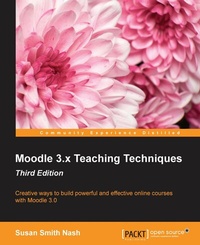
Moodle 3.x Teaching Techniques
Creative ways to build powerful and effective online courses with Moodle 3.0
3rd Edition
Published on 8. July 2025
240 pages
978-1-78646-766-9 (ISBN)
Description

Creative ways to build powerful and effective online courses with Moodle 3.0
Key Features
Unleash your teaching talents and develop exciting, dynamic courses
Put together effective online courses that motivate students from all backgrounds, generations, and learning styles
Find powerful insights into developing more successful and educational courses
Book DescriptionMoodle, the world's most popular, free open-source Learning Management System (LMS) has released several new features and enhancements in its latest 3.0 release. More and more colleges, universities, and training providers are using Moodle, which has helped revolutionize e-learning with its flexible, reusable platform and components. This book brings together step-by-step, easy-to-follow instructions to leverage the full power of Moodle 3 to build highly interactive and engaging courses that run on a wide range of platforms including mobile and cloud. Beginning with developing an effective online course, you will write learning outcomes that align with Bloom's taxonomy and list the kinds of instructional materials that will work given one's goal. You will gradually move on to setting up different types of forums for discussions and incorporating multi-media from cloud-base sources. You will then focus on developing effective timed tests, self-scoring quizzes while organizing the content, building different lessons, and incorporating assessments. Lastly, you will dive into more advanced topics such as creating interactive templates for a full course by focussing on creating each element and create workshops and portfolios which encourage engagement and collaboration What you will learn
Create a dynamic learning environment using different techniques
Motivate your students to collaborate and demonstrate what they are learning and to create projects together
Develop materials you can re-use in your future courses
Create online workshops and galleries for your students to make presentations about what they have learned
Engage your students in team work that helps them connect course content with their experiences and prior learning
Develop high-quality courses that will last to create a personal inventory you can use and re-use
Who this book is forIf you want to unleash your teaching talents and develop exciting, dynamic courses that really get students moving forward, then this book is for you. Experienced Moodlers who want to upgrade to Moodle 3.0 will find powerful insights into developing more successful and educational courses.
Key Features
Unleash your teaching talents and develop exciting, dynamic courses
Put together effective online courses that motivate students from all backgrounds, generations, and learning styles
Find powerful insights into developing more successful and educational courses
Book DescriptionMoodle, the world's most popular, free open-source Learning Management System (LMS) has released several new features and enhancements in its latest 3.0 release. More and more colleges, universities, and training providers are using Moodle, which has helped revolutionize e-learning with its flexible, reusable platform and components. This book brings together step-by-step, easy-to-follow instructions to leverage the full power of Moodle 3 to build highly interactive and engaging courses that run on a wide range of platforms including mobile and cloud. Beginning with developing an effective online course, you will write learning outcomes that align with Bloom's taxonomy and list the kinds of instructional materials that will work given one's goal. You will gradually move on to setting up different types of forums for discussions and incorporating multi-media from cloud-base sources. You will then focus on developing effective timed tests, self-scoring quizzes while organizing the content, building different lessons, and incorporating assessments. Lastly, you will dive into more advanced topics such as creating interactive templates for a full course by focussing on creating each element and create workshops and portfolios which encourage engagement and collaboration What you will learn
Create a dynamic learning environment using different techniques
Motivate your students to collaborate and demonstrate what they are learning and to create projects together
Develop materials you can re-use in your future courses
Create online workshops and galleries for your students to make presentations about what they have learned
Engage your students in team work that helps them connect course content with their experiences and prior learning
Develop high-quality courses that will last to create a personal inventory you can use and re-use
Who this book is forIf you want to unleash your teaching talents and develop exciting, dynamic courses that really get students moving forward, then this book is for you. Experienced Moodlers who want to upgrade to Moodle 3.0 will find powerful insights into developing more successful and educational courses.
All prices
More details
Edition
3rd Revised edition
Language
English
Place of publication
Birmingham
United Kingdom
Target group
Professional and scholarly
US School Grade: College Graduate Student
Edition type
Revised edition
File size
21,43 MB
ISBN-13
978-1-78646-766-9 (9781786467669)
Copyright in bibliographic data and cover images is held by Nielsen Book Services Limited or by the publishers or by their respective licensors: all rights reserved.
Schweitzer Classification
Other editions
Additional editions
Susan Smith Nash
Moodle 3.x Teaching Techniques
Creative ways to build powerful and effective online courses with Moodle 3.0
Book
05/2016
3rd Edition
Packt Publishing
€55.50
Shipment within 3-4 weeks
Person
Nash Susan Smith :
Susan Smith Nash has been developing and administering online courses for more than 20 years for both academic and professional training purposes. She earned her Bachelor's of Science, Masters of Art, and Ph.D. at the University of Oklahoma. She has been widely published in the area of instructional design as well as in energy and economic development. Her books for Packt include Moodle E-Learning Course Development, Moodle 3.X Teaching Techniques, and Moodle Course Design Best Practices. Susan's interests include the development and promotion of new technologies and she enjoys studying films from the Golden Age of Mexican cinema, as well as hiking and tennis. Susan lives in Oklahoma, near her son and his family.
Susan Smith Nash has been developing and administering online courses for more than 20 years for both academic and professional training purposes. She earned her Bachelor's of Science, Masters of Art, and Ph.D. at the University of Oklahoma. She has been widely published in the area of instructional design as well as in energy and economic development. Her books for Packt include Moodle E-Learning Course Development, Moodle 3.X Teaching Techniques, and Moodle Course Design Best Practices. Susan's interests include the development and promotion of new technologies and she enjoys studying films from the Golden Age of Mexican cinema, as well as hiking and tennis. Susan lives in Oklahoma, near her son and his family.
Content
Table of Contents
DEVELOPING AN EFFECTIVE ONLINE COURSE
INSTRUCTIONAL MATERIAL
COLLABORATIVE ACTIVITIES
ASSESSMENT
LESSON SOLUTIONS
WIKI SOLUTIONS
GLOSSARY SOLUTIONS
THE CHOICE ACTIVITY
COURSE SOLUTIONS
WORKSHOP SOLUTION
PORTFOLIO/GALLERY SOLUTION
DEVELOPING AN EFFECTIVE ONLINE COURSE
INSTRUCTIONAL MATERIAL
COLLABORATIVE ACTIVITIES
ASSESSMENT
LESSON SOLUTIONS
WIKI SOLUTIONS
GLOSSARY SOLUTIONS
THE CHOICE ACTIVITY
COURSE SOLUTIONS
WORKSHOP SOLUTION
PORTFOLIO/GALLERY SOLUTION

