

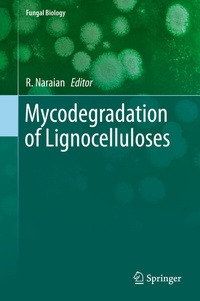
Mycodegradation of Lignocelluloses
Description

This book provides a knowledge-based view to the dynamic capabilities in an organization. The author integrates two existing views on gaining competitive advantage: the Knowledge View which suggests that the capability of organizations to learn faster than competitors is the only source of competitiveness; and the Dynamic Capability View which speculates that a fi rm's competitive advantage rests on it's ability to adapt to changes in the business environment. Using the IT sector in India as a case study, this book provides and tests a new framework-Knowledge-Based Dynamic Capabilities-in the prediction of competitive advantage in organizations.
More details
Other editions
Additional editions
Person
ramnarain_itrc@rediffmail.com
+91-9453095777
Content
Preface.- Compositional biochemistry of lignocellulosic resources and an overview of their Mycodegradation.- Basic principle and mechanism of lignocellulosic Mycodegradation.- Efficient fungal enzyme system working in mycodegradation of lingo celluloses.- Fungal biodiversity producing cellulose involved in efficient cellulolysis.- Fungal biodiversity producing laccase and peroxidase involved in efficient ligninolysis.- Fungal biodiversity producing enzymes involved in efficient xylanolysis.- Fungal cellulase system and mechanism of cellulolysis during Mycodegradation.- Fungal pectinase system and mechanism of pectinolysis during Mycodegradation.- Strategic role of lactases during mycodegradation of lignocelluloses.- Application of mycodegradation in mushroom production. Selective mycodegradation of lignin in paper and pulp industry.- Mycodegradation and bioconversion of lignocelluloses into bioactive compounds.- Fungal digestion/treatment of lignocelluloses for nutritious animal fodder.- Fungal hydrolysis and saccharification of lignocellulosic wastes for bioethanol production.- Application of mycodegradation in production of secondary metabolites.- Mycodegradation of lignocelluloses and release of common metabolites.- Multiple factors influencing the strategy of Mycodegradation.- Bioconversion of lignocelluloses into nutrient rich Agaricus mushroom.- Index.
