

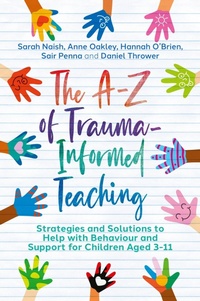
The A-Z of Trauma-Informed Teaching
Strategies and Solutions to Help with Behaviour and Support for Children Aged 3-11
Published on 21. August 2023
352 pages
978-1-83997-208-9 (ISBN)
Description

"This is a remarkable achievement. Like Batman's Utility belt for teachers. So many practical, wise, inspiring, and achievable ideas are packed in here. I can imagine this becoming as indispensable for teachers as Gray's Anatomy is for doctors..." - Stephen Fry
"If you want a book to assist with your work with traumatised children, choose this one. It is the best!" - Professor Peter Fonagy OBE, Chief Executive, Anna Freud National Centre for Children & Families
"Humane and grounded in science, this book could change lives." - Sir Norman Lamb, Chair of Maudsley NHS and Children and Young People's Mental Health Coalition
What does trauma-informed teaching really look like in the classroom, and can we really achieve it?
Maybe you, like many other teachers, will reach the end of a busy day feeling exhausted, deskilled and less than keen to dive into a book on the theory of trauma. Luckily you won't find any complex theory or jargon in this book, but you will gain an understanding of how small humans develop, how perplexing behaviours can be explained and learn inclusive strategies that will help all children in your classroom and school. Part 1 provides you with an explanation of what trauma-informed teaching involves. Then, Part 2 lists an A-Z of issues and behaviours for you to flip to in your busiest moments, ranging from Aggression and Lateness right through to Learning Challenges and Zzz (sleep issues).
Gain new understanding into the children in your classroom with this book offering you strategies to better support every child's mental health and resilience.
"If you want a book to assist with your work with traumatised children, choose this one. It is the best!" - Professor Peter Fonagy OBE, Chief Executive, Anna Freud National Centre for Children & Families
"Humane and grounded in science, this book could change lives." - Sir Norman Lamb, Chair of Maudsley NHS and Children and Young People's Mental Health Coalition
What does trauma-informed teaching really look like in the classroom, and can we really achieve it?
Maybe you, like many other teachers, will reach the end of a busy day feeling exhausted, deskilled and less than keen to dive into a book on the theory of trauma. Luckily you won't find any complex theory or jargon in this book, but you will gain an understanding of how small humans develop, how perplexing behaviours can be explained and learn inclusive strategies that will help all children in your classroom and school. Part 1 provides you with an explanation of what trauma-informed teaching involves. Then, Part 2 lists an A-Z of issues and behaviours for you to flip to in your busiest moments, ranging from Aggression and Lateness right through to Learning Challenges and Zzz (sleep issues).
Gain new understanding into the children in your classroom with this book offering you strategies to better support every child's mental health and resilience.
More details
Edition
Digital original
Language
English
Place of publication
London
United Kingdom
Target group
Primary & secondary/elementary & high school
College/higher education
Professional and scholarly
Edition type
Digital original
File size
1,74 MB
ISBN-13
978-1-83997-208-9 (9781839972089)
Copyright in bibliographic data and cover images is held by Nielsen Book Services Limited or by the publishers or by their respective licensors: all rights reserved.
Schweitzer Classification
Other editions
Additional editions
Sarah Naish | Anne Oakley | Hannah O'Brien
The A-Z of Trauma-Informed Teaching
Strategies and Solutions to Help with Behaviour and Support for Children Aged 3-11
Book
08/2023
Jessica Kingsley Publishers
€25.00
Shipment within 3-4 weeks
Persons
Sarah Naish is CEO and founder of the Centre for Excellence in Child Trauma. This talented author team combines extensive experience in both teaching and supporting children with developmental trauma and attachment difficulties, Anne Oakley is the Strategic Lead for Attachment and Trauma at The Wensum Trust but also supports Norfolk schools, Hannah O'Brien is founder of and CEO of Wickselm House Alternative Learning Centre, Sair Penna works within the Centre of Excellence in Child Trauma supporting the delivery of education, training, resources, peer support and therapeutic support to families who care for neurodivergent children and children who have experienced trauma and Daniel Thrower is CEO of The Wensum Trust.
Content
- Intro
- The A-Z of Trauma-Informed Teaching
- Cover
- Of related interest
- Title Page
- Copyright
- Contents
- Introduction
- Part 1 : The Basics
- 1. Common Behaviours and Underlying Factors
- 2. A Word about Developmental Trauma and Related Disorders
- 3. The Essential Foundations of Trauma-Informed Teaching
- 4. Responses and Strategies to Avoid
- 5. Useful Approaches and Responses for Trauma-Informed Teaching
- 6. Compassion Fatigue
- Part 2: A-Z of Behaviours and Challenges with Solutions
- A
- Absconding
- Affection ('professional love', touch, policies)
- After-school restraint collapse : See Chapter 2
- Aggression
- Anger : See Aggression, Arguing, Rudeness, Sleep Issues, and Chapter 1
- Anxiety
- Arguing (child vs teacher/support worker)
- Attention and listening
- Attention/attachment seeking/connection needing (approval seeking, connection seeking)
- Avoidant behaviours : See Choosing Difficulties, Controlling Behaviours, Defiance, Rejection, and Ch
- B
- Baby voice : See Immaturity
- Banging
- Bedtime issues
- Behaviour management policy: See Chapter 3, 'Discipline is learning too'
- Bereavement: See Grief
- Birthdays/Christmas and other celebrations
- Biting
- Blocked care: See Chapter 6
- Blocking: See Controlling Behaviours
- Boasting
- Bossiness: See Competitiveness, Controlling Behaviours, Sibling Rivalry
- Bottles (late use of): See Immaturity
- Breaking things: See Damaging, Sabotaging
- Brushing teeth
- C
- Cause and effect: See Chapter 1, 'Lack of cause-and-effect thinking'
- Changes in behaviour: See Transitions
- Charming
- Chewing
- Choosing difficulties
- Christmas: See Birthdays/Christmas and Other Celebrations, Rejection, Sabotaging, Transitions, Un
- Clinging: See Separation Anxiety
- Clothing (uniforms, refusal, removal in class)
- Cognitive learning difficulties: See Executive Functions, Learning Behaviours, Self-Regulation
- Compartmentalizing: See Manipulation
- Compassion fatigue: See Chapter 6
- Competitiveness
- Constant chatter/questions: See Nonsense Chatter/Nonsense Questions
- Contact time with family: See Co-Parenting, Sibling Rivalry
- Controlling behaviours
- Co-parenting
- Co-regulation: See Emotional Regulation, and Chapter 3, 'Trusted Adult'
- Cruelty to animals
- Curriculum: See Chapter 3, 'Bespoke curriculums'
- D
- Damaging
- Defiance
- Destruction: See Damaging
- Disorganization: See Clothing, Memory Issues and Disorganization
- Disrespecting: See Damaging, Rejection, Rudeness, Ungratefulness
- Disruption (calling out, interrupting, sabotaging group,: connection seeking, notice me)
- Dissociating: See Zoning Out
- E
- Emotional age
- Emotional regulation
- Empathy (lack of): See Chapter 1, 'Lack of empathy'
- Engagement : See Chapter 3, 'Bespoke curriculums'
- Escaping demands
- Exaggerating: See Boasting
- Executive functions: See Flexible Thinking, Impulsiveness, Learning Behaviours, Memory Issues and
- F
- False allegations
- Father's Day: See Birthdays/Christmas and Other Celebrations, Sabotaging
- Fearfulness/fear: See Chapter 1
- Fire drills
- Flexible thinking (lack of)
- Food issues
- Food issues
- Friendships
- G
- Goading: See Joking/Teasing
- Grief (sadness and loss)
- H
- Headbanging
- Hiding: See Transitions
- Hitting/kicking others : See Aggression
- Hitting self: See Damaging, Sabotaging, Self-Harm
- Holidays
- Homework
- Honeymoon period
- Hunger: See Food Issues, Mealtime Issues, and Chapter 1
- Hyperactivity: See Sensory Issues, Self-Regulation
- Hypervigilance: See Chapter 1
- Hypochondria
- I
- Identity See: Self-Awareness
- Ignoring: See Controlling Behaviours, Defiance, Lateness
- Imagination (real/pretend, love of malevolence): See Engagement, Play Skills
- Immaturity
- Impulsiveness
- Inclusion
- Interoception: See Chapter 1
- Isolation
- J
- Jealousy towards adults
- Joking/teasing
- K
- Keeping in mind
- Key adult/person/team/trusted adult
- Kicking: See Aggression
- L
- Lateness
- Learning behaviours : See Self-Regulation
- Licking
- Life story : See Chapter 3, 'Bespoke Curriculums'
- Lining up: See Learning Behaviours, Sensory Issues, Transitions
- Literalness: See Joking/Teasing, and Chapter 1
- Lived experience: See Therapy
- Losing things: See Memory Issues and Disorganization
- Lying
- M
- Making decisions: See Choosing Difficulties
- Manic laughter
- Manipulation
- Masking feelings: See Emotional Regulation, and Chapter 2, 'Fawn response' and 'After-school restra
- Mealtime issues
- Memory issues and disorganization
- Moaning: See Whining and Whinging
- Mother's or Father's Day: See Birthdays/Christmas and Other Celebrations, Sabotaging
- Mouthing: See Chewing, Sensory Issues
- N
- Natural consequences
- Night terrors/nightmares: See Sleep Issues
- Nonsense chatter/nonsense questions
- Non-compliance
- Not listening
- O
- Obsessions
- Offensive dialogue and interests
- Over-independence: See Rejection
- Overreacting: See Hypochondria, Sensory Issues
- P
- Parents - a partnership: See Chapter 2, 'After-school restraint collapse' and Chapter 3, 'Teamwork'
- Physical regulation (the need for)
- Play skills
- Playfulness
- Praise: See Rewards
- Progress, peaks and troughs: See Introduction, 'What is trauma-informed teaching?'
- Predictable routine
- Q
- Questioning: See Nonsense Chatter/Nonsense Questions
- R
- Refusing to follow instructions: See Defiance, Non-Compliance
- Refusing to say sorry: See Chapter 4
- Regression
- Rejection
- Relationships: See Key Adult/Person/Team/Trusted Adult, Manipulation, Time-In/Time-Out, and Cha
- Remorse
- Repair and restoration
- Rewards
- Rigidity: See Defiance, Executive Functions, Flexible Thinking
- Rudeness
- Running off
- S
- Sabotaging
- Sadness: See Chapter 1
- Safe place: See Chapter 3, 'Psychological safety'
- Saying sorry: See Remorse, and Chapter 4
- School refusal anxiety
- Screaming: See Shouting and Screaming
- Self-awareness
- Self-care: See Chapter 6
- Self-esteem (low or poor self-esteem)
- Self-harm
- Self-regulation (learning behaviours)
- Sensory issues
- Separation anxiety
- Sexualized behaviour
- Shame: See Chapter 1
- Sharing: See Competitiveness, Controlling Behaviours
- Shouting and screaming
- Sibling rivalry
- Siblings (sibling trauma bonds)
- Sleep issues
- Social skills (difficulties with)
- Spitting
- Splitting: See Manipulation
- Stealing (borrowing without asking) and hoarding
- Stress response: See Emotional Regulation, and Chapter 1, 'Fear'
- Sugar addiction: See Food Issues, Hunger, Overeating
- Swearing
- T
- Taking things literally: See Joking/Teasing, and Chapter 1
- Taking turns: See Competitiveness, Social Skills
- Therapy
- Throwing
- Time-in/time-out
- Toileting issues
- Tooth brushing
- Touch: See Chapter 3, 'Understanding emotions
- Toxic shame
- Transitions
- Triggers: See Transitions, and Chapter 3
- U
- Unable to be alone: See Anxiety, Nonsense Chatter/Nonsense Questions, Separation Anxiety
- Unable to make choices/decisions: See Choosing Difficulties
- Ungratefulness
- Uniform (dirty clothing, non-uniform, worry holes)
- V
- Violence: See Aggression
- W
- Waiting (concept of time)
- Whining and whinging
- Writing (pen/paper, shame)
- Y
- Yelling See Shouting and Screaming
- Z
- Zoning out (trauma-related absences/dissociative seizures, non-epileptic seizures)
- Zzz: See Sleep Issues
- About the Authors
- Acknowledgements
- Recommended Reading
- References
- Index
