

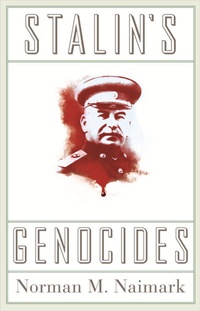
Stalin's Genocides
1st Edition
Published on 19. November 2018
176 pages
978-1-4008-3606-2 (ISBN)
Description

The chilling story of Stalin's crimes against humanity
Between the early 1930s and his death in 1953, Joseph Stalin had more than a million of his own citizens executed. Millions more fell victim to forced labor, deportation, famine, bloody massacres, and detention and interrogation by Stalin's henchmen. Stalin's Genocides is the chilling story of these crimes. The book puts forward the important argument that brutal mass killings under Stalin in the 1930s were indeed acts of genocide and that the Soviet dictator himself was behind them.
Norman Naimark, one of our most respected authorities on the Soviet era, challenges the widely held notion that Stalin's crimes do not constitute genocide, which the United Nations defines as the premeditated killing of a group of people because of their race, religion, or inherent national qualities. In this gripping book, Naimark explains how Stalin became a pitiless mass killer. He looks at the most consequential and harrowing episodes of Stalin's systematic destruction of his own populace-the liquidation and repression of the so-called kulaks, the Ukrainian famine, the purge of nationalities, and the Great Terror-and examines them in light of other genocides in history. In addition, Naimark compares Stalin's crimes with those of the most notorious genocidal killer of them all, Adolf Hitler.
Between the early 1930s and his death in 1953, Joseph Stalin had more than a million of his own citizens executed. Millions more fell victim to forced labor, deportation, famine, bloody massacres, and detention and interrogation by Stalin's henchmen. Stalin's Genocides is the chilling story of these crimes. The book puts forward the important argument that brutal mass killings under Stalin in the 1930s were indeed acts of genocide and that the Soviet dictator himself was behind them.
Norman Naimark, one of our most respected authorities on the Soviet era, challenges the widely held notion that Stalin's crimes do not constitute genocide, which the United Nations defines as the premeditated killing of a group of people because of their race, religion, or inherent national qualities. In this gripping book, Naimark explains how Stalin became a pitiless mass killer. He looks at the most consequential and harrowing episodes of Stalin's systematic destruction of his own populace-the liquidation and repression of the so-called kulaks, the Ukrainian famine, the purge of nationalities, and the Great Terror-and examines them in light of other genocides in history. In addition, Naimark compares Stalin's crimes with those of the most notorious genocidal killer of them all, Adolf Hitler.
All prices
More details
Other editions
Additional editions
Norman M. Naimark
Stalin's Genocides
Book
12/2011
Princeton University Press
€27.50
Shipment within 10-20 days
Person
Norman M. Naimark is the Robert and Florence McDonnell Professor of East European Studies at Stanford University. His books include Fires of Hatred: Ethnic Cleansing in Twentieth-Century Europe and The Russians in Germany: A History of the Soviet Zone of Occupation, 1945-1949.
Content
Acknowledgments vii
Introduction 1
Chapter 1: The Genocide Issue 15
Chapter 2: The Making of a Genocidaire 30
Chapter 3: Dekulakization 51
Chapter 4: The Holodomor 70
Chapter 5: Removing Nations 80
Chapter 6: The Great Terror 99
Chapter 7: The Crimes of Stalin and Hitler 121
Conclusions 131
Notes 139
Index 155
Introduction 1
Chapter 1: The Genocide Issue 15
Chapter 2: The Making of a Genocidaire 30
Chapter 3: Dekulakization 51
Chapter 4: The Holodomor 70
Chapter 5: Removing Nations 80
Chapter 6: The Great Terror 99
Chapter 7: The Crimes of Stalin and Hitler 121
Conclusions 131
Notes 139
Index 155

