

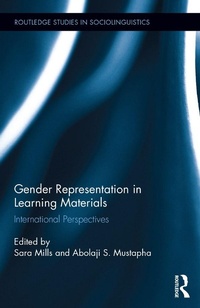
Gender Representation in Learning Materials
International Perspectives
Published on 11. August 2015
256 pages
978-1-317-65325-7 (ISBN)
Description

Representations of gender in learning materials convey an implicit message to students about attitudes towards culturally appropriate gender roles for women and men. This collection takes a linguistic approach to exploring theories about gender representation within the sphere of education and textbooks, and their effects on readers and students within an international context.
In the opening section, contributors discuss theories of representation and effect, challenging the conventional Althusserian model of interpellation, and acknowledging the challenges of applying Western feminist models within an international context. Following chapters provide detailed analyses focusing on a number of different countries: Australia, Japan, Brazil, Finland, Russia, Hong Kong, Nigeria, Germany, Qatar, Tanzania, and Poland. Through linguistic analysis of vocabulary associated with women and men, content analysis of what women and men say in textbooks, and discourse analysis of the types of linguistic moves associated with women and men, contributors evaluate the extent to which gendered representations in textbooks perpetuate stereotypical gender roles, what the impact may be on learners, and the ways that both teachers and learners interact and engage with these texts.
In the opening section, contributors discuss theories of representation and effect, challenging the conventional Althusserian model of interpellation, and acknowledging the challenges of applying Western feminist models within an international context. Following chapters provide detailed analyses focusing on a number of different countries: Australia, Japan, Brazil, Finland, Russia, Hong Kong, Nigeria, Germany, Qatar, Tanzania, and Poland. Through linguistic analysis of vocabulary associated with women and men, content analysis of what women and men say in textbooks, and discourse analysis of the types of linguistic moves associated with women and men, contributors evaluate the extent to which gendered representations in textbooks perpetuate stereotypical gender roles, what the impact may be on learners, and the ways that both teachers and learners interact and engage with these texts.
Reviews / Votes
'This collection of various representations of gender found in English Language Learning textbooks is a rich one with a new theoretical visions to the field as well as fresh explorations of textbooks from around the world. Mills and Mustapha have assembled an incredible variety of original explorations of how gender still matters and still reveals problematic societal assumptions.' -Allyson Jule, Trinity Western University, CanadaMore details
Series
Language
English
Place of publication
London
United Kingdom
Publishing group
Taylor & Francis Ltd
Target group
College/higher education
Illustrations
27 Tables, black and white; 4 Line drawings, black and white; 5 Halftones, black and white
File size
1,98 MB
ISBN-13
978-1-317-65325-7 (9781317653257)
Copyright in bibliographic data and cover images is held by Nielsen Book Services Limited or by the publishers or by their respective licensors: all rights reserved.
Schweitzer Classification
Other editions
Additional editions
Abolaji S. Mustapha | Sara Mills
Gender Representation in Learning Materials
International Perspectives
Book
02/2018
1st Edition
Routledge
€76.60
Shipment within 10-20 days
Abolaji S. Mustapha | Sara Mills
Gender Representation in Learning Materials
International Perspectives
Book
09/2015
1st Edition
Routledge
€233.30
Shipment within 10-20 days
Persons
Sara Mills is Research Professor in Linguistics at Sheffield Hallam University. She has published in the areas of feminist linguistics and politeness research, for example on language and sexism, gender and politeness. Her books include Gender and Politeness (2003) and Language, Gender and Feminism (with Mullany) (2011).
Abolaji S. Mustapha is Senior Lecturer at Lagos State University, Nigeria. He has published in the areas of gender, language policy, politeness, and multilingualism. His publications include Gender in Language Use (2010) Compliment response patterns in Nigerian English (2010) and The hegemony of the English language in Nigeria (2014).
Abolaji S. Mustapha is Senior Lecturer at Lagos State University, Nigeria. He has published in the areas of gender, language policy, politeness, and multilingualism. His publications include Gender in Language Use (2010) Compliment response patterns in Nigerian English (2010) and The hegemony of the English language in Nigeria (2014).
Content
Introduction Abolaji S. Mustapha and Sara Mills Part I: Theories of Representation in Relation to Textbooks 1. Gender Representation in Learning Materials Abolaji S. Mustapha and Sara Mills 2. Gender (Representation) in Foreign Language Textbooks: Avoiding Pitfalls and Moving On Jane Sunderland Part II: Textual Analysis 3. Gender Representation in Hong Kong Primary English-Language Textbooks: A Corpus Study Jackie Lee and Peter Collins 4. Innocent Maths? Gender Representations in German Maths Books Christine Ott 5. Gender Representations in EFL Textbooks in Turkey Ebru Bag and Yasemin Bayyurt 6. Gender Stereotyping and Linguistic Sexism in Qatari Teaching Materials Zohreh Eslami, Sunni Sonnenburg, Wei-Hong Ko, Fatma Hasan, and Fuhui Tong Part III: Beyond the Text 7. Textual Representations and Transformation in Teacher Masculinity Rosyln Appleby 8. Finnish Teachers Exploring Gender Bias in School Textbooks Liisa Tainio and Ulla Karvonen 9. Gender Positioning through Visual Images in English Language Textbooks in Nigeria Abolaji S. Mustapha 10. Gender Socialization through Literary Texts: A Study of Two Folk Tales Used in a Russian Preschool Ekaterina Moore 11. Constructing Gender and Sexuality in the EFL Classroom in Poland: Textbook Construction and Classroom Negotiation? Lukasz Pakula and Joanna Pawelczyk
