

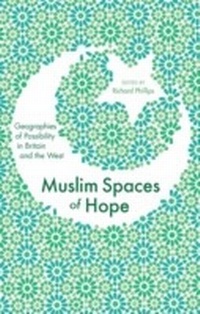
Muslim Spaces of Hope
Geographies of Possibility in Britain and the West
Zed Books Ltd (Publisher)
1st Edition
Published on 12. November 2009
280 pages
978-1-84813-302-0 (ISBN)
Description

Debates about contemporary Islam and Muslims in the West have taken some negative turns in the depressing atmosphere of the war on terror and its aftermath. This book argues that we have been too preoccupied with problems, not enough with solutions.
The increased mobilisation and scrutiny of Muslim identities has taken place in the context of a more general recasting of racial ideas and racism: a shift from overtly racial to ostensibly ethnic and cultural including religious categories within discourses of social difference. The targeting of Muslims has been associated with new forms of an older phenomenon: imperialism. New divisions between Muslims and others echo colonial binaries of black and white, colonised and coloniser, within practices of divide and rule.
This book speaks to others who have been marginalised and colonised, and to wider debates about social difference, oppression and liberation.
The increased mobilisation and scrutiny of Muslim identities has taken place in the context of a more general recasting of racial ideas and racism: a shift from overtly racial to ostensibly ethnic and cultural including religious categories within discourses of social difference. The targeting of Muslims has been associated with new forms of an older phenomenon: imperialism. New divisions between Muslims and others echo colonial binaries of black and white, colonised and coloniser, within practices of divide and rule.
This book speaks to others who have been marginalised and colonised, and to wider debates about social difference, oppression and liberation.
Reviews / Votes
As the scaremongering and counter-productive thinking that accompanied the "war on terror" makes way, this timely book offers much needed authoritative insights and nuanced ideas to replace the ignorance of fear with the spaces of hope. * Asim Siddiqui, The City Circle * Muslim Spaces of Hope provides a much needed positive contribution to academic discussions about Muslims in Britain. As well as interrogating a range of challenges that Muslims in the UK face on a daily basis the book highlights encouraging circumstances; points of compatibility, communication and cohesion; offers solutions and therefore the "spaces of hope" asserted in the title. An area of considerable deficit in the subject literature, this book recasts the debate within an optimistic and spatial framework. * ELizabeth Poole, Staffordshire University * The essays in this innovative volume variously recast, in convivial terms, the collaborative contexts that produce Muslim and Islamic spatialities in western countries. In transcending the stale vocabularies of "segregation" and "integration", this excellent interdisciplinary book uses the tools of academic critique to not only debunk myths, but inspire hope. A genuine achievement for mobilizing public debate that is both honest and optimistic. * Kay Anderson, University of Western Sydney * The book explores Muslim participation beyond rigid binary discourses of Identity politics, socio-economic depravation and "civilisation clashes" and instead charts positive Muslim engagement and social interaction from the global to the local. The publication is an invaluable resource for students of Islamic, cultural and postcolonial studies, geography, ethnicity and race, politics and sociology. It should also become required reading for anyone interested in the field of Islam and Muslims in the West. * Mohammad Seddon, University of Chester * Timely and hopeful...moving beyond the trope of victim or threat this collection shows Muslims engaging constructively and critically with many aspects of British society whether commerce, finance, charities or anti-war movements. It also points to the willingness of institutions, from scouting to housing associations, to adapt and make space for Muslim needs. * Philip Lewis, University of Bradford * This is a very important and interesting book. When talking about "Muslims in the West" one understands, through the different authors and approaches, that the main challenges are neither religious nor theological, and that it is time to speak out about issues such as racism, mistrust, unemployment, discrimination and empowerment. The West and Muslims will only be able to create true 'spaces of hope' by addressing the real challenges, and this is why this book is precious and relevant. * Tariq Ramadan, Oxford University *More details
Edition
1. Auflage
Language
English
Place of publication
London
United Kingdom
Publishing group
Bloomsbury Publishing PLC
Target group
College/higher education
Professional and scholarly
ISBN-13
978-1-84813-302-0 (9781848133020)
Copyright in bibliographic data and cover images is held by Nielsen Book Services Limited or by the publishers or by their respective licensors: all rights reserved.
Schweitzer Classification
Other editions
Additional editions
Muslim Spaces of Hope
Geographies of Possibility in Britain and the West
Book
11/2009
Zed Books Ltd
€87.50
Shipment within 3-4 weeks
Muslim Spaces of Hope
Geographies of Possibility in Britain and the West
Book
11/2009
Zed Books Ltd
€40.50
Shipment within 3-4 weeks
Persons
Richard Phillips teaches postcolonial criticism and cultural geography at the University of Liverpool, where he is Reader in Geography. His publications include Mapping Men and Empire: A Geography of Adventure (1997), Sex, Politics and Empire: A Postcolonial Geography (2006), and the co-edited Decentring Sexualities: Politics and Representations Beyond the Metropolis (2000). He is also the author of a series of articles for journals and magazines ranging from the Annals of the Association of American Geographers and Antipode: a Radical Journal of Geography, to Race & Class, and Red Pepper.
Content
Introduction: Muslim Geographies: Spaces of Hope? - Richard Phillips and Tahir Abbas
Part I: Spaces of Hope?
1. Spaces of Hope: Interventions - Ziauddin Sardar
2. Muslims in the West: Deconstructing Geographical Binaries - Peter Hopkins
3. The Hopeful and Exclusionary Politics of Islam in Australia: Constructing Alternative Geographies of Western Islam - Kevin Dunn and Alanna Kamp
Part II: Convivial Cities
4. Veils and Sales: Muslims and the Spaces of Postcolonial Fashion Retail - Reina Lewis
5. Citizenship and Faith: Muslim Scout Groups - Sarah Mills
6. The Utopian Space of the Islamic Bathhouse or Hammam - Magda Sibley and Fodil Fadli
7. Making space for Muslims: Housing for Bangladeshis in London - Ayona Datta
Part III: Economic and Political Empowerment
8. Muslim Economic Initiatives: Global Finance and Local Projects - Jane Pollard, Hilary Lim and Rajeswary Ampalavanar Brown
9. Muslims and the Anti-War Movements - Richard Phillips and Jamil Iqbal
10. Liberalising Islam: Creating Brits of the Islamic Persuasion - Sarah Glynn
Part IV: Integration and Resistance
11. British Muslims and 'Community Cohesion' Debates - Claire Dwyer and Varun Uberoi
12. Residential Integration: Evidence from the UK Census - Kevin Brice
13. Muslim-American Hyphenated Identity: Negotiating a Positive Path - Selcuk R. Sirin and Selen Imamo?
14. 'After 7/7': Challenging the Dominant Hegemony - Tahir Abbas
Part I: Spaces of Hope?
1. Spaces of Hope: Interventions - Ziauddin Sardar
2. Muslims in the West: Deconstructing Geographical Binaries - Peter Hopkins
3. The Hopeful and Exclusionary Politics of Islam in Australia: Constructing Alternative Geographies of Western Islam - Kevin Dunn and Alanna Kamp
Part II: Convivial Cities
4. Veils and Sales: Muslims and the Spaces of Postcolonial Fashion Retail - Reina Lewis
5. Citizenship and Faith: Muslim Scout Groups - Sarah Mills
6. The Utopian Space of the Islamic Bathhouse or Hammam - Magda Sibley and Fodil Fadli
7. Making space for Muslims: Housing for Bangladeshis in London - Ayona Datta
Part III: Economic and Political Empowerment
8. Muslim Economic Initiatives: Global Finance and Local Projects - Jane Pollard, Hilary Lim and Rajeswary Ampalavanar Brown
9. Muslims and the Anti-War Movements - Richard Phillips and Jamil Iqbal
10. Liberalising Islam: Creating Brits of the Islamic Persuasion - Sarah Glynn
Part IV: Integration and Resistance
11. British Muslims and 'Community Cohesion' Debates - Claire Dwyer and Varun Uberoi
12. Residential Integration: Evidence from the UK Census - Kevin Brice
13. Muslim-American Hyphenated Identity: Negotiating a Positive Path - Selcuk R. Sirin and Selen Imamo?
14. 'After 7/7': Challenging the Dominant Hegemony - Tahir Abbas
