

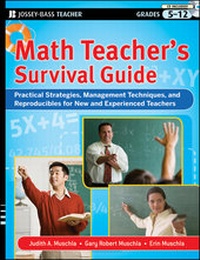
Math Teacher's Survival Guide
Practical Strategies, Management Techniques, and Reproducibles for New and Experienced Teachers, Grades 5-12
Published on 18. February 2010
352 pages
978-0-470-57493-5 (ISBN)
Description

Classroom-tested strategies to help new and experienced mathteachers thrive
* Math teachers must not only instruct their students in basicmathematical skills and concepts, they must also prepare them forstandardized tests, provide instruction in the use of technology,and teach problem-solving and critical-thinking skills. At the sametime, they must also manage their other responsibilities -taking attendance, planning, grading, record-keeping, disciplining,and communicating with parents and administrators. This bookprovides efficient and practical information on the managementskills necessary to succeed in this most challengingprofession.
* Offers realistic suggestions and strategies for planning anddelivering effective math instruction
* Helps math teachers achieve excellence and continue to beenthusiastic and successful in their teaching careers
* Includes reproducible forms to help math teachers stay on topof everything they need to do
* The Math Teacher's Survival Guide contains a wealth ofuseful tools and strategies that can help any math teacher succeedin the classroom.
More details
Other editions
Additional editions
Judith A. Muschla | Gary R. Muschla | Erin Muschla
Math Teacher's Survival Guide: Practical Strategies, Management Techniques, and Reproducibles for New and Experienced Teachers, Grades 5-12
Book
03/2010
1st Edition
Jossey-Bass
€31.00
Shipment within 10-20 days
Persons
Judith Muschla has taught mathematics in South River, NewJersey, for over twenty-five years. Gary Robert Muschla taughtreading, writing, and math for more than twenty-five years inSpotswood, New Jersey. Erin Muschla teaches 7th grade math atApplegarth Middle School in Monroe, New Jersey.
Gary and Judith are the coauthors of The Math Teacher's Book ofLists, Hands-on Math Projects with Real-Life Applications, MathStarters, The Geometry Teacher's Activities Kit, Math Smart, TheMath Teacher's Problem-a-Day, and Algebra Teacher's Activities Kit,all published by Jossey-Bass.
Content
- Math Teacher's Survival Guide: Practical Strategies, Management Techniques, and Reproducibles for New and Experienced Teachers, Grades 5-12
- Jossey-Bass Teacher
- About This Book
- The Authors
- Acknowledgments
- Contents
- Section One: Embracing the Profession of Teacher of Mathematics
- Traits of Great Math Teachers
- Meeting State Standards and District Math Goals
- School Policies and Procedures You Need to Know
- Professionalism and Common Sense
- Professionalism Outside the Classroom
- Maintaining Your Professional Expertise
- Quick Review for Embracing the Profession of Teacher of Mathematics
- Section Two: Before the First Day
- Starting the Year Early
- Greeting Administrators, Colleagues, and Support Staff
- Getting a Head Start on Paperwork
- Your Schedule and Class Lists
- Seating Charts
- Setting Up Your Classroom
- Preparing for the First Day
- Especially for the First-Year Math Teacher
- Quick Review for Before the First Day
- Section Three: The Math Teacher's Tools of the Trade
- Basic Supplies, Materials, and Equipment
- Common Math Manipulatives
- Sources for Math Materials and Manipulatives
- Technology
- Resources on the Internet
- Sources of Supplementary Teaching Materials
- Quick Review for the Math Teacher's Tools of the Trade
- Section Four: Becoming a Valued Member of the Staff
- Working Effectively with Others
- Committees and Teamwork
- Working Together in Sharing
- Getting Along with Others in Your School
- Evaluations for Math Teachers
- Becoming a Mentor for New Math Teachers
- After School and Beyond
- Quick Review for Becoming a Valued Member of the Staff
- Section Five: Organizing for Success
- Your Master Schedule for Organization
- The Value of an All-Purpose Binder
- Practical Routines
- Organizing Your Classroom
- Special Organizational Considerations When Sharing a Classroom
- Organizing Files
- Necessary Information to Maintain
- Managing Your Paper Load
- Taking Control of Time
- The Importance of Effective Substitute Plans
- Quick Review for Organizing for Success
- Section Six: Planning a Great First Day
- The First-Day Basics
- Providing an Overview of Your Math Class
- Learning About Your Students
- Providing a Math Activity on the First Day
- Handing Out Texts, Workbooks, and Other Materials
- Quick Review for Having a Great First Day
- Section Seven: Managing Your Math Classroom
- Establishing Efficient Classroom Routines
- Achieving a Smooth Flow of Classroom Traffic
- Creating a Productive Math Class
- Helping Your Students Learn to Follow Directions
- Quick Review for Managing Your Classroom
- Section Eight: Building a Positive Environment for Learning Math
- The Physical Classroom
- Setting a Tone of Respect and Courtesy
- Preventing and Responding to Bullying
- Creating a Positive Math Environment for Diverse Students
- Avoiding Gender and Ethnic Bias in Math Class
- Appreciating Cultural Diversity
- Helping Students Overcome Math Anxiety
- Quick Review for Building a Positive Environment for Learning Math
- Section Nine: Interacting with Your Students
- Maintaining a Professional Role with Your Students
- Getting to Know Your Students
- Guiding Students to Become Successful Math Students
- How to Conduct Successful Math Conferences with Students
- Preventing and Dealing with Disruptions
- Helping Students Cope with the Pressures of Being a Student
- Quick Review for Interacting with Your Students
- Section Ten: Designing Effective Math Lessons and Activities
- Making Time for Planning
- Planning a Variety of Math Lessons and Activities
- The Foundation of Successful Math Lessons and Activities
- Components of Effective Math Plans and Activities
- Types of Math Plans
- Overcoming Common Problems in Planning
- Incorporating Literature into Your Math Class
- Incorporating Writing into Your Math Class
- Quick Review for Designing Effective Math Lessons and Activities
- Section Eleven: Providing Effective Math Instruction
- Being a Facilitator of Learning
- Meeting the Needs of Diverse Learners Through Instruction
- Using Various Instructional Methods for Teaching
- Fostering Problem-Solving Skills in Your Students
- Motivating Your Students
- Improving Your Instructional Delivery Skills
- Quick Review for Providing Effective Math Instruction
- Section Twelve: Evaluating the Progress of Your Students
- Devising a Fair System of Grading
- Ways to Assess Student Learning
- Preparing Your Students for Standardized Math Tests
- Evaluating Assessment Results
- Record Keeping
- Quick Review for Evaluating the Progress of Your Students
- Section Thirteen: Managing Inappropriate Behavior
- Addressing Inappropriate Behavior in Your Math Class
- Involving Parents and Guardians in Addressing Inappropriate Behavior
- Involving Administrators in Addressing Inappropriate Behavior
- The Major Incident Report
- Common Examples of Inappropriate Behavior and How to Handle Them
- Quick Review for Managing Inappropriate Behavior
- Section Fourteen: Working with Parents and Guardians
- The Expectations of Parents and Guardians for Their Child's Math Teacher
- How to Make Parents and Guardians Partners in Math Education
- How Parents and Guardians Can Help Their Children with Math
- Preparing for and Conducting a Successful Back-to-School Night
- Conducting Successful Conferences with Parents and Guardians
- Dealing with Difficult Parents and Guardians
- Working with Parents and Guardians Who Speak Limited English
- Expanding Your Role as a Math Teacher
- Quick Review for Working with Parents and Guardians
- Section Fifteen: Keeping the Flame Burning
- Causes and Symptoms of Teacher Burnout
- Avoiding and Overcoming Teacher Burnout
- Becoming the Most Effective Math Teacher You Can Be
- Quick Review for Keeping the Flame Burning
- References and Suggested Reading
- Index
- How to Use the CD
