

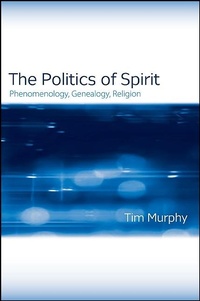
The Politics of Spirit
Phenomenology, Genealogy, Religion
1st Edition
Published on 28. December 2010
405 pages
978-1-4384-3289-2 (ISBN)
Description

A critical look at the development of the phenomenological approach to the study of religion, revealing its evaluative and metaphysical concepts.
All prices
More details
Series
Language
English
Place of publication
Basel/Berlin/Boston
United States
Target group
Professional and scholarly
Edition type
Digital original
Product notice
Reflowable
Illustrations
Total Illustrations: 0
Total Illustrations: 0
ISBN-13
978-1-4384-3289-2 (9781438432892)
Schweitzer Classification
Other editions
Additional editions
Book
07/2011
State University of New York Press
€37.00
Shipment within 10-20 days
Book
12/2010
State University of New York Press
€96.00
Shipment within 10-20 days
Person
Tim Murphy is an Associate Professor of Religious Studies at the University of Alabama. He is the author of Nietzsche, Metaphor, Religion, also published by SUNY Press, and Representing Religion: Essays in History, Theory, and Crisis.
Content
Acknowledgments
PART I. Introduction, Background, Methodological Issues
1. The Phenomenology of Religion: Introduction and Background
Traditional Historiography of the Phenomenology of Religion: Hegel versus Husserl
Geist and the Geisteswissenschaften in Nineteenth-Century Continental Thought
"Explanation versus Interpretation": Previous Critiques of the Phenomenology of Religion
The Pedigree of Classical Phenomenology of Religion
Terminology: "Phenomenology" and "History of Religions"
Authorial Stance and Thesis
2. Discourse, Text, Philosophemes: Elements of a Postcolonial-Genealogical Reading
Overview: Method and Rezeptionsgeschitche
Language (Langue) and Discourse
Postcolonial Discourse Theory
The Politics of Geist
PART II. Readings in the Discourse of the Phenomenology of Religion
3. Geist, History, Religion: Hegel and the Structure of Phenomenology and Religionswissenschaft
The Nature of Historical Change: Hegel's Articulation of the Concept of Entwicklung ("Development")
Geist and the Unity and Stages of History
"In" History: Reason, Morality, and the State
Geist and the Stages of Religious Self-Consciousness
Spirit as Life and as Community
4. Religion in Essence and Development: C. P. Tiele, Early Religionswissenschaft, and the Phenomenology of Religion
The Concept of "Entwicklung" (Development)
Ontology, or the Essence of Religion
History of Religion/s
5. "Experience, Expression, Understanding": Wilhelm Dilthey on Geist and the Methodology of the Geisteswissenschaft
Experience (Erlebnis)
Expression (Ausdruck)
Understanding (Verstehen)
Dilthey and Hegel/Geist und Natur
6. Geist, Nature, and History: The Phenomenology of Rudolf Otto
Geist versus Natur: The Structure of the Religious A Priori
"The Defi cient Rationalization and Moralization of Experience":"Primitive" Religion
The (Feminine) Passivity of the East versus the (Masculine) Vitality of the Gothic West
The Stage of Monotheism: Judaism and Islam versus
Christianity
Conclusion
7. Phenomenology as Empathetic Taxonomy: The Phenomenological Approaches of Chantepie de la Saussaye and W. B. Kristensen Chantepie: Religionswissenschaft as a Tripart Science
Phenomenology as Taxonomic Operation
Ethnographic Part
History of Religions
W. Brede Kristensen
The Representation of Religion
The Tripart Science: Philosophy, History, and Phenomenology in Religionswissenschaft
Phenomenological Limit
Classifi cation of Religions
8. Experience, Expression, Empathy: Gerardus van der Leeuw's Phenomenological Program
Subject/Object; Experience/Expression; Inward/Outward
Structure, Meaning, and Phenomenological Reconstruction
Religion in History
Limits of Religionsphänomenologie
9. Overcoming the Foreign through Experience, Expression, Understanding: The Method/ology of Joachim Wach
Experience
Expression
Understanding
History of Religions, Society, and Culture
10. The Total Hermeneutics of the New Humanism: Mircea Eliade's Agenda for Religionswissenschaft
The Grounding of the Sacred as an "Irreducible Element"
Expression and Experience
Structure, History, Intelligibility
Religionswissenschaft, a Total Hermeneutic and the New Humanism
PART III. Poststructuralist, Postcolonialist Analyses
11. "The Center Does Not Hold": Decentering the "Centrisms" of the Discourse of the Phenomenology of Religion
Logocentrism
Eurocentrism
Christocentrism
Ethnocentrism
Phenomenology of Religion and/as Racism
12. The "End of Man" and the Phenomenology of Religion
"Man," Subject, Consciousness, Geist
The Sickness unto Death of "Man"
The Sicknesses of "Man"
Incipit: Post-"Man"
Notes
Bibliography
Index
PART I. Introduction, Background, Methodological Issues
1. The Phenomenology of Religion: Introduction and Background
Traditional Historiography of the Phenomenology of Religion: Hegel versus Husserl
Geist and the Geisteswissenschaften in Nineteenth-Century Continental Thought
"Explanation versus Interpretation": Previous Critiques of the Phenomenology of Religion
The Pedigree of Classical Phenomenology of Religion
Terminology: "Phenomenology" and "History of Religions"
Authorial Stance and Thesis
2. Discourse, Text, Philosophemes: Elements of a Postcolonial-Genealogical Reading
Overview: Method and Rezeptionsgeschitche
Language (Langue) and Discourse
Postcolonial Discourse Theory
The Politics of Geist
PART II. Readings in the Discourse of the Phenomenology of Religion
3. Geist, History, Religion: Hegel and the Structure of Phenomenology and Religionswissenschaft
The Nature of Historical Change: Hegel's Articulation of the Concept of Entwicklung ("Development")
Geist and the Unity and Stages of History
"In" History: Reason, Morality, and the State
Geist and the Stages of Religious Self-Consciousness
Spirit as Life and as Community
4. Religion in Essence and Development: C. P. Tiele, Early Religionswissenschaft, and the Phenomenology of Religion
The Concept of "Entwicklung" (Development)
Ontology, or the Essence of Religion
History of Religion/s
5. "Experience, Expression, Understanding": Wilhelm Dilthey on Geist and the Methodology of the Geisteswissenschaft
Experience (Erlebnis)
Expression (Ausdruck)
Understanding (Verstehen)
Dilthey and Hegel/Geist und Natur
6. Geist, Nature, and History: The Phenomenology of Rudolf Otto
Geist versus Natur: The Structure of the Religious A Priori
"The Defi cient Rationalization and Moralization of Experience":"Primitive" Religion
The (Feminine) Passivity of the East versus the (Masculine) Vitality of the Gothic West
The Stage of Monotheism: Judaism and Islam versus
Christianity
Conclusion
7. Phenomenology as Empathetic Taxonomy: The Phenomenological Approaches of Chantepie de la Saussaye and W. B. Kristensen Chantepie: Religionswissenschaft as a Tripart Science
Phenomenology as Taxonomic Operation
Ethnographic Part
History of Religions
W. Brede Kristensen
The Representation of Religion
The Tripart Science: Philosophy, History, and Phenomenology in Religionswissenschaft
Phenomenological Limit
Classifi cation of Religions
8. Experience, Expression, Empathy: Gerardus van der Leeuw's Phenomenological Program
Subject/Object; Experience/Expression; Inward/Outward
Structure, Meaning, and Phenomenological Reconstruction
Religion in History
Limits of Religionsphänomenologie
9. Overcoming the Foreign through Experience, Expression, Understanding: The Method/ology of Joachim Wach
Experience
Expression
Understanding
History of Religions, Society, and Culture
10. The Total Hermeneutics of the New Humanism: Mircea Eliade's Agenda for Religionswissenschaft
The Grounding of the Sacred as an "Irreducible Element"
Expression and Experience
Structure, History, Intelligibility
Religionswissenschaft, a Total Hermeneutic and the New Humanism
PART III. Poststructuralist, Postcolonialist Analyses
11. "The Center Does Not Hold": Decentering the "Centrisms" of the Discourse of the Phenomenology of Religion
Logocentrism
Eurocentrism
Christocentrism
Ethnocentrism
Phenomenology of Religion and/as Racism
12. The "End of Man" and the Phenomenology of Religion
"Man," Subject, Consciousness, Geist
The Sickness unto Death of "Man"
The Sicknesses of "Man"
Incipit: Post-"Man"
Notes
Bibliography
Index
