

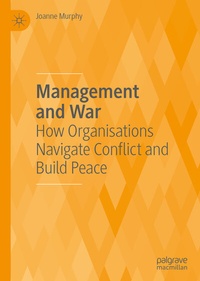
Management and War
Description

War and conflict are a reality of life throughout the world. While much is written about the impact of violence and disorder, how people and organisations adapt to these environments is poorly understood. This book tells the often hidden story of people managing, delivering services and sustaining economies through and beyond violent conflict. It is written for both general readers and academic specialists, combining first person interviews, insights from 'witness seminars; and informal conversations with more scholarly research. Building on what we already know about organisational behavior and conflict transformation, the book looks at the delivery of housing and public amenities, the management of public space and commemoration and the role of local businesses during and beyond violent conflict. In particular, it focuses on the role of organisational managers as peacebuilding entrepreneurs, generating and sustaining conflict transformation efforts.
More details
Other editions
Additional editions
Person
Dr Joanne Murphy is a Senior Lecturer in Queen's Management School and Academic Director of the William J. Clinton Leadership Institute, Queen's University, Belfast. Her research explores leadership, change and organisational development in politically volatile environments, including those affected by ethno-political conflict. She is a Fellow of the Senator George J. Mitchell Institute for Global Peace, Security and Justice and a Senior Fellow of Northern Ireland's policy think tank - Pivotal.
Content
Chapter 1: Introduction: Why it Matters.- Part I: Framework of Analysis: Theory and Context.-Chapter 2: Framing an Understanding of Management and War.- Chapter 3: Hope and History: the environmental antecedents of conflict and peacebuilding.- Chapter 4: The Lived Experience of Intense Conflict.- Part II: Sectoral Challenges.- Chapter 5: 'Green shoots': Driving Economic Renewal.- Chapter 6: 'Managing Space': Divided Places, Divided Communities.- Chapter: 7: 'For Public Good': Housing, Local Government and the Delivery of Public Services.- Chapter 8: The Management of Memory, Heritage and the Arts.- Chapter 9: Non-Governmental Organisations, International Networks and the Paradox of Assistance.- Part III: Organisational Activity, Conflict and Building Peace.- Chapter 10: Liminal Space: Organisational Transition and Conflict.- Chapter:11: Living in the Grey Zone: Decision Makingin Conflict and Transition.- Chapter 12: 'Go where the fissures are': Organisational Actors as Peacebuilding Entrepreneurs.- Chapter 13: Conclusion: Managing in Conflict and Transition.
