

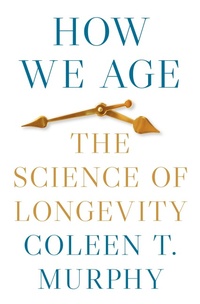
How We Age
The Science of Longevity
1st Edition
Published on 22. November 2023
464 pages
978-0-691-25033-5 (ISBN)
Description

How recent breakthroughs in longevity research offer clues about human aging
All of us would like to live longer, or to slow the debilitating effects of age. In How We Age, Coleen Murphy shows how recent research on longevity and aging may be bringing us closer to this goal. Murphy, a leading scholar of aging, explains that the study of model systems, particularly simple invertebrate animals, combined with breakthroughs in genomic methods, have allowed scientists to probe the molecular mechanisms of longevity and aging. Understanding the fundamental biological rules that govern aging in model systems provides clues about how we might slow human aging, which could lead in turn to new therapeutics and treatments for age-related disease.
Among other vivid examples, Murphy describes research that shows how changing a single gene in the nematode worm C. elegans doubles its lifespan, extending not only the end of life but also the youthful, healthy part of life. Drawing on work in her own lab as well as other recent research, Murphy chronicles the history and current state of the field, explaining longevity's links to reproduction and mating, sensory and cognitive function, inheritances from our ancestors, and the gut microbiome. Written with clarity and wit, How We Age provides a guide to the science: what we know about aging, how we know what we know, and what we can do with this new knowledge.
All of us would like to live longer, or to slow the debilitating effects of age. In How We Age, Coleen Murphy shows how recent research on longevity and aging may be bringing us closer to this goal. Murphy, a leading scholar of aging, explains that the study of model systems, particularly simple invertebrate animals, combined with breakthroughs in genomic methods, have allowed scientists to probe the molecular mechanisms of longevity and aging. Understanding the fundamental biological rules that govern aging in model systems provides clues about how we might slow human aging, which could lead in turn to new therapeutics and treatments for age-related disease.
Among other vivid examples, Murphy describes research that shows how changing a single gene in the nematode worm C. elegans doubles its lifespan, extending not only the end of life but also the youthful, healthy part of life. Drawing on work in her own lab as well as other recent research, Murphy chronicles the history and current state of the field, explaining longevity's links to reproduction and mating, sensory and cognitive function, inheritances from our ancestors, and the gut microbiome. Written with clarity and wit, How We Age provides a guide to the science: what we know about aging, how we know what we know, and what we can do with this new knowledge.
More details
Other editions
Additional editions
Book
05/2025
Princeton University Press
€24.00
Shipment within 10-20 days
Book
11/2023
Princeton University Press
€37.17
Shipment within 10-20 days
Person
Coleen T. Murphy is director of the Lewis Sigler Institute of Genomics and professor of genomics and molecular biology at Princeton University. She is also director of Princeton's Glenn Foundation for Research on Aging and the director of the Simons Collaboration on Plasticity in the Aging Brain.
Content
- Cover
- Contents
- Acknowledgments
- Abbreviations
- Introduction
- 1. Ethics and Economics of Longevity: Is It Right to Study Aging?
- 2. Why Do We Age?
- 3. Studying the Genetics of Human Longevity: Centenarians and What We Can Learn from Them
- 4. Long-Lived Species and Longevity Mutants of Model Organisms
- 5. What Is Aging (and How Can We Measure It)? Biomarkers of Aging and "Quality of Life" Metrics
- 6. Insulin Signaling, FOXO Targets, and the Regulation of Longevity and Reproduction
- 7. Dietary Restriction: Nutrient and Genetic Regulation of Longevity and Reproduction
- 8. Taking out the Trash: Molecular Homeostasis in the Regulation of Longevity
- 9. Powering Longevity: Mitochondria's Role in Aging and Longevity
- 10. Dracula and Wolverine: How DNA Repair and Cell Replacement Can Help Us Live Long
- 11. Use It or Lose It: Reproductive Aging, the Germline, and Longevity
- 12. Sex, Flies (and Worms), and Videotape: The Battle of the Sexes
- 13. I See Dead Flies: Neurons and Sensory Regulation of Longevity
- 14. Don't You Forget about Me: What We Are Learning about Cognitive Aging and How to Slow It
- 15. Lamarck's Revenge? Transgenerational Inheritance, the "Molecular Clock," and the Epigenetic Regulation of Longevity
- 16. Gut Feelings: The Microbiome and Aging
- 17. Long Life in a Pill? The Future of Longevity: From Bench to Biotech
- Notes
- Index
