

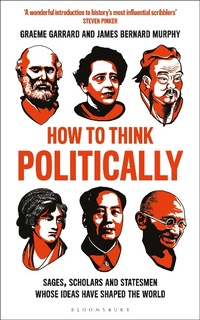
How to Think Politically
Sages, Scholars and Statesmen Whose Ideas Have Shaped the World
1st Edition
Published on 8. August 2019
320 pages
978-1-4729-6176-1 (ISBN)
Description

'A wonderful introduction to history's most influential scribblers' - Steven Pinker
What is truly at stake in politics? Nothing less than how we should live, as individuals and as communities. This book goes beyond the surface headlines, the fake news and the hysteria to explore the timeless questions posed and answers offered by a diverse group of the 30 greatest political thinkers who have ever lived.
Are we political, economic, or religious animals? Should we live in small city-states, nations, or multinational empires? What values should politics promote? Should wealth be owned privately or in common? Do animals also have rights? There is no idea too radical for this global assortment of thinkers, which includes: Confucius; Plato; Augustine; Machiavelli; Burke; Wollstonecraft; Marx; Nietzsche; Gandhi; Qutb; Arendt; Nussbaum, Naess and Rawls.
In each brief chapter, the authors paint a vivid portrait of these often prescient, always compelling political thinkers, showing how their ideas grew out of their own dramatic lives and times and evolved beyond them. Now more than ever we need to be reminded that politics can be a noble, inspiring and civilising art. And if we want to understand today's political world, we need to understand the foundations of politics and its architects. This is the perfect guide to both.
What is truly at stake in politics? Nothing less than how we should live, as individuals and as communities. This book goes beyond the surface headlines, the fake news and the hysteria to explore the timeless questions posed and answers offered by a diverse group of the 30 greatest political thinkers who have ever lived.
Are we political, economic, or religious animals? Should we live in small city-states, nations, or multinational empires? What values should politics promote? Should wealth be owned privately or in common? Do animals also have rights? There is no idea too radical for this global assortment of thinkers, which includes: Confucius; Plato; Augustine; Machiavelli; Burke; Wollstonecraft; Marx; Nietzsche; Gandhi; Qutb; Arendt; Nussbaum, Naess and Rawls.
In each brief chapter, the authors paint a vivid portrait of these often prescient, always compelling political thinkers, showing how their ideas grew out of their own dramatic lives and times and evolved beyond them. Now more than ever we need to be reminded that politics can be a noble, inspiring and civilising art. And if we want to understand today's political world, we need to understand the foundations of politics and its architects. This is the perfect guide to both.
More details
Edition
1. Auflage
Language
English
Place of publication
London
United Kingdom
Publishing group
Bloomsbury Publishing PLC
ISBN-13
978-1-4729-6176-1 (9781472961761)
Copyright in bibliographic data and cover images is held by Nielsen Book Services Limited or by the publishers or by their respective licensors: all rights reserved.
Schweitzer Classification
Other editions
Additional editions
James Bernard Murphy | Graeme Garrard
How to Think Politically
Sages, Scholars and Statesmen Whose Ideas Have Shaped the World
Book
08/2019
Bloomsbury Continuum
€19.00
Shipment within 10-20 days
Persons
James Bernard Murphy is Professor of Government at Dartmouth College, where he teaches political philosophy, jurisprudence, and ethics. Before becoming a professor, Murphy worked as an urban planner in the City of New York, where he was born. He received his Masters of City Planning from M.I.T. and his B.A. and Ph.D. from Yale University. Murphy's scholarly books include The Moral Economy of Labor (1993), Your Whole Life: Beyond Childhood and Adulthood (2020), and Deification in Classical Greek Philosophy and the Bible (forthcoming 2024). He has also written for a wider audience in his books How to Think Politically (with Graeme Garrard, 2019), Haunted by Paradise: A Philosopher's Quest for Biblical Answers to Key Moral Questions (2021), The Third Sword: On the Political Role of Prophets (forthcoming, 2023), and in essays for the New York Times, the Wall Street Journal, and the Washington Post.
Content
Thinker Dates
Introduction: Politics - Might Made Right
ANCIENTS
1 Confucius: The Sage
2 Plato: The Dramatist
3 Aristotle: The Biologist
4 Augustine: The Realist
MEDIEVALS
5 Al-Farabi: The Imam
6 Maimonides: The Lawgiver
7 Thomas Aquinas: The Harmonizer
MODERNS
8 Niccolò Machiavelli: The Patrio
9 Thomas Hobbes: The Absolutist
10 John Locke: The Puritan
11 David Hume: The Sceptic
12 Jean-Jacques Rousseau: The Citizen
13 Edmund Burke: The Counter-Revolutionary
14 Mary Wollstonecroft: The Feminist
15 Immanuel Kant: The Purist
16 Thomas Paine: The Firebrand
17 Georg Wilhelm Freidrich Hegel: The Mystic
18 James Madison: The Founder
19 Alexis de Tocqueville: The Prophet
20 John Stuart Mill: The Individualist
21 Karl Marx: The Revolutionary
22 Friedrich Nietsche: The Psychologist
CONTEMPORARIES
23 Mohandas Gandhi: The Warrior
24 Sayyid Qutb: The Jihadist
25 Hannah Arendt: The Pariah
26 Mao Zedong: The Chairman
27 Friedrich Hayek: The Libertairan
28 John Rawls: The Liberal
29 Martha Nussbaum: The Self-Developer
30 Arne Naess: The Mountaineer
Conclusion: The Unhappy Marriage of Politics and Philosophy
Suggested Further Reading
Acknowledgements
Index
Introduction: Politics - Might Made Right
ANCIENTS
1 Confucius: The Sage
2 Plato: The Dramatist
3 Aristotle: The Biologist
4 Augustine: The Realist
MEDIEVALS
5 Al-Farabi: The Imam
6 Maimonides: The Lawgiver
7 Thomas Aquinas: The Harmonizer
MODERNS
8 Niccolò Machiavelli: The Patrio
9 Thomas Hobbes: The Absolutist
10 John Locke: The Puritan
11 David Hume: The Sceptic
12 Jean-Jacques Rousseau: The Citizen
13 Edmund Burke: The Counter-Revolutionary
14 Mary Wollstonecroft: The Feminist
15 Immanuel Kant: The Purist
16 Thomas Paine: The Firebrand
17 Georg Wilhelm Freidrich Hegel: The Mystic
18 James Madison: The Founder
19 Alexis de Tocqueville: The Prophet
20 John Stuart Mill: The Individualist
21 Karl Marx: The Revolutionary
22 Friedrich Nietsche: The Psychologist
CONTEMPORARIES
23 Mohandas Gandhi: The Warrior
24 Sayyid Qutb: The Jihadist
25 Hannah Arendt: The Pariah
26 Mao Zedong: The Chairman
27 Friedrich Hayek: The Libertairan
28 John Rawls: The Liberal
29 Martha Nussbaum: The Self-Developer
30 Arne Naess: The Mountaineer
Conclusion: The Unhappy Marriage of Politics and Philosophy
Suggested Further Reading
Acknowledgements
Index
