


Exploring Ottoman Sovereignty
Tradition, Image and Practice in the Ottoman Imperial Household, 1400-1800
1st Edition
Published on 25. September 2008
370 pages
978-1-4411-4143-9 (ISBN)
Description

Is it possible to identify the 'essence' of Ottoman kingship? And if so, what were the core motivating principles that governed the dynasty over its 600 year lifespan and how continuous and consistent were they? Following the death of the dynasty's eponymous founder Osman in 1324, 35 successors held the throne. Despite the wide range of character traits, dispositions and personal preferences, they led the expansion, stagnation and eventual collapse of the empire. Rhoades Murphey offers an alternative way of understanding the soul of the empire as reflected in its key ruling institution: the sultanate. For much of the period of centralized Ottoman rule between ca. 1450 and 1850 each of the dynasty's successive rulers developed and used the state bureaucratic apparatus to achieve their ruling priorities, based around the palace and court culture and rituals of sovereignty as well as the sultan's role as the head of the central state administrative apparatus.
Sovereignty was attached to the person of the sultan who moved (with his court) both often and for prolonged stays away from his principal residence. In the period between 1360 and 1453 there were dual capitals at Bursa and Edirne (Adrianople) and even after 1453 several Ottoman sultans showed a preference for Edirne over Istanbul. Even Sultan Suleyman the Magnificent - held by the Ottomans, western contemporaries and modern analysts alike to be the pinnacle and paragon of Ottoman kingship - spent far more time away from his residence at the Topkapi Palace than in it. This book explores the growing complexity of the empire as it absorbed cultural influences and imperial legacies from a wide diversity of sources each in turn engendering a further interpretation of existing notions of kingship and definitions of the role and function of the ruler.
Sovereignty was attached to the person of the sultan who moved (with his court) both often and for prolonged stays away from his principal residence. In the period between 1360 and 1453 there were dual capitals at Bursa and Edirne (Adrianople) and even after 1453 several Ottoman sultans showed a preference for Edirne over Istanbul. Even Sultan Suleyman the Magnificent - held by the Ottomans, western contemporaries and modern analysts alike to be the pinnacle and paragon of Ottoman kingship - spent far more time away from his residence at the Topkapi Palace than in it. This book explores the growing complexity of the empire as it absorbed cultural influences and imperial legacies from a wide diversity of sources each in turn engendering a further interpretation of existing notions of kingship and definitions of the role and function of the ruler.
Reviews / Votes
Mention -Book News, February 2009 'This book is a lively political anthropology of Ottoman sovereignty, an account of the rituals, ceremonies, and projection of the sultans' power over the period 1480-1820.'More details
Edition
1. Auflage
Language
English
Place of publication
New York
United States
Target group
Professional and scholarly
ISBN-13
978-1-4411-4143-9 (9781441141439)
Copyright in bibliographic data and cover images is held by Nielsen Book Services Limited or by the publishers or by their respective licensors: all rights reserved.
Schweitzer Classification
Other editions
Additional editions
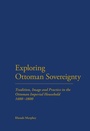
Rhoads Murphey
Exploring Ottoman Sovereignty
Tradition, Image and Practice in the Ottoman Imperial Household, 1400-1800
Book
10/2011
Bloomsbury Continuum
€65.80
Shipment within 15-20 days
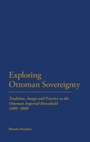
Rhoads Murphey
Exploring Ottoman Sovereignty
Tradition, Image and Practice in the Ottoman Imperial Household, 1400-1800
Book
09/2008
Hambledon Continuum
€193.90
Shipment within 3-4 weeks
Person
Rhoads Murphey is Reader in Ottoman Studies in the Department of History at the University of Birmingham, UK. He is the author of numerous books on Ottoman Empire and Warfare.
Content
Maps, Dynastic, Genealogical and Chronological Charts
Introduction
1. Dynastic Origins: Medieval Inheritances and Major Influences on Ottoman Concepts of Sovereignty
2. Dynastic Identity: Ottoman Political Values and the Quest for an Imperial Identity in the Proto-Imperial Era, 1300-1450
3. Dynastic Image: An Investigation of the Ottoman's Use of Titulature in Coins and Chancellery Documents
4. The Dynasty as Family Enterprise: Sibling Rivalry, Struggles for Succession to the Throne and Incipient Creation of the 'Political Household'
5. Consolidation of the Political Household in the Immediate Post Accession Phase of Rule
6. Formation of the Wider Palace Household: A People-centered Glimpse at the Institution of the Sultanate and an Account of the Composition, Growth and Development of the Imperial Administrative Corps, ca. 1470 to ca. 1670
7. Celebrating the Coming of Age of an Ottoman Prince: Exclusivity versus Inclusiveness in Ottoman Court Ceremonial
Introduction
1. Dynastic Origins: Medieval Inheritances and Major Influences on Ottoman Concepts of Sovereignty
2. Dynastic Identity: Ottoman Political Values and the Quest for an Imperial Identity in the Proto-Imperial Era, 1300-1450
3. Dynastic Image: An Investigation of the Ottoman's Use of Titulature in Coins and Chancellery Documents
4. The Dynasty as Family Enterprise: Sibling Rivalry, Struggles for Succession to the Throne and Incipient Creation of the 'Political Household'
5. Consolidation of the Political Household in the Immediate Post Accession Phase of Rule
6. Formation of the Wider Palace Household: A People-centered Glimpse at the Institution of the Sultanate and an Account of the Composition, Growth and Development of the Imperial Administrative Corps, ca. 1470 to ca. 1670
7. Celebrating the Coming of Age of an Ottoman Prince: Exclusivity versus Inclusiveness in Ottoman Court Ceremonial
