

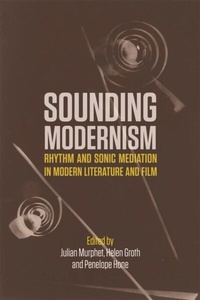
Sounding Modernism
Description

Explores the transformations of sound in modern literary and cinematic forms from the 1890s to the mid-20th century
This volume brings together a range of essays by eminent and emergent scholars working at the intersection of modern literary, cinema and sound studies. The individual studies ask what specific sonorous qualities are capable of being registered by different modern media, and how sonic transpositions and transferences across media affect the ways in which human subjects attend to modern soundscapes. Script, groove, electrical current, magnetic imprint, phonographic vibration: as the contributors show, sound traverses these and other material platforms to become an insistent ground-note of modern aesthetics, one not yet adequately integrated into critical accounts of the period. This collection also provides a commanding and wide-ranging investigation of the conditions under which modernists tapped technically into the rhythms, echoes and sonic architectures of their worlds.
Key Features
- Addresses a growing demand for critical studies on the interface between literary history and the 'soundscape' of modernity
- Discusses the rich nexus of new sound recording technologies, new vocabularies of and for sonic phenomena, new standardisations of rhythm and speed, and the weird displacements of 'voice' peculiar to modernity
- Answers the need for an explicit engagement with the symbolic registrations of sonic modernity on textual forms in sound studies
- Systematically analyses modernist forms in terms of their capacities to mediate rhythms, sonic textures and vocal derangements
More details
Other editions
Additional editions
Content
- Intro
- Sounding Modernism
- Copyright
- Contents
- Acknowledgements
- Chapter 1 Introduction: Sounding Modernism 1890-1950
- Part One Writing Modern Sound
- Chapter 2 On Not Listening to Modernism
- Chapter 3 Advocating Auricularisation: Virginia Woolf's 'In The Orchard'
- Part Two Mediated Voices
- Chapter 4 Bottled Bands: Automatic Music and American Media Publics
- Chapter 5 How to Listen to Joyce: Gramophones, Voice and the Limits of Mediation
- Chapter 6 Sounding Region, Writing Accent: A. G. Street and the BBC
- Chapter 7 Partial to Opera: Sounding Willa Cather's Empty Rooms
- Chapter 8 Elliptical Sound: Audibility and the Space of Reading
- Part Three Difficult Voices
- Chapter 9 Harsh Sounds: George Gissing's Penetrating Literary Voice
- Chapter 10 Body and Soul: Modernism, Metaphysics, Rhyme
- Chapter 11 Listening to the Late Cantos
- Part Four Modern Rhythm: Writing, Sound, Cinema
- Chapter 12 The Rhythms of Character in Katherine Mansfield's 'Miss Brill'
- Chapter 13 The Rhythm of the Rails: Sound and Locomotion
- Chapter 14 Two-step, Nerve-tap, Tanglefoot: Tapdance Typologies in Cinema
- Contributors
- Bibliography
- Index
