

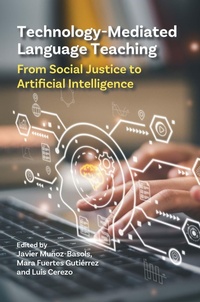
Technology-Mediated Language Teaching
From Social Justice to Artificial Intelligence
Published on 7. March 2025
344 pages
978-1-80041-989-6 (ISBN)
Description

This volume offers a rich overview of current research and teaching strategies for the integration of technology into language teaching and learning. It introduces the Planning, Personalization and Implementation (PPI) methodological framework to support educators in engaging with the theoretical foundations and innovative practices that should guide the incorporation of technology into their teaching practices. While Spanish language teaching is used as an example, the recommendations can be applied to any language learning contexts. The 13 chapters address a broad range of themes including accessibility, curriculum design, teacher attitudes, motivation, anxiety and feedback, and offer guidance on using digital tools such as podcasts, gamification and artificial intelligence. Written by an international group of scholars, this book serves as a roadmap for language professionals to effectively incorporate technology into any learning environment, whether face-to-face, hybrid or online.
This book will be available as an open access publication under a CC BY NC ND licence.
This book will be available as an open access publication under a CC BY NC ND licence.
Reviews / Votes
A timely addition to the growing scholarship on the impact of digital culture and technology on language education. This collection of essays by leading language specialists provides both crucial theoretical context and a well-structured practical framework for applying insights across a range of topics from assessment, virtual worlds, gamified learning, digital storytelling, access and inclusivity, to a critical engagement with AI. It will be invaluable to anyone considering the future of language teaching and learning in a rapidly changing and increasingly media-inflected pedagogical landscape. * Paul Spence, King's College London, UK * This book provides a refreshingly proactive yet comprehensive approach to maximizing the affordances current innovations in technology (e.g. AI) can offer to language teachers. The authors have put together an impressive collection of pertinent topics that include tools to implement a technology-mediated language teaching model. This is an essential resource for any language educator seeking to empower themselves (and their students) in the use of technology to promote learning in the instructed setting. * Ronald P. Leow, Georgetown University, USA *More details
Language
English
Place of publication
Bristol
United Kingdom
Target group
College/higher education
Product notice
Reflowable
File size
13,54 MB
ISBN-13
978-1-80041-989-6 (9781800419896)
Copyright in bibliographic data and cover images is held by Nielsen Book Services Limited or by the publishers or by their respective licensors: all rights reserved.
Schweitzer Classification
Other editions
Additional editions
Javier Munoz-Basols | Mara Fuertes Gutierrez | Luis Cerezo
Technology-Mediated Language Teaching
From Social Justice to Artificial Intelligence
Book
03/2025
Multilingual Matters
€57.50
Shipment within 10-20 days
Persons
Javier Munoz-Basols is a Beatriz Galindo Distinguished Senior Researcher at the University of Seville, Spain, and Honorary Faculty Research Fellow at the University of Oxford, UK. He is the Co-Founder and Editor-in-Chief of the Journal of Spanish Language Teaching and President of the Association for the Teaching of Spanish as a Foreign Language (ASELE).
Mara Fuertes Gutierrez is a Senior Lecturer in Spanish at the Open University, UK. Her recent research and publications focus on sociolinguistics applied to Spanish teaching, teacher training, and distance and online education. She is the Vice President of the Association for the Teaching of Spanish as a Foreign Language (ASELE) and Secretary of the Association of Hispanists of Great Britain and Ireland (AHGBI).
Luis Cerezo is an Associate Professor of Applied Linguistics at the American University, Washington, DC, USA. His research focuses on the teaching of additional languages through videogames, computer-mediated communication, and hybrid and online environments based on guided induction, metacognitive instruction and observational learning. He is also a member of the CALICO Journal editorial board.
Mara Fuertes Gutierrez is a Senior Lecturer in Spanish at the Open University, UK. Her recent research and publications focus on sociolinguistics applied to Spanish teaching, teacher training, and distance and online education. She is the Vice President of the Association for the Teaching of Spanish as a Foreign Language (ASELE) and Secretary of the Association of Hispanists of Great Britain and Ireland (AHGBI).
Luis Cerezo is an Associate Professor of Applied Linguistics at the American University, Washington, DC, USA. His research focuses on the teaching of additional languages through videogames, computer-mediated communication, and hybrid and online environments based on guided induction, metacognitive instruction and observational learning. He is also a member of the CALICO Journal editorial board.
Content
Figures
Tables
Contributors
Javier Munoz-Basols, Mara Fuertes Gutierrez and Luis Cerezo: Planning, Personalization, Implementation (PPI): Technology-Mediated Language Teaching
Part 1: Planning Technology Needs
Chapter 1. Melinda Dooly and Anna Comas-Quinn: Access to Technology and Social Justice
Chapter 2. Marta Gonzalez-Lloret: Curriculum Planning and Development in Virtual Environments
Chapter 3. Inmaculada Gomez Soler and Marta Tecedor: Virtual Teachers' Beliefs, Attitudes and Competence
Chapter 4. Daria Mizza and Fernando Rubio: Effective Technological Practices and Diversity
Part 2: Personalizing Learning and Teaching
Chapter 5. Luis Cerezo and Inigo Yanguas: Motivation and Virtual Learning
Chapter 6. Zsuzsanna Barkanyi: Anxiety and Virtual Learning
Chapter 7. Javier Munoz-Basols and Mara Fuertes Gutierrez: Interaction in Virtual Learning Environments
Chapter 8. Sonia Bailini: Assessment and Feedback in Virtual Learning Environments
Part 3: Implementing Technology Resources
Chapter 9. Robert Blake, Lillian Jones and Cory Osburn: Hybrid and Online Teaching and the Flipped Classroom
Chapter 10. Carlos Soler Montes and Olga Juan-Lazaro: Digital Language Immersion (DLI) and Virtual Exchanges
Chapter 11. Ana Oskoz: Competences and Language Digitalization: Podcasts and Digital Stories
Chapter 12. Luis Cerezo and Joan-Tomas Pujola: Digital Ludic Pedagogies (DLP): Videogames, Minigames, Extended Realities and Robots
Epilogue: New Technology-Mediated Scenarios
Chapter 13. Javier Munoz-Basols and Mara Fuertes Gutierrez: Opportunities for Artificial Intelligence (AI) in Language Teaching and Learning
Tables
Contributors
Javier Munoz-Basols, Mara Fuertes Gutierrez and Luis Cerezo: Planning, Personalization, Implementation (PPI): Technology-Mediated Language Teaching
Part 1: Planning Technology Needs
Chapter 1. Melinda Dooly and Anna Comas-Quinn: Access to Technology and Social Justice
Chapter 2. Marta Gonzalez-Lloret: Curriculum Planning and Development in Virtual Environments
Chapter 3. Inmaculada Gomez Soler and Marta Tecedor: Virtual Teachers' Beliefs, Attitudes and Competence
Chapter 4. Daria Mizza and Fernando Rubio: Effective Technological Practices and Diversity
Part 2: Personalizing Learning and Teaching
Chapter 5. Luis Cerezo and Inigo Yanguas: Motivation and Virtual Learning
Chapter 6. Zsuzsanna Barkanyi: Anxiety and Virtual Learning
Chapter 7. Javier Munoz-Basols and Mara Fuertes Gutierrez: Interaction in Virtual Learning Environments
Chapter 8. Sonia Bailini: Assessment and Feedback in Virtual Learning Environments
Part 3: Implementing Technology Resources
Chapter 9. Robert Blake, Lillian Jones and Cory Osburn: Hybrid and Online Teaching and the Flipped Classroom
Chapter 10. Carlos Soler Montes and Olga Juan-Lazaro: Digital Language Immersion (DLI) and Virtual Exchanges
Chapter 11. Ana Oskoz: Competences and Language Digitalization: Podcasts and Digital Stories
Chapter 12. Luis Cerezo and Joan-Tomas Pujola: Digital Ludic Pedagogies (DLP): Videogames, Minigames, Extended Realities and Robots
Epilogue: New Technology-Mediated Scenarios
Chapter 13. Javier Munoz-Basols and Mara Fuertes Gutierrez: Opportunities for Artificial Intelligence (AI) in Language Teaching and Learning
