


Redistribution Recession
How Labor Market Distortions Contracted the Economy
1st Edition
Published on 5. October 2012
364 pages
978-0-19-994222-0 (ISBN)
Description

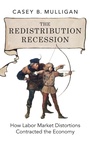
The Redistribution Recession is a controversial, clear-cut, and thoroughly researched analysis of the effects of various government policies on the labor market during the recent recession.
More details
Other editions
Additional editions
Book
11/2012
Oxford University Press Inc
€110.70
Shipment within 15-20 days
Content
- Cover
- Contents
- Preface
- 1. Introduction
- 2. The Rise of Labor Productivity
- Quarterly Indicators of Aggregate Economic Quantities
- Movements Along an Aggregate Marginal Productivity Schedule
- On Average, Real Wages Did Not Fall
- Was It Customer Demand? Factor Reduction and Factor Substitution by Industry
- Neither Wealth Effects Nor Intertemporal Substitution Effects Explain the "Supply" Shift
- Labor Market Distortions Since 2007
- Conclusion: Productivity Patterns Begin to Reveal the Recession's Causes
- Appendix 2.1. Productivity, Labor, and Residuals in Prior Downturns
- Appendix 2.2. Sensitivity Analysis
- 3. The Expanding Social Safety Net
- A Framework for Quantifying the Generosity of the Safety Net as a Whole
- Legislation Made the Safety Net Available to Millions More
- Legislation Increased the Amount of Benefits Received per Program Participant
- Most of the Increase in Government Safety Net Expenditure Is the Direct Result of Program Rule Changes
- Safety Net Rule Changes and Assistance for the Unemployed
- Means-Tested Loan Forgiveness
- Conclusion: Replacement Rates for Aggregate Analysis
- Appendix 3.1. Calculation and Aggregation of Statutory Eligibility and Benefit Indices
- Appendix 3.2. Sensitivity Analysis
- Appendix 3.3. The Self-Reliance Rate Outlook
- Appendix 3.4. The Making Work Pay, Earned Income, and Child Tax Credits
- 4. Supply and Demand: Labor Market Consequences of Safety Net Expansions
- The Income-Maximization Fallacy
- Labor and Output Effects of Safety Net Expansions
- Predictions for Consumption and Investment
- Calibrating the Wage Elasticity of Aggregate Labor Supply
- Conclusions and Interpretation
- Appendix 4.1. Comparative Advantage with Heterogeneous Effects of the Safety Net Expansions
- Appendix 4.2. Calibrating the Supply Elasticity from Unemployment Duration Studies
- Appendix 4.3. Safety Net Distortions Measured in Dollars per Year
- 5. Means-Tested Subsidies and Economic Dynamics Since 2007
- The Neoclassical Growth Model with Targeted Means-Tested Subsidies
- Data and Simulation Results
- Effects of the Safety Net Expansion
- Interpreting the Residual Labor Market Distortions
- An Investment Distortion by Itself Does Not Fit Actual Behavior
- Conclusions
- Appendix 5.1. Calibration, Simulation, and Additional Sensitivity Analysis
- 6. Cross-Sectional Patterns of Employment and Hours Changes
- Cross-Sectional Patterns of Self-Reliance Rate Changes
- Work Hours Changes by Demographic Group and Region
- Program Participation Changes by Demographic Group
- Conclusion: The Cross-Sectional Patterns of Employment and Hours Changes Are as Expected from a Large Safety Net Expansion
- Appendix 6.1. Summary Statistics and Additional Results
- 7. Keynesian and Other Models of Safety Net Stimulus
- The Safety Net and Consumer Spending
- Transfers and Government Purchases Are Not the Same
- Labor Market Slack and the Marginal Effects of Supply
- Sticky Prices, the Wage Elasticity of Labor Demand, and the Zero Lower Bound
- An Econometric Model That Nests My Approach with the Slack Market and Sticky Price Hypotheses
- Conclusion: Whether Labor Supply Matters More, or Less, During a Recession Is an Empirical Question
- Appendix 7.1. The Safety Net, Sticky Prices, and Monetary Policy
- 8. Recession-Era Effects of Factor Supply and Demand: Evidence from the Seasonal Cycle, the Construction Market, and Minimum Wage Hikes
- Christmas and Academic Seasons as Demand and Supply Shifts
- Christmas Demand in Recessions and Booms
- The Summer Seasonal Change for Employment and Unemployment
- Housing Investment Crowds Out Nonresidential Construction
- The Employment Effects of Recent Minimum Wage Hikes Were No Less Than Before
- The Federal Minimum Wage Hikes Likely Reduced National Employment by Hundreds of Thousands, Especially Among the Young and Unskilled
- Conclusion: Labor Supply Still Matters, About as Much as It Did in the Past
- 9. Incentives and Compliance Under the Federal Mortgage Modification Guidelines
- The Budget Set of a Borrower Facing the FDIC-HAMP Modification Guidelines
- Borrower Reactions Under Full Information and Full Compliance: Spend More and Work Less
- Lender Incentives to Expand Modification Capacity
- Conclusions
- Appendix 9.1. Principal Modifications and the Eligible Income Range
- Appendix 9.2. Marginal Tax Rates with Various Horizons and Discount Rates
- 10. Uncertainty, Redistribution, and the Labor Market
- A Model of the Equity-Efficiency Tradeoff
- Possible Changes in the Equity-Efficiency Tradeoff, and the Optimal Degree of Social Insurance
- The Cost-Benefit Analysis of Safety Net Expansions: Necessary Ingredients
- Conclusions
- 11. Conclusions
- Incentives Matter
- Was the Financial Collapse a Cause, or an Effect?
- Labor Supply and Demand Help Explain an Unhappy Situation
- Notes
- Bibliography
- Index
- A
- B
- C
- D
- E
- F
- G
- H
- I
- J
- K
- L
- M
- N
- O
- P
- Q
- R
- S
- T
- U
- V
- W
- Y
- Z
