

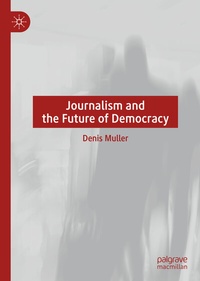
Journalism and the Future of Democracy
Description

This book is about how journalism can contribute to the recovery of democracy from the crisis exemplified by the Trump presidency, the Brexit referendum and the rise of populism across the Western world. It explores the ethical concepts that provide the foundation for journalism in modern democracies: pluralism, liberalism, tolerance, truth, free speech, and impartiality. History has shown that crisis brings opportunity for change on a scale that is unachievable under ordinary political conditions, and this book proposes fundamental ways in which journalism can help democratic societies seize the moment. It traces the development of traditional mass media and social media and explores how the two might work better together to benefit democratic life. The development of press theory is described, and enhanced by a proposed new theory, Democratic Revival.
More details
Other editions
Additional editions
Person
Denis Muller is Senior Research Fellow in the Centre for Advancing Journalism at the University of Melbourne, Australia. He is the author of Journalism Ethics for the Digital Age (2014), and Media Ethics and Disasters (2011). He is a former Assistant Editor, investigations, of The Sydney Morning Herald and Associate Editor of The Age , Melbourne.
Content
Part 1: Democratic conditions.- Chapter one, Crisis and Opportunity.- Chapter two, Democracy Under Strain.- Chapter three, Enemies of Democracy: Populism and Scapegoating.- Chapter four, Essentials of Democracy: Liberalism and Pluralism.-Part 2: Journalism's Ethical Fundamentals .- Chapter five, Tolerance: History and Practice.- Chapter six, Journalistic Truth: Empirical and Contingent - Chapter seven, Free speech: Rights and Limitations.- Chapter eight, Impartiality: Attainable and Assessable.-Part 3: Press Development and Theory.-Chapter nine, Development of Professional Mass Media.- Chapter Ten,Development of Social Media.- Chapter eleven, Theories of the Press.- Chapter Twelve, A New Press Theory: Democratic Revival.-Part 4:Journalism and the Future of Democracy.- Chapter Thirteen, Conclusion
