

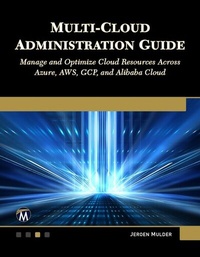
Multi-Cloud Administration Guide
Manage and Optimize Cloud Resources Across Azure, AWS, GCP, and Alibaba Cloud
1st Edition
Published on 3. September 2024
304 pages
978-1-5015-1948-2 (ISBN)
Description

As businesses increasingly adopt cloud-first strategies, managing workloads across multiple
cloud platforms becomes a critical challenge. This comprehensive book provides practical solutions and in-depth knowledge to efficiently operate in a multi-cloud world. Learn to leverage frameworks from AWS, Azure, GCP, and Alibaba Cloud to maximize the benefits of multi-cloud environments. Understand cloud networking, software-defined networking, and microservices to optimize cloud connectivity. Develop a robust data strategy to ensure data quality, security, and integrity across multiple cloud platforms. Discover how automation and AI can help maintain compliance with governmental and industry regulations in the cloud. Designed for cloud architects, IT administrators, and technical managers, this book is also valuable for anyone looking to deepen their understanding of cloud technologies and multi-cloud strategies.
FEATURES
•Uses frameworks from AWS, Azure, GCP, and Alibaba Cloud to maximize the benefits of multi-cloud environments
•Provides practical instructions and real-world examples for managing multi-cloud environments
•Features insights into cloud-native technologies, serverless functions, and container orchestration with Kubernetes
•Explores the details of multi-cloud connectivity, storage, compute, data management, security, and compliance
•Includes companion files with code samples and color figures available for downloading
cloud platforms becomes a critical challenge. This comprehensive book provides practical solutions and in-depth knowledge to efficiently operate in a multi-cloud world. Learn to leverage frameworks from AWS, Azure, GCP, and Alibaba Cloud to maximize the benefits of multi-cloud environments. Understand cloud networking, software-defined networking, and microservices to optimize cloud connectivity. Develop a robust data strategy to ensure data quality, security, and integrity across multiple cloud platforms. Discover how automation and AI can help maintain compliance with governmental and industry regulations in the cloud. Designed for cloud architects, IT administrators, and technical managers, this book is also valuable for anyone looking to deepen their understanding of cloud technologies and multi-cloud strategies.
FEATURES
•Uses frameworks from AWS, Azure, GCP, and Alibaba Cloud to maximize the benefits of multi-cloud environments
•Provides practical instructions and real-world examples for managing multi-cloud environments
•Features insights into cloud-native technologies, serverless functions, and container orchestration with Kubernetes
•Explores the details of multi-cloud connectivity, storage, compute, data management, security, and compliance
•Includes companion files with code samples and color figures available for downloading
More details
Language
English
Place of publication
New York
United States
Target group
Professional and scholarly
US School Grade: College Graduate Student
File size
3,28 MB
ISBN-13
978-1-5015-1948-2 (9781501519482)
Copyright in bibliographic data and cover images is held by Nielsen Book Services Limited or by the publishers or by their respective licensors: all rights reserved.
Schweitzer Classification
Other editions
Additional editions
Jeroen Mulder
Multi-Cloud Administration Guide
Manage and Optimize Cloud Resources Across Azure, AWS, GCP, and Alibaba Cloud
E-Book
09/2024
1st Edition
Mercury Learning and Information
€49.95
Available for download
Jeroen Mulder
Multi-Cloud Administration Guide
Manage and Optimize Cloud Resources Across Azure, AWS, GCP, and Alibaba Cloud
Book
08/2024
1st Edition
De Gruyter
€49.95
Article not available at the moment
Content
- Cover
- Half Title
- Title
- Copyright
- Dedication
- Contents
- Preface
- Acknowledgments
- About the Author
- Chapter 1: Using the Cloud Adoption Frameworks
- Introduction
- Structure
- Exploring the Business Challenge of Multi-Cloud
- Introducing CAFs: How to Use Them
- Strategy
- Plan
- Prepare
- Adopt
- Govern
- Operate
- Deep Dive in the CAFs of Azure and AWS
- Frameworks by GCP and Alibaba Cloud
- Lead
- Learn
- Scale
- Secure
- Similarities and Differences
- Monitoring Multi-Cloud and Keeping Track of Value Propositions
- Measuring Business Metrics
- Introducing Best Practices in Monitoring
- Conclusion
- Key Points
- Questions
- Chapter 2: Virtualizing and Managing Connectivity
- Introduction
- Structure
- Building Blocks in Networks
- Virtual Switching
- Routing
- Virtual Firewalls
- Load Balancing
- Cloud Network Operations
- Deployment Concepts SD-WAN, Edge, and SASE
- Managing Networks in Multi-Cloud
- Setting Up VPN
- Setting Up Direct Connections
- Conclusion
- Key Points
- Questions
- Chapter 3: Virtualizing and Managing Storage
- Introduction
- Structure
- Types of Storage Virtualization
- Storage Concepts in Public Clouds
- Managing Storage Assets in Multi-Cloud
- Protecting Data from Data Loss
- Using Third-Party Storage Products
- Managing Storage Lifecycles and Tiering
- Automating Tiering
- Automating Scaling of Storage
- Managing Data Access
- Conclusion
- Key Points
- Questions
- Chapter 4: Virtualizing and Managing Compute
- Introduction
- Structure
- Comparing Compute Models in Public Clouds
- Key Considerations for Choosing Compute
- Rightsizing Compute in Deployment and Autoscaling
- Rightsizing Using Autoscaling
- Exploring On-Premises Propositions of Public Cloud
- Azure Stack and Azure Arc
- AWS Outposts
- Google Anthos
- Extending VMWare
- Deploying and Managing Compute Assets
- Automating Infrastructure Management
- Conclusion
- Key Points
- Questions
- Chapter 5: Creating Interoperability
- Introduction
- Structure
- Defining Interoperability
- Requirements for Interoperability
- Explaining the Difference Between Portability and Interoperability
- Solutions to Create Interoperability in Public and Hybrid Clouds
- Working with Open Compute Project
- Conclusion
- Key Points
- Questions
- Chapter 6: Managing Data in Multi-Cloud
- Introduction
- Structure
- Defining a Data Strategy
- Planning Data Migration
- Managing Data Governance
- Improving Data Quality
- Data Quality in AWS
- Data Quality in Azure
- Data Quality in GCP
- Data Quality in Alibaba Cloud
- Securing Data
- Conclusion
- Key Points
- Questions
- Chapter 7: Build and Operate Cloud Native
- Introduction
- Structure
- Understanding Cloud-Native Concepts
- Organizing Cloud-Native with DevOps
- Explaining Microservices
- Managing Releases in Microservices
- Conclusion
- Key Points
- Questions
- Chapter 8: Building Agnostic with Containers
- Introduction
- Structure
- Understanding Container Technology
- Pitfalls and Risks of Container Technology
- Container Services from Major Cloud Providers
- Developing and Provisioning Containers Using Industry Standards
- Guided Plan to Develop and Deploy Containers
- Exploring Container Management Using a Single Pane of Glass View
- Managing Security in Container Platforms
- Deep Dive into Container Monitoring and Log Management
- Collecting and Analyzing Logs
- Conclusion
- Key Points
- Questions
- Chapter 9: Building and Managing Serverless
- Introduction
- Structure
- Understanding the Serverless Concept
- Developing and Provisioning Serverless Functions from Architecture
- Using CI/CD for Serverless Deployments
- Managing Multi-Cloud Environments with Serverless Frameworks
- Following Best Practices in Serverless
- Deep Dive into Monitoring Serverless
- Conclusion
- Key Points
- Questions
- Chapter 10: Managing Access Management
- Introduction
- Structure
- Exploring the Basics of Access Management
- Understanding Managed Identities
- Challenges in Access Management
- Using Cloud Tools for Access Management
- Understanding and Working with PAM
- Privileged Session and Privileged Behavior Analytics
- Creating and Storing Secrets
- Managing Secrets and Keys in AWS and Azure
- Managing Secrets and Keys in GCP and Alibaba Cloud
- Avoiding Pitfalls in Managing Secrets and Keys
- Defining, Implementing, and Managing Role Based Access Control
- Monitoring Access Control
- Conclusion
- Key Points
- Questions
- Chapter 11: Managing Security
- Introduction
- Structure
- Working with Cloud Security Frameworks
- Example of Implementing CIS Guidelines for Azure
- Choosing the Security Tools
- Managing Security Through One Lens
- Introducing Cloud Security Posture Management
- Keeping Track and Up to Date with Security Trends
- Conclusion
- Key Points
- Questions
- Chapter 12: Automating Compliancy
- Introduction
- Structure
- Understanding Compliance in Multi-Cloud
- Automating Governance
- Using RPA for Automating Compliance
- The Next Step: Using AI for Compliance Checking
- Conclusion
- Key Points
- Questions
- Appendix
- Index
