

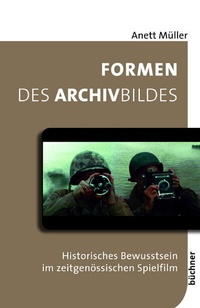
Formen des Archivbildes
Historisches Bewusstsein im zeitgenössischen Spielfilm
1st Edition
Published on 26. February 2018
146 pages
978-3-96317-627-2 (ISBN)
Description

YouTube und andere Videoplattformen üben massiven Einfluss auf unser kollektives Gedächtnis aus. Im Zuge der steigenden Bedeutung dieser Archive des Internetzeitalters haben auch spektakuläre Spielfilmproduktionen Hochkonjunktur, die auf Archivbilder von markanten historischen Ereignissen zurückgreifen. Vier Filme der jüngsten Filmgeschichte belegen herausragend die neue Aktualität des "Archivbildfilms": Clint Eastwoods zweiteiliges Epos FLAGS OF OUR FATHERS (2006)/LETTERS FROM IWO JIMA (2006), Steven Soderberghs THE GOOD GERMAN - IN DEN RUINEN VON BERLIN (2006) und Sam Mendes' JARHEAD - WILLKOMMEN IM DRECK (2005).
Entlang dieser Filme stellt die Autorin die entscheidende Frage, wie wir uns in Zukunft erinnern werden: in Bildern oder an Bilder?
Entlang dieser Filme stellt die Autorin die entscheidende Frage, wie wir uns in Zukunft erinnern werden: in Bildern oder an Bilder?
More details
Other editions
Additional editions
Book
12/2010
1st Edition
Büchner-Verlag
€19.90
Article exhausted; check different version
Person
Anett Müller, geboren 1984. Studium der Medien-, Theater- und Literaturwissenschaft in Bayreuth und Marburg. Arbeitet momentan an ihrer Doktorarbeit zum Thema "Archivbilder und Bildgedächtnis im aktuellen Medienwandel".
Content
- Cover
- Inhalt
- Einleitung
- TEIL I
- 1. Das Archivbild
- 2. Das Archiv
- 2.1. Begriffsgeschichte und -bestimmung
- 2.2. Theorie-Verortung
- 2.3. Eine Zwischenbilanz
- 2.4. Monument vs. Dokument
- Exkurs: Walter Benjamins "Kunstwerk im Zeitalter seiner technischen Reproduzierbarkeit"
- 2.5. Übergang vom Archiv zum Gedächtnis
- 2.6. Speichern und Übertragen
- 2.7. Das Gedächtnis
- 2.8. Gedächtnis im Wechsel zwischen Kultur und Geschichte
- 3. Jenseits des Genres
- 3.1. Kompilationsfilm
- 3.2. Collage-Film
- 3.3. Found Footage-Film
- Exkurs: Film-im-Film-Theorie
- 4. Archivbilder im Wandel der Filmgeschichte
- Exkurs: CITIZEN KANE (1941)
- Exkurs: HIROSHIMA, MON AMOUR (1959)
- Exkurs: ZELIG (1983)
- Exkurs: FORREST GUMP (1994)
- 5. Zwischenbilanz und Fazit
- TEIL II
- Ausgangspunkt
- 1. Clint Eastwood: FLAGS OF OUR FATHERS/LETTERS FROM IWO JIMA
- 1.1. Was wird erzählt?
- 1.1.1. FLAGS OF OUR FATHERS
- 1.1.2. LETTERS FROM IWO JIMA
- 1.2. Historisches Bewusstsein
- 1.3. Demontage des Heldentums
- 1.4. Artefakte des Gedächtnisses
- 1.4.1. Fotografie
- 1.4.2. Briefe
- 1.5. Bildästhetik
- 1.6. Fazit und Wirkung
- 2. Steven Soderbergh: THE GOOD GERMAN - IN DEN RUINEN VON BERLIN
- 2.1. Was wird erzählt?
- 2.2. Historisches Bewusstsein
- 2.3. Archivbilder in THE GOOD GERMAN
- 2.3.1. Berlin-Bild
- 2.3.2. Potsdamer Konferenz
- 2.3.3. Wochenschau
- 2.4. Filmisches Gedächtnis
- 2.4.1. Hommage an den Film Noir
- 2.4.2. Filmische Referenzen
- 2.5. Wirkung und Fazit
- 3. Sam Mendes: JARHEAD - WILLKOMMEN IM DRECK
- 3.1. Was wird erzählt?
- 3.2. Historisches Bewusstsein
- 3.3. Krieg ohne Bilder
- 3.4. Archivbilder
- 3.4.1. Highway (Miles) of Death
- 3.4.2. Brennende Ölfelder
- 3.4.3. Pferd
- 3.5. Warten. Formen der Ereignislosigkeit
- 3.6. Filmische Zitate
- 3.7. Fazit und Wirkung
- TEIL III
- Fazit und Ausblick
- Literatur
- Filmverzeichnis
- ANHANG
