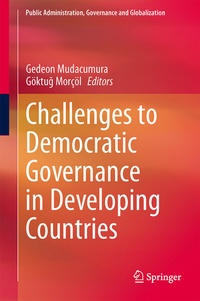
Challenges to Democratic Governance in Developing Countries
Description

Despite the large amounts of human and financial resources invested to foster democratic governance in developing countries, statistics show that the majority of these countries have not yet achieved significant improvements in living standards. While some regions make strides towards improving the living conditions of their citizens, Sub-Saharan Africa, for instance, is still trapped in poverty with more than 40% of its 600 million people living below the internationally recognized absolute poverty line of one US dollar per day. Poor governance and corruption should be highlighted as the most important systemic factors contributing to poverty in developing countries. As a result the institutional foundations of these countries are weakened, public funds are misappropriated, and policies and programs aimed at reducing poverty and fostering sustainable economic growth are undermined. It is therefore not surprising that a 2008 Transparency International report found a direct link between corruption and the failure of the societal institutions designed to achieve the Millennium Development Goals in the majority of developing countries. This book investigates the problems of democratic governance, particularly as they relate to corruption, and also whether democracy should be based on universal principles or local context and historical factors. It also analyses the rule of law, in promoting democratic governance and curbing corruption and if governmental, non-governmental organizations, and civil societies are effective in promoting democratic governance and curbing corruption. This book will go beyond identifying the challenges and offer plausible solutions that could be adapted to various developing countries. It is premised on the importance of bridging theory and practice, which has been lacking in most local and international development publications, making of interest to scholars and policy-makers alike concerned with public administration indeveloping countries.
More details
Other editions
Additional editions