

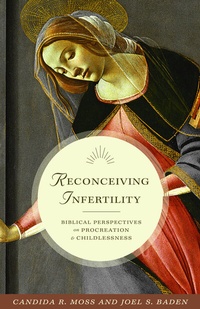
Reconceiving Infertility
Biblical Perspectives on Procreation and Childlessness
1st Edition
Published on 29. October 2015
328 pages
978-1-4008-7356-2 (ISBN)
Description

A more complete picture of how procreation and childlessness are depicted in the Bible
In the Book of Genesis, the first words God speaks to humanity are "Be fruitful and multiply." From ancient times to today, these words have been understood as a divine command to procreate. Fertility is viewed as a sign of blessedness and moral uprightness, while infertility is associated with sin and moral failing. Reconceiving Infertility explores traditional interpretations such as these, providing a more complete picture of how procreation and childlessness are depicted in the Bible.
Closely examining texts and themes from both the Hebrew Bible and the New Testament, Candida Moss and Joel Baden offer vital new perspectives on infertility and the social experiences of the infertile in the biblical tradition. They begin with perhaps the most famous stories of infertility in the Bible-those of the matriarchs Sarah, Rebekah, and Rachel-and show how the divine injunction in Genesis is both a blessing and a curse. Moss and Baden go on to discuss the metaphorical treatments of Israel as a "barren mother," the conception of Jesus, Paul's writings on family and reproduction, and more. They reveal how biblical views on procreation and infertility, and the ancient contexts from which they emerged, were more diverse than we think.
Reconceiving Infertility demonstrates that the Bible speaks in many voices about infertility, and lays a biblical foundation for a more supportive religious environment for those suffering from infertility today.
In the Book of Genesis, the first words God speaks to humanity are "Be fruitful and multiply." From ancient times to today, these words have been understood as a divine command to procreate. Fertility is viewed as a sign of blessedness and moral uprightness, while infertility is associated with sin and moral failing. Reconceiving Infertility explores traditional interpretations such as these, providing a more complete picture of how procreation and childlessness are depicted in the Bible.
Closely examining texts and themes from both the Hebrew Bible and the New Testament, Candida Moss and Joel Baden offer vital new perspectives on infertility and the social experiences of the infertile in the biblical tradition. They begin with perhaps the most famous stories of infertility in the Bible-those of the matriarchs Sarah, Rebekah, and Rachel-and show how the divine injunction in Genesis is both a blessing and a curse. Moss and Baden go on to discuss the metaphorical treatments of Israel as a "barren mother," the conception of Jesus, Paul's writings on family and reproduction, and more. They reveal how biblical views on procreation and infertility, and the ancient contexts from which they emerged, were more diverse than we think.
Reconceiving Infertility demonstrates that the Bible speaks in many voices about infertility, and lays a biblical foundation for a more supportive religious environment for those suffering from infertility today.
More details
Edition
Pilot project. eBook available to selected US libraries only
Language
English
Place of publication
Princeton, NJ
United States
Publishing group
De Gruyter
Target group
Professional and scholarly
Edition type
Digital original
Product notice
Reflowable
File size
1,84 MB
ISBN-13
978-1-4008-7356-2 (9781400873562)
Schweitzer Classification
Other editions
Additional editions
Candida R. Moss | Joel S. Baden
Reconceiving Infertility
Biblical Perspectives on Procreation and Childlessness
Book
08/2015
Princeton University Press
€43.33
Shipment within 10-20 days
Persons
Candida R. Moss is professor of New Testament and Early Christianity at the University of Notre Dame. She is the author of Ancient Christian Martyrdom: Diverse Practices, Theologies, and Traditions, among other books. Joel S. Baden is professor of Hebrew Bible at Yale Divinity School. His books include The Composition of the Pentateuch.
Content
Preface ix
Acknowledgments xi
Introduction 1
Chapter 1: The Matriarchs as Models 21
Chapter 2: The Blessing and the Curse 70
Chapter 3: Mother Zion and the Eschaton 103
Chapter 4: The Son of God and the Conception of the New Age 140
Chapter 5: Chastity, Marriage, and Gender in the Christian Family 171
Chapter 6: Barrenness and the Eschaton 200
Conclusion 229
Notes 239
Bibliography 291
Primary Source Index 313
Subject Index 325
Acknowledgments xi
Introduction 1
Chapter 1: The Matriarchs as Models 21
Chapter 2: The Blessing and the Curse 70
Chapter 3: Mother Zion and the Eschaton 103
Chapter 4: The Son of God and the Conception of the New Age 140
Chapter 5: Chastity, Marriage, and Gender in the Christian Family 171
Chapter 6: Barrenness and the Eschaton 200
Conclusion 229
Notes 239
Bibliography 291
Primary Source Index 313
Subject Index 325
