

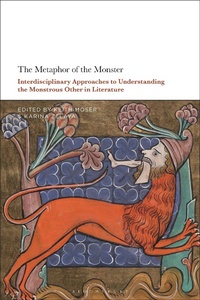
The Metaphor of the Monster
Interdisciplinary Approaches to Understanding the Monstrous Other in Literature
1st Edition
Published on 15. October 2020
256 pages
978-1-5013-6434-1 (ISBN)
Description

The Metaphor of the Monster offers fresh perspectives and a variety of disciplinary approaches to the ever-broadening field of monster studies. The eclectic group of contributors to this volume represents areas of study not generally considered under the purview of monster studies, including world literature, classical studies, philosophy, ecocriticism, animal ethics, and gender studies.
Combining historical overviews with contemporary and global outlooks, this volume recontextualizes the monstrous entities that have always haunted the human imagination in the age of the Anthropocene. It also invites reflection on new forms of monstrosity in an era epitomized by an unprecedented deluge of (mis)information. Uniting researchers from varied academic backgrounds in a common effort to challenge the monstrous labels that have historically been imposed upon "the Other," this book endeavors above all to bring the monster out of the shadows and into the light of moral consideration.
Combining historical overviews with contemporary and global outlooks, this volume recontextualizes the monstrous entities that have always haunted the human imagination in the age of the Anthropocene. It also invites reflection on new forms of monstrosity in an era epitomized by an unprecedented deluge of (mis)information. Uniting researchers from varied academic backgrounds in a common effort to challenge the monstrous labels that have historically been imposed upon "the Other," this book endeavors above all to bring the monster out of the shadows and into the light of moral consideration.
Reviews / Votes
As they draw our gaze toward them, monsters, as Nietzsche observed, also force us to look within. This wide-ranging volume engages literary studies across numerous disciplines to explore urgent questions about encounters with monstrosity, rendered in narrative form, that challenge us to account for who we are and what we fear we might become. * Roland Racevskis, Associate Dean for Arts and Humanities, University of Iowa, USA, and author of Tragic Passages: Jean Racine's Art of the Threshold (2008) * Written by researchers from various disciplines, The Metaphor of the Monster opens the way to new perspectives on theories of the Other. This brilliant and original collection of essays is essential to understand better what is at stake now in our societies. * Louise Dupre, Associate Professor of Literary Studies, Universite du Quebec a Montreal, Canada * Through its multidisciplinary exploration of the myriad forms that monsters have taken across time and space, this edited collection presents an engaging and thought-provoking glimpse into the varied applications and effects of the notion of monstrosity. * The Journal of Critical Studies in Language and Literature *More details
Edition
1. Auflage
Language
English
Place of publication
New York
United States
Publishing group
Bloomsbury Publishing PLC (Digital)
Target group
Professional and scholarly
ISBN-13
978-1-5013-6434-1 (9781501364341)
Copyright in bibliographic data and cover images is held by Nielsen Book Services Limited or by the publishers or by their respective licensors: all rights reserved.
Schweitzer Classification
Other editions
Additional editions
Keith Moser | Karina Zelaya
The Metaphor of the Monster
Interdisciplinary Approaches to Understanding the Monstrous Other in Literature
Book
04/2022
Bloomsbury Academic USA
€57.13
Shipment within 15-20 days
Persons
Keith Moser is Professor of French and Francophone Studies at Mississippi State University, USA. He is the author of five full-length book projects, the latest of which is entitled The Encyclopedic Philosophy of Michel Serres: Writing the Modern World and Anticipating the Future (2016).
Karina Zelaya is Assistant Professor of Spanish (Latin American Cultural Studies) at Mississippi State University, USA.
Karina Zelaya is Assistant Professor of Spanish (Latin American Cultural Studies) at Mississippi State University, USA.
Content
Acknowledgments
Introduction
Keith Moser (Mississippi State University, USA)
Part I Ecological Perspectives
1. A Portrait of Fictional Characters as Darwinian Monsters
Dominique Lestel (Stanford University, USA), translated by Keith Moser
2. Tokyo Ghoul and the Trouble with Cannibalism
Tony Milligan (King's College London, UK)
3. Monster and Victim: Melusine from the Fourteenth Century to the Age of Homo Detritus
Jonathan Krell (University of Georgia, USA)
4. J. M. G. Le Clezio's Defense of the Human and Other-than-human Victims of the Derridean "Monstrosity of the Unrecognizable" in the Mauritian Saga Alma
Keith Moser (Mississippi State University, USA)
5. Strange Fish: Caliban's Sea-changes and the Problems of Classification
James Seth (Central Washington University, USA)
6. Monster of Vacancy, Ghost of Culture, Instrument of Clarity: Cultural and Textual Analysis of the Function of the Sonoran Desert as Monster in Luis Alberto Urrea's The Devil's Highway
Mindy Adams (Texas State University, USA)
Part II Transgressive, Monstrous Gender and Corporality
7. Transgressive and Sovereign Authority in the Valois Court
Touba Ghadessi (Wheaton College, USA)
8. "Maybe Something I Never Wanted Will Be Born": Etgar Keret's Monstrous Dream of Motherhood
Elisa Carandina (Institut National des Langues et Civilisations Orientales, France)
Part III Teaching Monstrosity in the (Post-)Modern World
9. Reading Monsters: How Mary Shelley Teaches Incels to Read Paradise Lost
Neil Barrett (The Webb School, USA)
10. "We Live in a Time of Monsters": Teaching Composition through the Representations of Monsters and Monstrosity in Literature
Devon Pizzino (Borough of Manhattan Community College / St. Francis College, USA)
Part IV Monstrosity in World Literature
11. Vamping It Up: Identity Performance and Intoxicated Bloodlust in the Poetry of Eduardo Haro Ibars
Alyssa Holan (University of Wisconsin, Platteville, USA)
12. The Edges of the World in Classical Greece and Epic India: A Comparison of the Monstrous Races of Ctesias's Indica and the Raksasas of Valmiki's Ramayana
Albert Watanabe (Louisiana State University, USA)
13. Satire and Monstrosity in African Diasporic Drama
Subbah Mir (Louisiana State University, USA)
14. How a Monster Became a Hero: An Understanding of Camusian Morality through the Absurdist Hero, Don Juan
Scott Truesdale (University of Georgia, USA)
Index
Introduction
Keith Moser (Mississippi State University, USA)
Part I Ecological Perspectives
1. A Portrait of Fictional Characters as Darwinian Monsters
Dominique Lestel (Stanford University, USA), translated by Keith Moser
2. Tokyo Ghoul and the Trouble with Cannibalism
Tony Milligan (King's College London, UK)
3. Monster and Victim: Melusine from the Fourteenth Century to the Age of Homo Detritus
Jonathan Krell (University of Georgia, USA)
4. J. M. G. Le Clezio's Defense of the Human and Other-than-human Victims of the Derridean "Monstrosity of the Unrecognizable" in the Mauritian Saga Alma
Keith Moser (Mississippi State University, USA)
5. Strange Fish: Caliban's Sea-changes and the Problems of Classification
James Seth (Central Washington University, USA)
6. Monster of Vacancy, Ghost of Culture, Instrument of Clarity: Cultural and Textual Analysis of the Function of the Sonoran Desert as Monster in Luis Alberto Urrea's The Devil's Highway
Mindy Adams (Texas State University, USA)
Part II Transgressive, Monstrous Gender and Corporality
7. Transgressive and Sovereign Authority in the Valois Court
Touba Ghadessi (Wheaton College, USA)
8. "Maybe Something I Never Wanted Will Be Born": Etgar Keret's Monstrous Dream of Motherhood
Elisa Carandina (Institut National des Langues et Civilisations Orientales, France)
Part III Teaching Monstrosity in the (Post-)Modern World
9. Reading Monsters: How Mary Shelley Teaches Incels to Read Paradise Lost
Neil Barrett (The Webb School, USA)
10. "We Live in a Time of Monsters": Teaching Composition through the Representations of Monsters and Monstrosity in Literature
Devon Pizzino (Borough of Manhattan Community College / St. Francis College, USA)
Part IV Monstrosity in World Literature
11. Vamping It Up: Identity Performance and Intoxicated Bloodlust in the Poetry of Eduardo Haro Ibars
Alyssa Holan (University of Wisconsin, Platteville, USA)
12. The Edges of the World in Classical Greece and Epic India: A Comparison of the Monstrous Races of Ctesias's Indica and the Raksasas of Valmiki's Ramayana
Albert Watanabe (Louisiana State University, USA)
13. Satire and Monstrosity in African Diasporic Drama
Subbah Mir (Louisiana State University, USA)
14. How a Monster Became a Hero: An Understanding of Camusian Morality through the Absurdist Hero, Don Juan
Scott Truesdale (University of Georgia, USA)
Index
