

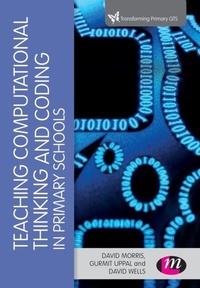
Teaching Computational Thinking and Coding in Primary Schools
1st Edition
Published on 22. May 2017
216 pages
978-1-5264-1467-0 (ISBN)
Description

This is a guide to the teaching of computing and coding in primary schools, and an exploration of how children develop their computational thinking. It covers all areas of the National Curriculum for primary computing and offers insight into effective teaching.
The text considers three strands of computer science, digital literacy and information technology. The teaching of coding is especially challenging for primary teachers, so it highlights learning on this, giving practical examples of how this can be taught. For all areas of the computing curriculum the text also provides guidance on planning age-appropriate activities with step-by-step guides and details of educationally appropriate software and hardware.
This book helps you to connect what you need to teach with how it can be taught, and opens up opportunities in the new curriculum for creative and imaginative teaching. It also includes the full National Curriculum Programme of Study for Computing, key stages 1 and 2 as a useful reference for trainee teachers.
The text considers three strands of computer science, digital literacy and information technology. The teaching of coding is especially challenging for primary teachers, so it highlights learning on this, giving practical examples of how this can be taught. For all areas of the computing curriculum the text also provides guidance on planning age-appropriate activities with step-by-step guides and details of educationally appropriate software and hardware.
This book helps you to connect what you need to teach with how it can be taught, and opens up opportunities in the new curriculum for creative and imaginative teaching. It also includes the full National Curriculum Programme of Study for Computing, key stages 1 and 2 as a useful reference for trainee teachers.
All prices
More details
Series
Edition
First Edition
Language
English
Place of publication
London
United Kingdom
Publishing group
Sage Publications Ltd
Target group
College/higher education
Product notice
Reflowable
File size
3,57 MB
ISBN-13
978-1-5264-1467-0 (9781526414670)
Copyright in bibliographic data and cover images is held by Nielsen Book Services Limited or by the publishers or by their respective licensors: all rights reserved.
Schweitzer Classification
Other editions
Additional editions
David Morris | Gurmit Uppal | David Wells
Teaching Computational Thinking and Coding in Primary Schools
Book
07/2017
1st Edition
Learning Matters Ltd
€128.80
Shipment within 15-20 days
David Morris | Gurmit Uppal | David Wells
Teaching Computational Thinking and Coding in Primary Schools
Book
07/2017
1st Edition
Learning Matters Ltd
€69.30
Shipment within 15-20 days
Persons
Content
Introduction to the computing curriculum
Developing computational thinking in the EYFS, KS1 and KS2
Programming with floor robots
Developing coding through age appropriate software: KS1 curriculum and pedagogy
Developing coding through age appropriate software: KS2 curriculum and pedagogy
Coding with HTML and web design
Using computational thinking and coding to create - App building
Using computational thinking and coding in gaming
Computational thinking across the computing curriculum
Planning for computational thinking and coding
Assessing pupil progress in computational thinking and coding
Transition issues - Bridging the gap between KS2 and KS3
Developing computational thinking in the EYFS, KS1 and KS2
Programming with floor robots
Developing coding through age appropriate software: KS1 curriculum and pedagogy
Developing coding through age appropriate software: KS2 curriculum and pedagogy
Coding with HTML and web design
Using computational thinking and coding to create - App building
Using computational thinking and coding in gaming
Computational thinking across the computing curriculum
Planning for computational thinking and coding
Assessing pupil progress in computational thinking and coding
Transition issues - Bridging the gap between KS2 and KS3
