


Energy Switch
Description

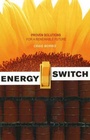
Declining oil supplies and the environmental impact of coal dictate a switch to renewable energy sources for a sustainable future. Written for a popular audience, Energy Switch details this momentous transition and proposes that the remaining non-renewable resources be used to develop a long-term supply of renewable energy.
A renewable energy leader two decades ago, the US now lags behind Germany and Japan. Energy Switch pays special attention to Europe's success, especially that of Germany, exploring what can be learned from their experience. It asks whether a mix of renewables is feasible as a major source of energy, at what cost, with what drawbacks, and in what time period. The book examines:
- The shortcomings and benefits of sources that might constitute a largely renewable energy platform: oil, nuclear, coal, biomass, natural gas, wind, PV, geothermal, hydrogen, wave and tidal power • Ecological tax reform and tax rebates, quotas and net metering, and the role of privatization
- The success of efficiency measures, the vision of demand management - tailoring power consumption to intermittent supply - and the phenomenon of virtual power plants
- The secret of success being in attitudes and policies, rather than in technology
- How the US could once again become a renewable energy leader
Craig Morris is a journalist and translator specializing in renewable energy. The author of a book in German that presents the rationale behind Germany's turn to renewable energy, he writes on energy policies and lives in Freiburg, Germany's solar capital.
More details
Other editions
Additional editions
Person
Content
- Front Cover
- Advance Praise
- Title Page
- Rights Page
- Contents
- Acknowledgments
- Instructions to Readers
- Chapter 1: Best Practices from Germany
- Chapter 2: The Big Picture
- Chapter 4: Biomass
- Chapter 5: Coal or Climate?
- Chapter 6: Nuclear Power
- Chapter 7: Natural Gas
- Chapter 8: Photovoltaics
- Chapter 9: Wind
- Chapter 10: Geothermal Power
- Chapter 11: Fuel Cells
- Chapter 12: Ocean Energy
- Chapter 13: Demand Management
- Chapter 14: Efficiency
- Chapter 15: Living to Learn
- Notes
- Index
- About the Author
