

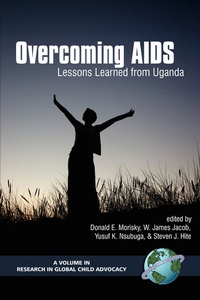
Overcoming AIDS
Lessons Learned from Uganda
1st Edition
Published on 1. June 2006
337 pages
978-1-60752-715-2 (ISBN)
Description

As a result of the AIDS epidemic, many nations around the world have faced the demands of caring for a particularly vulnerable population of children, the orphans of parents who have died of AIDS or whose caregivers are terminally ill from the disease. Overcoming AIDS: Lessons Learned from Uganda offers an in-depth exploration of this global issue and provides a broad focus on evolving a constructive response to the HIV/AIDS epidemic.
This collaborative resource is the fourth in the Research in Global Child Advocacy book series, and it offers readers a glimpse into the experience of HIV/AIDS infected and affected people from the perspective of researchers, policy makers, and professionals who diligently work toward crafting a framework for action that is integrated across disciplines. Despite the enormity and intensity of the problem, chapter authors share a commitment to advocate for a better world in which social and economic disparities do not preclude children from experiencing a future that is bright with potential opportunities and hope.
All prices
More details
Other editions
Additional editions
Book
06/2006
Information Age Publishing
€123.00
Article not available at the moment
Content
- Cover
- Overcoming AIDS: Lessons Learned from Uganda
- Series
- Overcoming AIDS: Lessons Learned from Uganda
- Copyright
- Contents
- Acknowledgments
- Preface
- Foreword
- Series Editors' Introduction
- List of Acronyms
- 1. Introduction
- REFERENCES
- I: SETTING THE CONTEXTUAL STAGE OF HIV/AIDS IN UGANDA
- 2. A Multisectoral Strategy for Overcoming AIDS in Uganda
- UNIQUE FEATURES OF THE HIV/AIDS EPIDEMIC IN UGANDA
- The Impact of HIV/AIDS on the Community
- Educational Obstacles: Domestic Violence and Ethnic Conflicts
- THE CURRENT STATE OF HIV/AIDS IN UGANDA
- Declining Trends in HIV/AIDS Prevalence
- HIV/AIDS, CHILDREN, AND YOUNG PEOPLE
- YOUTH SEXUAL BEHAVIOR AND MODES OF HIV/AIDS TRANSMISSION
- HIV/AIDS AND THE EDUCATION SECTOR IN UGANDA
- Programs to Mitigate the HIV/AIDS Epidemic
- School Health Education Project (SHEP)
- Population and Family Life Education Program in the Uganda Formal Education System
- Curriculum Development Approach
- Adolescent Reproductive Health and Counselling
- Guidance and Counseling
- Life Skills Initiative
- HIV/AIDS Education Through Drama
- PIASCY
- Extracurricular Activities
- MULTISECTORAL STRATEGIES FOR THE WAY FORWARD
- CONCLUSION
- NOTES
- REFERENCES
- 3. Fighting Stigma and Discrimination as a Strategy for HIV/AIDSPrevention and Control
- BACKGROUND OF AIDS STIGMA
- DEFINING AIDS STIGMA AND DISCRIMINATION
- Self-Stigma
- Felt Stigma
- Enacted Stigma
- FEATURES AND CAUSES OF AIDS STIGMA
- AIDS STIGMA BREEDS SILENCE
- STRATEGIES TO COUNTER AIDS STIGMA
- NOTES
- REFERENCES
- II: HIV/AIDS EDUCATION PROGRAMSIN THE FORMAL EDUCATION SECTOR
- 4. Evaluation of HIV/AIDS Education Programs in Uganda
- INTRODUCTION AND OVERVIEW
- METHODS
- School Selection Process
- Study Participants
- IRB Approval
- Advisory Committee
- Instruments
- Pilot Test of Questionnaire and Intervention
- Intervention
- FINDINGS
- DISCUSSION
- STUDY LIMITATIONS
- CONCLUSION AND IMPLICATIONS FOR THE FUTURE
- NOTES
- REFERENCES
- 5. Preparing a Generation of Teachers for Educating Youthin Uganda
- IMPACT OF HIV/AIDS ON THE EDUCATION SECTOR
- RESPONSE TO HIV/AIDS BY THE MINISTRY OF EDUCATION AND SPORTS
- Contributions and Achievements of the National Curriculum Development Centre
- TEACHER TRAINING IN UGANDA
- RESPONSE OF THE KYAMBOGO UNIVERSITY COMMUNITY TO HIV/AIDS
- TRAINING OF AIDS-COMPETENT TEACHERS
- Achievements
- Lessons Learned
- Formal Curriculum for Teacher Preparation in the Context of AIDS.
- Missed Opportunities
- Teacher Training Curriculum Innovation in the Era of AIDS
- Knowledge and Skills for
- Constraints in Preparation of Teachers as Agents of Change
- THE WAY FORWARD
- REFERENCES
- III: NONFORMAL YOUTH ANDCHILD HIV/AIDS EDUCATION PROGRAMS
- 6. Social and Behavioral Determinants of HIV Education ProgramsAmong Ugandan Youth
- INTRODUCTION
- GOVERNMENT PROGRAMS
- The School Health Education Project (SHEP)
- The Programme for Enhancing Adolescent Reproductive Life (PEARL)
- The Presidential Initiative on AIDS Strategy for Communication to Youth (PIASCY)
- FAITH-BASED PROGRAMS
- Catholic Church
- The Behaviour Change Programme (BCP)
- The Adolescent Sexual and Reproductive Health (ASRH) and Rights Programme
- Church of Uganda
- Church Human Services Agency (CHUSA)
- Safeguarding Youth From AIDS (SYFA)
- Islam
- INTERNATIONAL ORGANIZATION PROGRAMS
- UNICEF
- GOU-UNICEF BECCAD Program
- Adolescent Development and HIV/AIDS Prevention Strategy Program
- SOCIAL AND BEHAVIORAL DETERMINANTS
- Age
- Gender
- Peer Influence
- Social Environment
- Challenges
- CONCLUSION
- REFERENCES
- 7. The AIDS Support Organisation (TASO): Issues and Potential for Developing Countries
- THE NATIONAL STRATEGIC FRAMEWORK
- TASO'S ROLE IN THE MULTISECTORAL APPROACH
- EVALUATING TASO'S SERVICES AND PROGRAMS
- Official Objective Analysis
- Quality, Range, and Coverage of TASO's HIV/AIDS Services
- Competence of HIV/AIDS Service Providers
- Improving the Social, Political, and Economic Environment for PWA
- Organizational Capacity Building
- TASO'S COMPARATIVE ADVANTAGE
- Factors Facilitating Success
- Factors Limiting Success
- SWOT ANALYSIS
- Organizational Strengths
- Organizational Weaknesses
- Opportunities for TASO
- Potential Threats to the Organization
- CONCLUSION
- NOTES
- REFERENCES
- 8. Equipping Youth with Prevention and Treatment Strategies:Literacy and HIV/AIDS Initiatives in Uganda and Five OtherAfrican Nations
- PROGRAM OBJECTIVES AND GENERAL PROGRESS
- Underlying Assumptions, Methodology and Materials
- Literacy for Social Change and Literacy Solutions
- Overcoming AIDS
- OBSERVABLE OUTCOMES
- AN EXAMINATION OF THE THREE KEY PROGRAM COMPONENTS
- Community-Based Organization (CBO) Component
- YWCA of Uganda
- Operation Upgrade in South Africa
- Fifelela AIDS Project in South Africa
- Adult Literacy Organization of Zimbabwe (ALOZ)
- YMCA of Tanzania
- Kenya Adult Learners Association (KALA)
- Engage Now in Ethiopia
- CBO Component: Unique Findings and Analysis
- School Component
- Uganda MOES
- School Programs in Zimbabwe
- School Component: Unique Findings and Analysis
- Church Component
- South Africa: The Church of Jesus Christ of Latter-day Saints in Johannesburg and Pretoria Areas, and the Baptist Church in the Durban Area
- Zimbabwe Council of Churches in Partnership With the Deseret International Foundation
- Church Component: Unique Findings and Analysis
- OVERALL FINDINGS AND ANALYSIS
- CHALLENGES ENCOUNTERED AND THE WAY FORWARD
- NOTES
- REFERENCES
- 9. Successful Strategies in HIV/AIDS Prevention: The Case of theUganda Youth Anti-AIDS Association, 1992-2004
- HIV/AIDS SITUATION AMONG YOUNG PEOPLE IN UGANDA
- UGANDA YOUTH ANTI-AIDS ASSOCIATION
- UYAAS STRATEGIES FOR IMPROVING THE REPRODUCTIVE HEALTH OF YOUTH
- Building a Broad National and International Network
- Maintaining an Active Research Agenda
- Involving Youth Through National Mass Media
- Delivering Education, Training, and Technical Support
- Providing Voluntary Counseling and Testing (VCT) Services
- Reaching Out to Youth Through Community Services
- Facilitating Peer Education Among Youth Through Schools
- Producing and Distributing Educational Materials
- IMPLICATIONS OF UYAAS SUCCESS FOR HIV/AIDS ORGANIZATIONS
- NOTES
- REFERENCES
- 10. Maximizing HIV/AIDS Prevention Through the Media: AnAnalysis of the Straight Talk Foundation
- THE EPIDEMIOLOGICAL RATIONALE FOR PARTNER REDUCTION
- PARTNER REDUCTION EFFORTS
- IMPLICATIONS FOR BEHAVIOR CHANGE PROGRAMS
- REACHING THE MASSES THROUGH THE MEDIA
- Communication Through Straight Talk Clubs
- Straight Talk Radio-A Wake-up Call
- REACHING THE MASSES THROUGH PRINT
- Straight Talk Newspaper
- Young Talk
- Teacher Talk
- Parent Talk
- Ugandan-Language Newspapers
- RADIO SHOW PROGRAMS
- FEEDBACK FROM READERS AND LISTENERS
- OTHER SUPPORT PROGRAMS
- School Environment Program
- Online Counseling
- Monitoring and Evaluation
- Collaboration With Local CBOs, NGOs, and Faith Groups
- IMPACT ON THE BEHAVIOR OF ADOLESCENTS
- NOTE
- REFERENCES
- 11. The Role of Religion in Educating Ugandan YouthAbout HIV/AIDS
- RELIGIOUS ORGANIZATIONS IN UGANDAN HISTORY
- RELIGIOUS ORGANIZATIONS AND HIV/AIDS IN UGANDA
- RELIGIOUS PROGRAMS FOR PRIMARY AND SECONDARY EDUCATION
- Support for Orphans and Vulnerable Children
- Education and Awareness Programs for Youth
- HIGHER EDUCATION
- CONCLUSION: RELIGIOUS YOUTH PROGRAMS IN CONTEXT
- NOTES
- REFERENCES
- 12. The Family, Youth, and AIDS: Hope and Heartbreak for Africa
- INTRODUCTION
- IDEOLOGY IN PREVENTION
- Cultural Ideologies
- Being Realistic
- The African Condition
- TRANSFORMING IDEOLOGIES IN CULTURES AND INTERVENTION EFFORTS
- STUMBLING BLOCKS TO SUCCESS
- THE FAMILIAL DIMENSION: A MORAL CALL
- RESTORING FAMILIAL-FRIENDLY STARTING POINTS
- NOTE
- REFERENCES
- IV: DEALING WITH AIDS ORPHANS AND STREET CHILDREN
- 13. Poverty, AIDS, and Street Children in Uganda
- REPULSION AND ATTRACTION: WHY CHILDREN LIVE ON THE STREETS
- NUMBERS OF STREET CHILDREN
- LIFE ON THE STREETS
- HIV/AIDS and Street Children
- PROGRAMS TO HELP STREET CHILDREN
- NOTES
- Appendix: Organizations Working With Street Children
- REFERENCES
- 14. From Recovery to Catastrophe: A Comparative Look at theOrphan Crises in Uganda and South Africa
- INTRODUCTION
- BACKGROUND TO HIV/AIDS IN UGANDA AND SOUTH AFRICA
- HIV/AIDS in Uganda: Recovery
- HIV/AIDS in South Africa: Catastrophe
- Tradition and the Spread of HIV
- COMPARING CONTINENTAL, NATIONAL, AND REGIONAL TRENDS
- Comparing Continental Trends
- Comparing National Trends
- Comparing Regional Trends
- Comparing Uganda and South Africa
- OUTCOMES OF ORPHANHOOD IN UGANDA AND SOUTH AFRICA
- Loss of Parental Care
- Extended Family Care
- Institutional Care
- Self Care
- CONCLUSION
- REFERENCES
- About the Authors
- Index

