

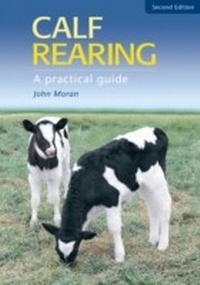
Calf Rearing
A Practical Guide
1st Edition
Published on 23. October 2002
212 pages
978-0-643-06990-9 (ISBN)
Description

Calf Rearing is recognised as one of the most informative and accessible guides on the subject, covering growth, nutrition, health and behaviour, with descriptions of various calf raising systems and facilities. John Moran, an expert in the field, also gives considerable coverage to calf welfare, post weaning management and calf communication. Practical economic information on feedstuffs, labour requirements and losses is provided to assist producers in selecting the most appropriate calf rearing system for their farms.
More details
Other editions
Additional editions
Book
10/2002
2nd Edition
Landlinks Press
€70.70
Shipment within 10-20 days
Content
- Cover
- Title
- Copyright
- Foreword
- Contents
- About the author
- Acknowledgments
- Chemical warning
- Chapter 1: Introduction
- The principles of good calf rearing
- The high costs of calf rearing
- An outline of this book
- Texts for further reading
- Chapter 2: The principles of digestion of feed in calves
- The calf digestive tract
- The milk-fed calf
- Rumen development and the process of weaning
- The role of roughage in the weaning process
- Chapter 3: The importance of colostrum to newborn calves
- Changes in recommendations on colostrum feeding
- Colostrum quality
- Identifying and storing good quality colostrum
- Feeding colostrum to newborn calves
- How to stomach tube a calf
- Commercial aids to calf rearing
- Results from overseas research on colostrum feeding
- Timeliness of colostrum feeding
- Summarising good colostrum feeding management
- Value-adding colostrum
- Financial benefits from good colostrum feeding practices
- Chapter 4: Nutrient requirements of calves
- Water
- Energy
- Protein
- Fibre
- Minerals and vitamins
- Chapter 5: Obtaining the calves
- Sources of calves for purchase
- Selection of calves
- Price and availability of calves
- Legislation regarding marketing, transport and slaughter of bobby calves
- Other guidelines for transporting bobby calves
- Bobby calf declarations
- On arrival at the rearing unit
- Chapter 6: Milk feeding of calves
- Teaching calves to drink
- The choice of liquid feeds
- The choice of feeding methods
- How much milk to feed
- Other aspects of artificial rearing
- Multiple suckling using dairy cows
- Chapter 7: Calf milk replacers
- The composition of milk replacers
- Describing quality of milk replacers
- The nutritive value of milk replacers
- The relative cost of milk replacers
- Using milk replacers to rear calves
- Examples of several milk-replacer rearing systems
- Chapter 8: Solid feeds for calves
- The nutritive value of solid feeds
- Feed intake and calf performance pre-weaning
- Feed intake and calf performance throughout the rearing period
- Criteria for weaning calves
- Concentrate mixtures for early weaning calves
- Formulating rations for weaned calves
- The role for pasture with weaned calves
- Special requirements for pink veal systems
- Chapter 9: Communicating with the calf
- Signals to watch for from the calf
- Changes in normal calf behaviour symptomatic of stress
- Visual changes in calves symptomatic of stress
- Understand how calves and heifers react to people
- Communicate with your calf rearer, too!!
- Contract calf rearing
- Chapter 10: Disease prevention in calves
- Calf scours or neonatal diarrhoea
- Pneumonia and other respiratory diseases
- Pulpy kidney and other clostridial diseases
- Internal parasites and their control
- Johne's disease
- Other diseases in calves
- How to recognise sick calves
- Calf management and disease
- What should you do with sick calves?
- Maintaining a healthy calf shed
- Chapter 11: Housing of calves
- Types of shelter
- Management considerations
- Physical comfort of calves
- Types of flooring
- Feeding and handling facilities
- Calf scales
- Cleaning and sanitising feeding equipment
- Calf sheds and children
- Summary
- Chapter 12: Welfare aspects of calf rearing
- Government codes of acceptable farming practice
- Additional management practices not included in the above code
- Australian Veterinary Association's policy on calf welfare
- Key issues identified by the Animal Welfare Centre
- Public lobby groups
- Chapter 13: Post-weaning management
- On-farm rearing of replacement dairy heifers
- Benefits of heavier heifers
- Target live weights for growing heifers
- Feeding heifers to achieve target live weights
- Using dairy stock for beef production
- Chapter 14: Economics of calf rearing
- Costing different feeds for calf rearing
- Other costs to consider in calf rearing
- Categorising calf and heifer rearing costs in the US
- The cost of diseases in calves
- A case study of cost savings through changing milk feeding systems
- Comparing different systems to calculate total feed costs for the first 12 weeks of rearing
- Chapter 15: Best management practices for rearing dairy replacement heifer
- What makes a good calf rearing system?
- Monitoring your calf rearing system
- What is best management practice and quality assurance?
- Checklists for quality assurance when rearing dairy replacement heifers
- Appendix 1: John Moran's 10 golden rules of calf rearing
- Appendix 2: John Moran's golden rules of heifer rearing
- Targets
- Feeding
- Management
- Appendix 3: Glossary of technical terms
- Appendix 4: Further reading
- Textbooks and manuals
- Useful websites on calf rearing
- Electronic discussion groups
- Calf rearing newsletter
