

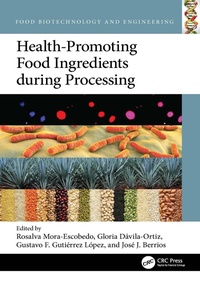
Health-Promoting Food Ingredients during Processing
1st Edition
Published on 30. October 2024
490 pages
978-1-040-13144-2 (ISBN)
Description

Health-Promoting Food Ingredients during Processing presents a comprehensive science-based approach covering the latest naturally occurring bioactive compounds in seeds, dietary fiber, proteins, fermented bio-compounds, agro-industrial waste by-products, and lactic acid bacteria. A volume in the Food Biotechnology and Engineering Series, the book discusses their identification, characterization, biological activities in terms of their bioavailability, bioaccessibility, and their beneficial effects as inflammatory mediators, probiotics, antioxidants, and hypoglycemic agents, as well as in gastrointestinal digestion and colonic fermentation. Written by an international expert team of food scientists, nutritionists, food biotechnologists, food engineers, and chemists, the book explains how this leads to opportunities in the treatment of diseases such as obesity, diabetes, cancer, and cognitive disorders.
Key features include:
? Presents original research and relevant peer-reviewed articles written by experts in disciplines such as food science, nutrition, food biotechnology, food engineering, and chemistry.
? Highlights new emerging trends, discoveries, and applications of biologically active compounds from seeds, dietary fiber, proteins, and agro-industrial waste by-products.
? Provides readers with a comprehensive, science-based approach to the identification, characterization, and utilization of food macromolecules, probiotics, lactic acid bacteria, and bioactive compounds.
- Discusses the impact of bioactive compounds in plants, agroindustrial by-products, and fermented biocompounds regarding their bioavailability, bioaccessibility, and potential human health benefits.
Key features include:
? Presents original research and relevant peer-reviewed articles written by experts in disciplines such as food science, nutrition, food biotechnology, food engineering, and chemistry.
? Highlights new emerging trends, discoveries, and applications of biologically active compounds from seeds, dietary fiber, proteins, and agro-industrial waste by-products.
? Provides readers with a comprehensive, science-based approach to the identification, characterization, and utilization of food macromolecules, probiotics, lactic acid bacteria, and bioactive compounds.
- Discusses the impact of bioactive compounds in plants, agroindustrial by-products, and fermented biocompounds regarding their bioavailability, bioaccessibility, and potential human health benefits.
More details
Series
Edition
1. Auflage
Language
English
Place of publication
London
United Kingdom
Publishing group
Taylor & Francis Ltd
Target group
Professional and scholarly
Illustrations
48 Tables, black and white; 49 Line drawings, black and white; 7 Halftones, black and white; 56 Illustrations, black and white
ISBN-13
978-1-040-13144-2 (9781040131442)
Copyright in bibliographic data and cover images is held by Nielsen Book Services Limited or by the publishers or by their respective licensors: all rights reserved.
Schweitzer Classification
Other editions
Additional editions
Rosalva Mora-Escobedo | Gloria Davila-Ortiz | Gustavo F. Gutierrez Lopez
Health-Promoting Food Ingredients during Processing
Book
approx. 06/2026
1st Edition
CRC Press
€89.00
Not yet published
Rosalva Mora-Escobedo | Gloria Davila-Ortiz | Gustavo F. Gutierrez Lopez
Health-Promoting Food Ingredients during Processing
Book
10/2024
1st Edition
CRC Press
€250.90
Shipment within 10-20 days
Persons
Rosalva Mora-Escobedo
Dr. Rosalva Mora-Escobedo is a professor of Nutrition Sciences at the National School of Biological Sciences (ENCB) of the National Polytechnic Institute (IPN) in Mexico. She earned her Ph.D. in Food Science from ENCB-IPN after conducting research at the Centre for Advanced Studies and Research (CINVESTAV) in Irapuato, Mexico. She also holds an MSc in Food Science and Technology from the Autonomous University of Queretaro, Mexico, and a BSc in Chemistry from the Autonomous University of San Luis Potosi, Mexico. Professor Mora-Escobedo received postdoctoral training in the Department of Food Science and Technology at the University of Reading, UK. She is a member of the Mexican Academy of Sciences and an Emeritus Researcher of the National Researcher System of the National Council for Humanities, Science, and Technology in Mexico. Dr. Mora-Escobedo has published research articles and book chapters on seeds as a source of bioactive compounds. She coedited a book on the same matter, focusing on amaranth, corn, honey, agave, and prickly pear. Currently, she leads a research group studying seed germination and the influence of seed consumption on diseases such as cancer, cardiovascular conditions, obesity, and diabetes. Her group conducts research on the effects of germination on the anticancer properties of soy protein, as well as the identification and mechanism of action of bioactive compounds responsible for the cytotoxic effect of germinated soybeans.
Gloria Davila Ortiz
Dr. Gloria Davila Ortiz is a professor on the Biochemistry of Vegetable Proteins at the National School of Biological Sciences (ENCB) of the National Polytechnic Institute (IPN), Mexico. She received her Ph.D. in Biochemistry at ENCB and holds a BSc in Biochemical Engineering at the same institution. She is an Emeritus Researcher of the National Researcher System of the National Council for Humanities, Science and Technology, Mexico and is a former director of the Center for the Development of Biotic Products (CEPROBI-IPN). She has received a number of important awards including the Lazaro Cardenas medal, given to outstanding members of IPN for their lifetime academic career and received the National Merit Award of the National Council for Humanities, Science and Technology, Mexico, which recognizes the professional and international research trajectory on food science; the Coatlicue Award, which is the highest honor granted by the International Coordination of Women, in the Arts to meritorious scientists, artists, journalists and anthropologists; and the Research Award, which is a recognition given by IPN for scientific work. Dr. Davila-Ortiz is an expert in the areas of proteins, protein concentrates, hydrolyzed proteins, bioactive peptides from cereals, legumes (beans, broad beans, chickpea, lupines) and has carried out outstanding research on proteomics, and peptidomics, Her research work has allowed her to coauthored numerous articles and book chapters and, her work on the characterization of bioactive compounds and microstructural changes has impacted the chemical, pharmaceutical, food, and energy industries in Mexico.
Gustavo F. Gutierrez-Lopez
Dr. Gustavo F. Gutierrez-Lopez is currently a Professor of Food Engineering at the National School of Biological Sciences (ENCB) of the National Polytechnic Institute (IPN), Mexico and is an Emeritus Researcher of the National Researcher System of the National Council for Humanities, Science and Technology, Mexico. He has successfully accomplished extensive and intensive activities as a leader of the Food Engineering international community by leading academic societies and organizing scientific meetings and was the Chairman of the PhD program in Food Science at ENCB-IPN for 17 consecutive years. Dr. Gutierrez-Lopez received his PhD and MSc in Food Engineering from the University of Reading, UK, a MSc in Food Science and Technology (IPN), and holds a BSc in Biochemical Engineering (IPN). He also carried out postdoctoral training at the University of Reading, UK and, in the Society of Chemical Industry of the United Kingdom as a Seligman-APV Fellow. Dr. Gutierrez-Lopez has consistently worked on structure-function properties of food related materials, focusing in non-linear dynamics and dispersed systems and has authored numerous publications in the fields of food engineering, biological structures including macro, micro and nano-technologies, is co-editor of important books on the subject and an is, currently, associated editor of the prestigious Food Engineering Reviews journal and has been an invited editor of the Journal of Food Engineering (for which he also serves in the Editorial Board) and the Microorganisms journal. He received the Lazaro Cardenas medal, given to outstanding members of the IPN community for lifetime academic merits, the IAEF (International Association for Engineering and Food) Lifetime Achievement Award, he is an IAFoST Fellow (IUFoST), an ISOPOW honorary member, and belongs to the ISEKI Food Academy.
Jose De J. Berrios
Dr. Berrios is a Lead Scientist with USDA-ARS at the Western Regional Research Center (WRRC) in California. He is nationally and internationally recognized for his extensive work in applied and basic research studies in Food Science and Agriculture. Leader of the extrusion food program at WRRC, developing processes and formulations to increase legume utilization through the manufacture of new extruded foods and food products with optimized nutritional and functional properties and desirable sensory attributes; pasta products and beverages; high protein and dietary fiber, gluten-free products with low GI and potential cholesterol lowering activity. Author and co-author of more than 100 publications and presentations. External Adviser to Canada?s Pulse Innovation Project, the American Pulse Association, Frito Lay, the U.S.A. Dry Pea and Lentil Council, and several National food companies. Collaborator with National and International organizations: University of California, Davis, CA; Washington State University, Pullman, WA; Kansas State University, Manhattan, KS; University Complutense of Madrid and IATA-CSIC, Valencia, Spain; AgroSup Dijon, France; Nacional University of Panama; National University of Colombia; University of Campinas, EMBRAPA (Rio de Janeiro and Goiania), University of Rio de Janeiro, and University of Pelotas, Brazil; University of Nuevo Leon, National Polytechnic Institute, and CIAD (Guadalajara and Culiacan), Mexico.
Dr. Rosalva Mora-Escobedo is a professor of Nutrition Sciences at the National School of Biological Sciences (ENCB) of the National Polytechnic Institute (IPN) in Mexico. She earned her Ph.D. in Food Science from ENCB-IPN after conducting research at the Centre for Advanced Studies and Research (CINVESTAV) in Irapuato, Mexico. She also holds an MSc in Food Science and Technology from the Autonomous University of Queretaro, Mexico, and a BSc in Chemistry from the Autonomous University of San Luis Potosi, Mexico. Professor Mora-Escobedo received postdoctoral training in the Department of Food Science and Technology at the University of Reading, UK. She is a member of the Mexican Academy of Sciences and an Emeritus Researcher of the National Researcher System of the National Council for Humanities, Science, and Technology in Mexico. Dr. Mora-Escobedo has published research articles and book chapters on seeds as a source of bioactive compounds. She coedited a book on the same matter, focusing on amaranth, corn, honey, agave, and prickly pear. Currently, she leads a research group studying seed germination and the influence of seed consumption on diseases such as cancer, cardiovascular conditions, obesity, and diabetes. Her group conducts research on the effects of germination on the anticancer properties of soy protein, as well as the identification and mechanism of action of bioactive compounds responsible for the cytotoxic effect of germinated soybeans.
Gloria Davila Ortiz
Dr. Gloria Davila Ortiz is a professor on the Biochemistry of Vegetable Proteins at the National School of Biological Sciences (ENCB) of the National Polytechnic Institute (IPN), Mexico. She received her Ph.D. in Biochemistry at ENCB and holds a BSc in Biochemical Engineering at the same institution. She is an Emeritus Researcher of the National Researcher System of the National Council for Humanities, Science and Technology, Mexico and is a former director of the Center for the Development of Biotic Products (CEPROBI-IPN). She has received a number of important awards including the Lazaro Cardenas medal, given to outstanding members of IPN for their lifetime academic career and received the National Merit Award of the National Council for Humanities, Science and Technology, Mexico, which recognizes the professional and international research trajectory on food science; the Coatlicue Award, which is the highest honor granted by the International Coordination of Women, in the Arts to meritorious scientists, artists, journalists and anthropologists; and the Research Award, which is a recognition given by IPN for scientific work. Dr. Davila-Ortiz is an expert in the areas of proteins, protein concentrates, hydrolyzed proteins, bioactive peptides from cereals, legumes (beans, broad beans, chickpea, lupines) and has carried out outstanding research on proteomics, and peptidomics, Her research work has allowed her to coauthored numerous articles and book chapters and, her work on the characterization of bioactive compounds and microstructural changes has impacted the chemical, pharmaceutical, food, and energy industries in Mexico.
Gustavo F. Gutierrez-Lopez
Dr. Gustavo F. Gutierrez-Lopez is currently a Professor of Food Engineering at the National School of Biological Sciences (ENCB) of the National Polytechnic Institute (IPN), Mexico and is an Emeritus Researcher of the National Researcher System of the National Council for Humanities, Science and Technology, Mexico. He has successfully accomplished extensive and intensive activities as a leader of the Food Engineering international community by leading academic societies and organizing scientific meetings and was the Chairman of the PhD program in Food Science at ENCB-IPN for 17 consecutive years. Dr. Gutierrez-Lopez received his PhD and MSc in Food Engineering from the University of Reading, UK, a MSc in Food Science and Technology (IPN), and holds a BSc in Biochemical Engineering (IPN). He also carried out postdoctoral training at the University of Reading, UK and, in the Society of Chemical Industry of the United Kingdom as a Seligman-APV Fellow. Dr. Gutierrez-Lopez has consistently worked on structure-function properties of food related materials, focusing in non-linear dynamics and dispersed systems and has authored numerous publications in the fields of food engineering, biological structures including macro, micro and nano-technologies, is co-editor of important books on the subject and an is, currently, associated editor of the prestigious Food Engineering Reviews journal and has been an invited editor of the Journal of Food Engineering (for which he also serves in the Editorial Board) and the Microorganisms journal. He received the Lazaro Cardenas medal, given to outstanding members of the IPN community for lifetime academic merits, the IAEF (International Association for Engineering and Food) Lifetime Achievement Award, he is an IAFoST Fellow (IUFoST), an ISOPOW honorary member, and belongs to the ISEKI Food Academy.
Jose De J. Berrios
Dr. Berrios is a Lead Scientist with USDA-ARS at the Western Regional Research Center (WRRC) in California. He is nationally and internationally recognized for his extensive work in applied and basic research studies in Food Science and Agriculture. Leader of the extrusion food program at WRRC, developing processes and formulations to increase legume utilization through the manufacture of new extruded foods and food products with optimized nutritional and functional properties and desirable sensory attributes; pasta products and beverages; high protein and dietary fiber, gluten-free products with low GI and potential cholesterol lowering activity. Author and co-author of more than 100 publications and presentations. External Adviser to Canada?s Pulse Innovation Project, the American Pulse Association, Frito Lay, the U.S.A. Dry Pea and Lentil Council, and several National food companies. Collaborator with National and International organizations: University of California, Davis, CA; Washington State University, Pullman, WA; Kansas State University, Manhattan, KS; University Complutense of Madrid and IATA-CSIC, Valencia, Spain; AgroSup Dijon, France; Nacional University of Panama; National University of Colombia; University of Campinas, EMBRAPA (Rio de Janeiro and Goiania), University of Rio de Janeiro, and University of Pelotas, Brazil; University of Nuevo Leon, National Polytechnic Institute, and CIAD (Guadalajara and Culiacan), Mexico.
Content
SECTION A IDENTIFICATION, CHARACTERIZATION, USE, AND EFFECT OF BIOACTIVE COMPOUNDS 1. Soybean: Understanding Benefits of Germination and Obtention of Bioactive Peptides 2. Biological Activities of Chickpea Peptides (Cicer arietinum L.) 3. Arthrospira and its Major Components: Effects on Obesity, Inflammation, and Potential Mechanism of Action 4. Fruit Seeds By-Products as Food Ingredients with High Potential for Human Health Promotion 5. Magnetic Nanoparticles Coencapsulated to Peptides in Poly Lactic-co-Glycolic Acid (PLGA) as a Delivery System for Cancer Treatment SECTION B DETERMINATION OF BIOLOGICAL ACTIVITIES IN NATURAL PRODUCTS WITH POTENTIAL HUMAN HEALTH BENEFITS 6. Computational and Technological Tools to Develop Therapeutic Foods to be Used in Combination with Existing Drugs to Improve Efficacy in Diabetes Mellitus Treatment 7. Anti-Inflammatory Effect of Aloe barbadensis on Cognitive Disorders 8. Antioxidant Activity During Gastrointestinal In Vitro Digestion of Agro-Industrial Waste By-Products 9. Gastrointestinal Digestion and Colonic Fermentation: Beyond Classic Food Science 10. The Potential of Agavins as a Prebiotic 11. Probiotic Activity of Lactic Acid Bacteria Isolated from Traditional Mexican Fermented Beverages: An Update 12. Probiotics, Gut Microbiota and Health 13. Combined Effect of Nano Particles Loaded with ?-Lipoic Acid, Vitamins E and C for Treating Oxidative Stress Related to Physiological Disorders SECTION C USE OF TECHNOLOGIES FOR THE SCALING UP AND OBTANTION OF BIOACTIVE COMPOUNDS (NUTRACEUTICALS) 14. Application of Green Technologies for the Extraction of Health Promoting Food Ingredients 15. Nutraceuticals Loaded in Polyelectrolyte Complexes (PECs) for the Treatment of Human Diseases 16. Starch Nanocrystals as Pickering Emulsions Stabilizers 17. Processing of Protein Microparticles and Their Application as Lipid Replacer for Low-Calorie Foods 18. Electrohydrodynamic Encapsulation of Natural Food Additives in Breadmaking Using Chia Mucilage as Wall Material. A Kinetic Glucose Oxidase Release Study 19. Common Bean Postharvest Storage Process: Microstructural Changes and Their Relationship with the Hardening 20. Liposomes Loaded as Active Carriers to Enhance the Bioavailability of Phenolic Compounds as Nutraceuticals 21. Food Texture and Rheology: An Opportunity to Improve Wellness and Nutrition of Elderly Population 22. A Comparison of Traditional Oil and Hot Air Frying in Respect to Composition, Morphological and Nutritional Characteristics of Fried Products
