

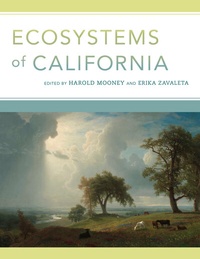
Ecosystems of California
1st Edition
Published on 19. January 2016
1008 pages
978-0-520-96217-0 (ISBN)
Description

This long-anticipated reference and sourcebook for California's remarkable ecological abundance provides an integrated assessment of each major ecosystem type-its distribution, structure, function, and management. A comprehensive synthesis of our knowledge about this biologically diverse state, Ecosystems of California covers the state from oceans to mountaintops using multiple lenses: past and present, flora and fauna, aquatic and terrestrial, natural and managed.
Each chapter evaluates natural processes for a specific ecosystem, describes drivers of change, and discusses how that ecosystem may be altered in the future. This book also explores the drivers of California's ecological patterns and the history of the state's various ecosystems, outlining how the challenges of climate change and invasive species and opportunities for regulation and stewardship could potentially affect the state's ecosystems. The text explicitly incorporates both human impacts and conservation and restoration efforts and shows how ecosystems support human well-being. Edited by two esteemed ecosystem ecologists and with overviews by leading experts on each ecosystem, this definitive work will be indispensable for natural resource management and conservation professionals as well as for undergraduate or graduate students of California's environment and curious naturalists.
Each chapter evaluates natural processes for a specific ecosystem, describes drivers of change, and discusses how that ecosystem may be altered in the future. This book also explores the drivers of California's ecological patterns and the history of the state's various ecosystems, outlining how the challenges of climate change and invasive species and opportunities for regulation and stewardship could potentially affect the state's ecosystems. The text explicitly incorporates both human impacts and conservation and restoration efforts and shows how ecosystems support human well-being. Edited by two esteemed ecosystem ecologists and with overviews by leading experts on each ecosystem, this definitive work will be indispensable for natural resource management and conservation professionals as well as for undergraduate or graduate students of California's environment and curious naturalists.
More details
Other editions
Additional editions
Harold Mooney | Erika Zavaleta
Ecosystems of California
Book
01/2016
1st Edition
University of California Press
€155.01
Shipment within 10-20 days
Persons
MooneyHarold:
Harold Mooney is Professor of Environmental Biology at Stanford University and a member of the National Academy of Sciences. He has authored over 400 scientific articles and is coeditor of Methods in Ecosystem Science (Springer, 2013) and Invasive Species in a Changing World (Island, 2000), among other books.
Erika Zavaleta is Professor of Environmental Studies at University of California, Santa Cruz. Her research bridges ecological theory with conservation and management practice. She received the 2008 Sustainability Science Award from the Ecological Society of America and has published in Science, Nature, and the Proceedings of the National Academy of Sciences.
Harold Mooney is Professor of Environmental Biology at Stanford University and a member of the National Academy of Sciences. He has authored over 400 scientific articles and is coeditor of Methods in Ecosystem Science (Springer, 2013) and Invasive Species in a Changing World (Island, 2000), among other books.
Erika Zavaleta is Professor of Environmental Studies at University of California, Santa Cruz. Her research bridges ecological theory with conservation and management practice. She received the 2008 Sustainability Science Award from the Ecological Society of America and has published in Science, Nature, and the Proceedings of the National Academy of Sciences.
Content
Contributors
Preface and Acknowledgments
Marine and Terrestrial Maps of California
1. Introduction (Erika Zavaleta and Harold Mooney)
DRIVERS
2. Climate (Sam F. Iacobellis, Daniel R. Cayan, John T. Abatzoglou, and Harold Mooney)
3. Fire as an Ecosystem Process (Jon E. Keeley and Hugh D. Safford)
4. Geomorphology and Soils (Robert C. Graham and Toby A. O'Geen)
5. Population and Land Use (Peter S. Alagona, Tim Paulson, Andrew B. Esch, and Jessica Marter-Kenyon)
6. Oceanography (Steven J. Bograd, Andrew Leising, and Elliott L. Hazen)
7. Atmospheric Chemistry (Andrzej Bytnerowicz, Mark Fenn, Edith B. Allen, and Ricardo Cisneros)
HISTORY
8. Ecosystems Past: Vegetation Prehistory (Constance I. Millar and Wallace B. Woolfenden)
9. Paleovertebrate Communities (Elizabeth A. Hadly and Robert S. Feranec)
10. Indigenous California (Terry L. Jones and Kacey Hadick)
BIOTA
11. Biodiversity (Bernie Tershy, Susan Harrison, Abraham Borker, Barry Sinervo, Tara Cornelisse, Cheng Li, Dena Spatz, Donald Croll, and Erika Zavaleta)
12. Vegetation (Christopher R. Dolanc, Todd Keeler-Wolf, and Michael G. Barbour)
13. Biological Invasions (Erika Zavaleta, Elissa Olimpi, Amelia A. Wolf, Bronwen Stanford, Jae Pasari, Sarah Skikne, Paulo Quadri, Katherine Ennis, and Flavia Oliveira)
14. Climate Change Impacts (Christopher B. Field, Nona R. Chiariello, and Noah S. Diffenbaugh)
15. Introduction to Concepts of Biodiversity, Ecosystem Functioning, Ecosystem Services, and Natural Capital (Rebecca Chaplin-Kramer, Lisa Mandle, Elizabeth Rauer, and Suzanne Langridge)
ECOSYSTEMS
16. The Offshore Ecosystem (Steven J. Bograd, Elliott L. Hazen, Sara M. Maxwell, Andrew W. Leising, Helen Bailey, and Richard D. Brodeur)
17. Shallow Rocky Reefs and Kelp Forests (Mark H. Carr and Daniel C. Reed)
18. Intertidal (Carol A. Blanchette, Mark W. Denny, John M. Engle, Brian Helmuth, Luke P. Miller, Karina J. Nielsen, and Jayson Smith)
19. Estuaries: Life on the Edge (James E. Cloern, Patrick Barnard, Erin Beller, John Callaway, J. Letitia Grenier, Edwin D. Grosholz, Robin Grossinger, Kathy Hieb, James T. Holligaugh, Noah Knowles, Martha Sutula, Samuel Veloz, Kerstin Wasson, and Alison Whipple)
20. Sandy Beaches (Jenifer E. Dugan and David M. Hubbard)
21. Coastal Dunes (Peter Alpert)
22. Coastal Sage Scrub (Elsa E. Cleland, Jennifer Funk, and Edith B. Allen)
23. Grasslands (Valerie T. Eviner)
24. Chaparral (V. Thomas Parker, R. Brandon Pratt, and Jon E. Keeley)
25. Oak Woodlands (Frank W. Davis, Dennis D. Baldocchi, and Claudia M. Tyler)
26. Coast Redwood Forests (Harold Mooney and Todd E. Dawson)
27. Montane Forests (Malcolm North, Brandon Collins, Hugh Safford, and Nathan L. Stephenson)
28. Subalpine Forests (Constance I. Millar and Philip W. Rundel)
29. Alpine Ecosystems (Philip W. Rundel and Constance I. Millar)
30. Deserts (Jayne Belnap, Robert H. Webb, Todd C. Esque, Matthew L. Brooks, Lesley A. DeFalco, and James A. MacMahon)
31. Wetlands (Walter G. Duffy, Philip Garone, Brenda J. Grewell, Sharon Kahara, Joseph Fleskes, Brent Helm, Peter Moyle, Rosemary Records, and Joseph Silveira)
32. Lakes (John Melack and S. Geoffrey Schladow)
33. Rivers (Mary E. Power, Sarah J. Kupferberg, Scott D. Cooper, and Michael L. Deas)
Managed Systems
34. Managed Island Ecosystems (Kathryn McEachern, Tanya Atwater, Paul W. Collins, Kate Faulkner, and Daniel V. Richards)
35. Marine Fisheries (Eric P. Bjorkstedt, John C. Field, Milton Love, Laura Rogers-Bennett, and Rick Starr)
36. Forestry (William Stewart, Benktesh Sharma, Rob York, Lowell Diller, Nadia Hamey, Roger Powell, and Robert Swiers)
37. Range Ecosystems (Sheri Spiegal, Lynn Huntsinger, Peter Hopkinson, and James Bartolome)
38. Agriculture (Alex McCalla and Richard Howitt)
39. Urban Ecosystems (Diane E. Pataki, G. Darrel Jenerette, Stephanie Pincetl, Tara L. E. Trammell, and La'Shaye Ervin)
POLICY AND STEWARDSHIP
40. Land Use Regulation for Resource Conservation (Stephanie Pincetl, Terry Watt, and Maria Santos)
41. Stewardship, Conservation, and Restoration in the Context of Environmental Change (Adina M. Merenlender, David D. Ackerly, Katherine Suding, M. Rebecca Shaw, and Erika Zavaleta)
INDEX
Preface and Acknowledgments
Marine and Terrestrial Maps of California
1. Introduction (Erika Zavaleta and Harold Mooney)
DRIVERS
2. Climate (Sam F. Iacobellis, Daniel R. Cayan, John T. Abatzoglou, and Harold Mooney)
3. Fire as an Ecosystem Process (Jon E. Keeley and Hugh D. Safford)
4. Geomorphology and Soils (Robert C. Graham and Toby A. O'Geen)
5. Population and Land Use (Peter S. Alagona, Tim Paulson, Andrew B. Esch, and Jessica Marter-Kenyon)
6. Oceanography (Steven J. Bograd, Andrew Leising, and Elliott L. Hazen)
7. Atmospheric Chemistry (Andrzej Bytnerowicz, Mark Fenn, Edith B. Allen, and Ricardo Cisneros)
HISTORY
8. Ecosystems Past: Vegetation Prehistory (Constance I. Millar and Wallace B. Woolfenden)
9. Paleovertebrate Communities (Elizabeth A. Hadly and Robert S. Feranec)
10. Indigenous California (Terry L. Jones and Kacey Hadick)
BIOTA
11. Biodiversity (Bernie Tershy, Susan Harrison, Abraham Borker, Barry Sinervo, Tara Cornelisse, Cheng Li, Dena Spatz, Donald Croll, and Erika Zavaleta)
12. Vegetation (Christopher R. Dolanc, Todd Keeler-Wolf, and Michael G. Barbour)
13. Biological Invasions (Erika Zavaleta, Elissa Olimpi, Amelia A. Wolf, Bronwen Stanford, Jae Pasari, Sarah Skikne, Paulo Quadri, Katherine Ennis, and Flavia Oliveira)
14. Climate Change Impacts (Christopher B. Field, Nona R. Chiariello, and Noah S. Diffenbaugh)
15. Introduction to Concepts of Biodiversity, Ecosystem Functioning, Ecosystem Services, and Natural Capital (Rebecca Chaplin-Kramer, Lisa Mandle, Elizabeth Rauer, and Suzanne Langridge)
ECOSYSTEMS
16. The Offshore Ecosystem (Steven J. Bograd, Elliott L. Hazen, Sara M. Maxwell, Andrew W. Leising, Helen Bailey, and Richard D. Brodeur)
17. Shallow Rocky Reefs and Kelp Forests (Mark H. Carr and Daniel C. Reed)
18. Intertidal (Carol A. Blanchette, Mark W. Denny, John M. Engle, Brian Helmuth, Luke P. Miller, Karina J. Nielsen, and Jayson Smith)
19. Estuaries: Life on the Edge (James E. Cloern, Patrick Barnard, Erin Beller, John Callaway, J. Letitia Grenier, Edwin D. Grosholz, Robin Grossinger, Kathy Hieb, James T. Holligaugh, Noah Knowles, Martha Sutula, Samuel Veloz, Kerstin Wasson, and Alison Whipple)
20. Sandy Beaches (Jenifer E. Dugan and David M. Hubbard)
21. Coastal Dunes (Peter Alpert)
22. Coastal Sage Scrub (Elsa E. Cleland, Jennifer Funk, and Edith B. Allen)
23. Grasslands (Valerie T. Eviner)
24. Chaparral (V. Thomas Parker, R. Brandon Pratt, and Jon E. Keeley)
25. Oak Woodlands (Frank W. Davis, Dennis D. Baldocchi, and Claudia M. Tyler)
26. Coast Redwood Forests (Harold Mooney and Todd E. Dawson)
27. Montane Forests (Malcolm North, Brandon Collins, Hugh Safford, and Nathan L. Stephenson)
28. Subalpine Forests (Constance I. Millar and Philip W. Rundel)
29. Alpine Ecosystems (Philip W. Rundel and Constance I. Millar)
30. Deserts (Jayne Belnap, Robert H. Webb, Todd C. Esque, Matthew L. Brooks, Lesley A. DeFalco, and James A. MacMahon)
31. Wetlands (Walter G. Duffy, Philip Garone, Brenda J. Grewell, Sharon Kahara, Joseph Fleskes, Brent Helm, Peter Moyle, Rosemary Records, and Joseph Silveira)
32. Lakes (John Melack and S. Geoffrey Schladow)
33. Rivers (Mary E. Power, Sarah J. Kupferberg, Scott D. Cooper, and Michael L. Deas)
Managed Systems
34. Managed Island Ecosystems (Kathryn McEachern, Tanya Atwater, Paul W. Collins, Kate Faulkner, and Daniel V. Richards)
35. Marine Fisheries (Eric P. Bjorkstedt, John C. Field, Milton Love, Laura Rogers-Bennett, and Rick Starr)
36. Forestry (William Stewart, Benktesh Sharma, Rob York, Lowell Diller, Nadia Hamey, Roger Powell, and Robert Swiers)
37. Range Ecosystems (Sheri Spiegal, Lynn Huntsinger, Peter Hopkinson, and James Bartolome)
38. Agriculture (Alex McCalla and Richard Howitt)
39. Urban Ecosystems (Diane E. Pataki, G. Darrel Jenerette, Stephanie Pincetl, Tara L. E. Trammell, and La'Shaye Ervin)
POLICY AND STEWARDSHIP
40. Land Use Regulation for Resource Conservation (Stephanie Pincetl, Terry Watt, and Maria Santos)
41. Stewardship, Conservation, and Restoration in the Context of Environmental Change (Adina M. Merenlender, David D. Ackerly, Katherine Suding, M. Rebecca Shaw, and Erika Zavaleta)
INDEX
