

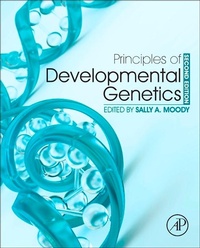
Principles of Developmental Genetics
2nd Edition
Published on 2. September 2014
784 pages
978-0-12-405923-8 (ISBN)
Description

Providing expert coverage of all major events in early embryogenesis and the organogenesis of specific systems, and supplemented with representative clinical syndromes, Principles of Developmental Genetics, Second Edition discusses the processes of normal development in embryonic and prenatal animals, including humans. The new edition of this classic work supports clinical researchers developing future therapies with its all-new coverage of systems biology, stem cell biology, new technologies, and clinical disorders. A crystal-clear layout, exceptional full-color design, and bulleted summaries of major takeaways and clinical pathways assist comprehension and readability of the highly complex content.
- All-new coverage of systems biology and stem cell biology in context of evolving technologies places the work squarely on the modern sciences
- Chapters are complemented with a bulleted summary for easy digestion of the major points, with a clinical summary for therapeutic application
- Clinical highlights provides a bridge between basic developmental biology and clinical sciences in embryonic and prenatal syndromes
More details
Other editions
Additional editions
Sally A. Moody
Principles of Developmental Genetics
Book
09/2014
2nd Edition
Academic Press
€184.50
Shipment within 15-20 days
Content
Section I: Emerging Technologies and Systems Biology1. Untangling the Gordian knot: Cell signaling events that instruct development2. RNA-seq and deep sequencing3. Using mutagenesis in mice and zebrafish for developmental gene discovery4. Chemical approaches to control stem cell fate5. BMP signaling and stem cell self-renewal in the Drosophila ovary6. Genomic Analyses of Neural Stem Cells7. Chordate origins, stem cells and regeneration
Section II: Early Embryology and Morphogenesis8. Dorsal-ventral axis patterning in insects 9. Building dimorphic forms: an examination of the genetic pathways that intersect embryonic patterning and sex determination10. Anterior-Posterior patterning in mammals11. Early development of epidermis and neural tissue12. Taking the middle road: mesoderm induction and the blastula-gastrula transition13. Endoderm induction14. Epithelial branching: mechanisms of patterning and self-organization15. Lateral line migration
Section III: Organogenesis16. Neural cell fate determination17. Retinal development18. Neural crest determination19. Determination of preplacodal ectoderm and sensory placodes20. Olfactory development21. Inner ear development22. Molecular genetics of tooth development23. Induction of the cardiac lineages 24. Blood vessel formation25. Blood induction and embryonic formation26. Vertebrate kidney formation: a comparative perspective27. Development of the genital system28. Skeletal development29. Formation of vertebrate limbs30. Patterning the embryonic endoderm into presumptive organ domains31. Pancreas Development and Regeneration
Section IV: Selected Clinical Problems32. Diaphragmatic embryogenesis and human congenital diaphragmatic defects33. Genetic and developmental basis of congenital cardiovascular malformations34. Multiple Roles of T-box genes35. Craniofacial syndromes: etiology, impact and treatment36. DeGeorge and related syndromes37. Neural tube defects
