

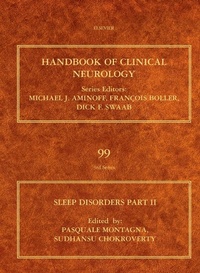
Sleep Disorders Part II
Published on 27. November 2012
560 pages
978-0-444-53482-8 (ISBN)
Description

Sleep Disorders II covers various aspects of sleep disorders. These include the different classification of sleep disorders, the genetic influences of sleep disorders, abnormality in the sleeping pattern, and the circadian rhythm sleep disorder. A sleep disorder is a medical disorder that affects the sleeping patterns of humans (and sometimes animals). The disruptions in sleep can be caused by different factors, such as teeth grinding, night terrors, and the like. The book also discusses different perspectives on insomnia and hypersomnia. According to the International Classification of Sleep Disorders, insomnia is a sleep that is low in quality or a difficulty in sleeping. On the other hand, hypersomnia is a sleeping disorder characterized by excessive daytime sleepiness (EDS) or prolonged nighttime sleep. The book discusses narcolepsy, a syndrome that is characterized by excessive daytime sleepiness that is associated with cataplexy and other REM sleep phenomena. The different medicines for this disease are also discussed. People who are practicing neurology and internal medicine, especially those in pulmonary, cardiovascular, gastrointestinal, renal and endocrine specialties, will find this book valuable.
- A comprehensive resource for the study of sleep science, sleep medicine, and sleep disorders
- Fascinating noninvasive neuroimaging studies that demonstrate marked changes during different sleep states
- A state-of-the-art reference that summarizes the clinical features and management of many of the neurological manifestations of sleep disorders
More details
Other editions
Additional editions
Book
12/2010
Elsevier
€271.50
Shipment within 15-20 days
Content
Section 1 History of sleep medicine1. History of sleep medicine
Section 2 Basic science and methods2. Normal sleep-recording and scoring techniques3. Assessment of daytime sleepiness4. Actigraphic monitoring of sleep and circadian rhythms5. Video recordings and video polysomnography 6. Functional neuroimaging in sleep, sleep deprivation, and sleep disorders
Section 3 Basic mechanisms of sleep7. The phylogeny of sleep8. Ontogeny of EEG sleep from neonatal through infancy periods9. Neurobiology of waking and sleeping10. Neurobiology of REM sleep11. Neurochemistry of sleep: an overview of animal experimental work12. Molecular neurobiology of sleep13. Manifestations and functional implications of sleep homeostasis14. Thermoregulation in wakefulness and sleep in humans15. Cytokines in immune function and sleep regulation 16. Endocrine and metabolic changes during sleep17. Sleep, memory, and molecular neurobiology
Section 4 Clinical aspects of sleep disorders18. Epidemiology of sleep disorders 19. Cardiovascular and cerebrovascular physiology in sleep20. Cardiovascular diseases and sleep apnea21. Alterations in gastrointestinal functioning during sleep22. Sleep and genitourinary systems: physiology and disorders23. Sleep enuresis 24. Respiratory physiology in sleep and wakefulness 25. Obstructive sleep apnea: diagnosis, risk factors, and pathophysiology26. Upper-airway resistance syndrome27. Central sleep apnea28. Positive-pressure treatment of obstructive sleep apnea syndrome29. Medical and surgical treatment of obstructive sleep apnea syndrome, including dental appliances30. Noninvasive positive ventilation in the treatment of sleep-related breathing disorders31. Sleep and pulmonary diseases32. Sleep-associated respiratory disorders and their psychobehavioral consequences in children33. Sudden death in infants during sleep34. Neurobiology and the neurological basis of dreaming35. Abnormal dreams and nightmare disorders36. Sleep and psychiatric diseases37. Sleep-related eating disorder38. Alcohol, toxins, and medications as a cause of sleep dysfunction39. Sleep, pain, fibromyalgia, and chronic fatigue syndrome40. Women and sleep41. Normal and abnormal sleep in the elderly
Section 5 Classification of sleep disorders42. Classification of sleep disorders
Section 6 Genetics of sleep disorders43. Genetics of sleep disorders
Section 7 Insomnia44. Neurological perspectives in insomnia and hyperarousal syndromes45. Insomnia: nature, diagnosis, and treatment46. Pharmacotherapy for insomnia
Section 8 Hypersomnia47. Hypothalamus, hypocretins/orexin, and vigilance control48. Narcolepsy and cataplexy 49. Recurrent hypersomnias50. Excessive daytime sleepiness
Section 9 Abnormal movements in sleep51. Motor control in sleep52. NREM parasomnias53. REM sleep parasomnias54. Isolated motor phenomena and symptoms of sleep55. Sleep bruxism56. Restless-legs syndrome and periodic leg movements in sleep
Section 10 Circadian rhythm sleep disorders57. Molecular neurobiology of circadian rhythms58. Circadian rhythm sleep disorders
Section 11 Sleep and neurological disorders59. Fatal familial insomnia and the role of the thalamus in sleep regulation 60. Sleep disorders in Parkinson's disease61. Sleep disorders in neurodegenerative diseases other than Parkinson's disease 62. Sleep and stroke 63. Sleep and headache64. Sleep and breathing in neuromuscular disorders65. Sleep-related epilepsy 66. Sleep disorders in multiple sclerosis
Section 12 Sleep and violence67. Violent parasomnias: forensic implications
