

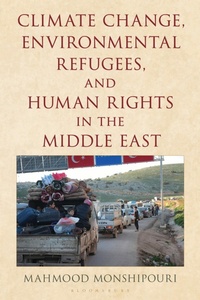
Climate Change, Environmental Refugees, and Human Rights in the Middle East
Published on 5. February 2026
328 pages
979-8-216-37658-3 (ISBN)
Description

This in-depth and readable text introduces students to the current and historical impacts of climate change on the region.
The Middle East and North Africa (MENA) region has experienced more frequent droughts, heat waves, and other extreme weather events than the rest of the world. Flooding has forced human migration and displacement in Egypt, Iran, and Tunisia in 2020, while wildfires have spread in Lebanon, Syria, and Turkey. The author, a specialist in the MENA region, unpacks the implications of several developments that have triggered large-scale migration from rural to urban areas in the Middle East, and North Africa, and threaten to destabilize the region. These include, among other things, widespread famine, population displacement, and the growing decline of agricultural productivity.
Digging deep into key terminology and frameworks such as the 1951 Refugee Convention, climate-human rights nexus, climate-related protest, environmental politics, green investment, and climate governance, the author demonstrates how human rights and climate change are inextricably intertwined and provides additional context to support student learning. This book examines the environmental threats and history of individual countries, including a survey of how the issues of climate change, forced migration, and human rights interface with socioeconomic, political, and legal perspectives.
The Middle East and North Africa (MENA) region has experienced more frequent droughts, heat waves, and other extreme weather events than the rest of the world. Flooding has forced human migration and displacement in Egypt, Iran, and Tunisia in 2020, while wildfires have spread in Lebanon, Syria, and Turkey. The author, a specialist in the MENA region, unpacks the implications of several developments that have triggered large-scale migration from rural to urban areas in the Middle East, and North Africa, and threaten to destabilize the region. These include, among other things, widespread famine, population displacement, and the growing decline of agricultural productivity.
Digging deep into key terminology and frameworks such as the 1951 Refugee Convention, climate-human rights nexus, climate-related protest, environmental politics, green investment, and climate governance, the author demonstrates how human rights and climate change are inextricably intertwined and provides additional context to support student learning. This book examines the environmental threats and history of individual countries, including a survey of how the issues of climate change, forced migration, and human rights interface with socioeconomic, political, and legal perspectives.
More details
Language
English
Place of publication
United States
Publishing group
Bloomsbury Publishing Plc
File size
0,61 MB
ISBN-13
979-8-216-37658-3 (9798216376583)
Copyright in bibliographic data and cover images is held by Nielsen Book Services Limited or by the publishers or by their respective licensors: all rights reserved.
Schweitzer Classification
Other editions
Additional editions
Mahmood Monshipouri
Climate Change, Environmental Refugees, and Human Rights in the Middle East
Book
approx. 04/2026
Bloomsbury Academic USA
€36.50
Not yet published
Person
MAHMOOD MONSHIPOURI is Professor of International Relations at San Francisco State University, USA, and Lecturer at the University of California, Berkeley, USA.
Content
Table of Contents
Acknowledgements
Part I: Concepts, Frameworks, and the Research Agenda
Chapter 1: Introduction
Chapter 2: A Political Framework: Environmental Security and Activism
Chapter 3: A Socioeconomic Framework: Refugees' Right to Work
Chapter 4: A Legal Framework: Making a Case for Climate Refugees
Part II: Political Tensions, Refugee Crisis, and Climate Change
Chapter 5: Turkey: Refugees, Forced Migration, and Climate Change
Chapter 6: Egypt: The Growing Relevance of Climate Change Politics
Chapter 7: Syria: Climate Change and Syrian Civil War Reexamined
Chapter 8: Yemen: The War, Human Security, and the Environment
Part III: Environmental Decline, Political Economy, and Adaptation Plans
Chapter 9: Iran: Environmental Decline, Climate Displacement, and Growing Protests
Chapter 10: GCC: Climate Change and the Political Economy of Adaptation
Chapter 11: Morocco: Politics, Green Investment, and Adaptation Plans
Chapter 12: Conclusion: Weighing the Uncertainty
Acknowledgements
Part I: Concepts, Frameworks, and the Research Agenda
Chapter 1: Introduction
Chapter 2: A Political Framework: Environmental Security and Activism
Chapter 3: A Socioeconomic Framework: Refugees' Right to Work
Chapter 4: A Legal Framework: Making a Case for Climate Refugees
Part II: Political Tensions, Refugee Crisis, and Climate Change
Chapter 5: Turkey: Refugees, Forced Migration, and Climate Change
Chapter 6: Egypt: The Growing Relevance of Climate Change Politics
Chapter 7: Syria: Climate Change and Syrian Civil War Reexamined
Chapter 8: Yemen: The War, Human Security, and the Environment
Part III: Environmental Decline, Political Economy, and Adaptation Plans
Chapter 9: Iran: Environmental Decline, Climate Displacement, and Growing Protests
Chapter 10: GCC: Climate Change and the Political Economy of Adaptation
Chapter 11: Morocco: Politics, Green Investment, and Adaptation Plans
Chapter 12: Conclusion: Weighing the Uncertainty
