

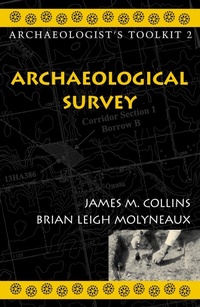
Archaeological Survey
1st Edition
Published on 16. April 2003
1 pages
979-8-216-23482-1 (ISBN)
Description

Two longtime fieldworkers offer mentors' advice on finding and mapping archaeological sites. They outline the logic behind field surveying and the various designs used for survey projects. Recognizing that logistical issues-like schedule, budget, and equipment-are equally important to complete the job, particularly in a cultural resource management context, the authors also guide new professionals through the practical details of their work. The volume also ranges through the legal and ethical context of fieldwork and the various geophysical methods available for non-intrusive surveying. As a handy guide for novices, or a text for students and field schools, Collins and Molyneaux's book will be the place to start.
More details
Other editions
Additional editions
Brian Leigh Molyneaux | James J. Collins
Archaeological Survey
Book
04/2003
AltaMira Press
€122.50
No shipping information available
Content
Part 1 I. The Survey Life
Part 2 II. The Law, the Process, and the Players
Chapter 3 Why Survey?
Chapter 4 Regulations in the United States
Chapter 5 Regulations in Canada
Chapter 6 Who Surveys?
Part 7 III. Survey Design
Part 8 IV. Pre-Field Strategies
Chapter 9 Implementing the Research Design
Chapter 10 The Two-Headed Monster
Chapter 11 Getting Started
Chapter 12 Background Research
Chapter 13 The Physical Setting
Chapter 14 The Cultural Setting
Part 15 V. Getting into the Field
Chapter 16 Personnel
Chapter 17 Equipment
Chapter 18 Local Relations
Chapter 19 Native American, First Nations, and Ethnic Community Issues
Chapter 20 Traditional Cultural Properties
Chapter 21 Consulting with Other Specialists
Chapter 22 Survey Methods
Chapter 23 Surface Discovery Techniques
Chapter 24 Subsurface Discovery Techniques
Chapter 25 Field Evaluation to Determine Potential Eligibility for the National Register
Part 26 VI. Indirect Exploration Techniques
Chapter 27 Metal Detector
Chapter 28 Electrical Resistivity
Chapter 29 Electromagnetic Conductivity
Chapter 30 Ground Penetrating Radar
Chapter 31 Magnetometry
Chapter 32 Magnetic Susceptibility
Part 33 VII. Recording and Mapping
Chapter 34 Reading Maps and Aerial Photographs
Chapter 35 Drafting Maps
Chapter 36 Global Positioning Systems
Chapter 37 Geographic Information Systems
Part 38 VIII. The Report
Chapter 39 Structure and Content
Chapter 40 Title Page
Chapter 41 Front Matter
Chapter 42 Abstract
Chapter 43 Introduction
Chapter 44 Project Area Description, a.k.a., Environmental Context
Chapter 45 Previous Archaeological Investigations
Chapter 46 Research Design
Chapter 47 Methods
Chapter 48 Results
Chapter 49 Archaeological Synthesis
Chapter 50 Summary and Recommendations
Chapter 51 Acknowledgments
Chapter 52 References Cited
Chapter 53 Figures
Chapter 54 Tables
Chapter 55 Appedices
Part 56 IX. Trying to Make it Real, Compared to What?
Part 57 References
Part 58 Index
Part 2 II. The Law, the Process, and the Players
Chapter 3 Why Survey?
Chapter 4 Regulations in the United States
Chapter 5 Regulations in Canada
Chapter 6 Who Surveys?
Part 7 III. Survey Design
Part 8 IV. Pre-Field Strategies
Chapter 9 Implementing the Research Design
Chapter 10 The Two-Headed Monster
Chapter 11 Getting Started
Chapter 12 Background Research
Chapter 13 The Physical Setting
Chapter 14 The Cultural Setting
Part 15 V. Getting into the Field
Chapter 16 Personnel
Chapter 17 Equipment
Chapter 18 Local Relations
Chapter 19 Native American, First Nations, and Ethnic Community Issues
Chapter 20 Traditional Cultural Properties
Chapter 21 Consulting with Other Specialists
Chapter 22 Survey Methods
Chapter 23 Surface Discovery Techniques
Chapter 24 Subsurface Discovery Techniques
Chapter 25 Field Evaluation to Determine Potential Eligibility for the National Register
Part 26 VI. Indirect Exploration Techniques
Chapter 27 Metal Detector
Chapter 28 Electrical Resistivity
Chapter 29 Electromagnetic Conductivity
Chapter 30 Ground Penetrating Radar
Chapter 31 Magnetometry
Chapter 32 Magnetic Susceptibility
Part 33 VII. Recording and Mapping
Chapter 34 Reading Maps and Aerial Photographs
Chapter 35 Drafting Maps
Chapter 36 Global Positioning Systems
Chapter 37 Geographic Information Systems
Part 38 VIII. The Report
Chapter 39 Structure and Content
Chapter 40 Title Page
Chapter 41 Front Matter
Chapter 42 Abstract
Chapter 43 Introduction
Chapter 44 Project Area Description, a.k.a., Environmental Context
Chapter 45 Previous Archaeological Investigations
Chapter 46 Research Design
Chapter 47 Methods
Chapter 48 Results
Chapter 49 Archaeological Synthesis
Chapter 50 Summary and Recommendations
Chapter 51 Acknowledgments
Chapter 52 References Cited
Chapter 53 Figures
Chapter 54 Tables
Chapter 55 Appedices
Part 56 IX. Trying to Make it Real, Compared to What?
Part 57 References
Part 58 Index
