

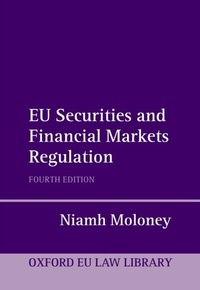
EU Securities and Financial Markets Regulation
1st Edition
Published on 25. March 2023
920 pages
978-0-19-258341-3 (ISBN)
Description

Over the decade or so since the global financial crisis rocked EU financial markets and led to wide-ranging reforms, EU securities and financial markets regulation has continued to evolve. The legislative framework has been refined and administrative rulemaking has expanded. Alongside, the Capital Markets Union agenda has developed, the UK has left the EU, and ESMA has emerged as a decisive influence on EU financial markets governance. All these developments, as well as the Covid-19 pandemic, have shaped the regulatory landscape and how supervision is organized. EU Securities and Financial Markets Regulation provides a comprehensive, critical, and contextual account of the intricate rulebook that governs EU financial markets and its supporting institutional arrangements. It is framed by an assessment of how the regime has evolved over the decade or so since the global financial crisis and considers, among other matters, the post-crisis reforms to key legislative measures, the massive expansion of administrative rulemaking and of soft law, the Capital Markets Union agenda, the development of supervisory convergence as the means for organizing pan-EU supervision, and ESMA's role in EU financial markets governance. Its coverage extends from capital-raising and the Prospectus Regulation to financial market intermediation and the MiFID II/MiFIR and IFD/IFR regimes, to the new regulatory regimes adopted since the global financial crisis (including for benchmarks and their administrators), to retail market regulation and the PRIIPs Regulation, and on to the EU's third country regime and the implications of the UK's departure from the EU. This is the fourth edition of the highly successful and authoritative monograph first published as EC Securities Regulation. Heavily revised from the third edition to reflect developments since the global financial crisis, it adopts the in-depth contextual and analytical approach of earlier editions and so considers the market, political, institutional, and international context of the regulatory and supervisory regime.
More details
Other editions
Additional editions
Niamh Moloney
EU Securities and Financial Markets Regulation
Book
04/2023
4th Edition
Oxford University Press
€280.80
Shipment within 15-20 days
Content
- Cover
- Series
- EU Securities and Financial Markets Regulation
- Copyright
- Dedication
- Preface
- Contents
- Detailed Contents
- Table of Cases
- Table of Legislation
- List of Abbreviations
- I. The Institutional Setting
- I.1 EU Securities and Financial Markets Regulation
- I.2 The Objectives of Financial Markets Regulation
- I.3 Financial Markets Regulation and the EU: Building an Integrated EU Financial Market
- I.3.1 The Treaties and the Single Market: The Role of Law
- I.3.2 Market Finance, Financial Market Integration, and Capital Markets Union
- I.4 From the Segré Report to the Covid-?19 Pandemic
- I.5 EU Financial Markets Governance: Law-?making and Supervision
- I.5.1 Law-?making
- I.5.2 Supervision and Enforcement
- I.6 EU Financial Markets Governance: ESMA
- I.6.1 ESMA
- I.6.2 Origins and Evolution
- I.6.3 Governance, Powers, and Legitimation
- I.6.4 Regulatory Governance
- I.6.5 Supervisory Convergence, Risk Monitoring, and Direct Intervention
- I.6.6 Centralized Supervision, ESMA, and the EU Financial Market
- I.7 Looking to the Future
- I.7.1 Bending to Uniformity?
- I.7.2 Sustainable Finance
- I.7.3 Technological Innovation and Digital Finance
- II. Capital-?Raising
- II.1 Introduction
- II.1.1 Introduction
- II.1.2 The EU Issuer Disclosure Rulebook
- II.2 Capital Markets, Issuer Disclosure, and the EU
- II.2.1 Capital Markets and Issuer Disclosure
- II.2.2 Issuer Disclosure and the EU: Market Finance and Market Integration
- II.3 The Evolution of the Issuer Disclosure Regime
- II.3.1 A Dynamic History
- II.3.2 Early Efforts
- II.3.3 The FSAP and Reform
- II.3.4 The Global Financial Crisis Era
- II.3.5 In the Wake of the Global Financial Crisis: Capital Markets Union and the Covid-?19 Pandemic
- II.3.6 The SME Agenda
- II.4 The Prospectus Regulation
- II.4.1 The Evolution of the Prospectus Regime
- II.4.2 The Prospectus Rulebook: Legislation, Administrative Rules, and Soft Law
- II.4.3 Setting the Perimeter: Public and Private Markets
- II.4.4 The Prospectus: Disclosure
- II.4.5 Prospectus Format: The Standard Form
- II.4.6 Publication and Dissemination
- II.4.7 Prospectus Supplements
- II.4.8 Prospectus Validity
- II.4.9 Calibration and Differentiation: Multiple Prospectus Formats
- II.4.10 Market Integration: Prospectus Approval and the Passport Mechanism
- II.4.11 Advertising
- II.4.12 Supervision and Enforcement
- II.5 Ongoing and Periodic Disclosure: The Transparency Directive and the Market Abuse Regime
- II.5.1 The Transparency Directive
- II.5.2 The Transparency Directive: Evolution
- II.5.3 The Transparency Rulebook: Legislation, Administrative Rules, and Soft Law
- II.5.4 The Transparency and Prospectus Rules: An Integrated Regime?
- II.5.5 Transparency Directive: Scope
- II.5.6 Transparency Directive: Differentiation, Exemptions, and SMEs
- II.5.7 Transparency Directive: The Issuer Disclosure Regime
- II.5.8 Transparency Directive: Ongoing Disclosure on Major Holdings
- II.5.9 Transparency Directive: Market Integration and Home Member State Control
- II.5.10 Transparency Directive: Supervision and Enforcement
- II.5.11 Ad Hoc Disclosure and the Market Abuse Regime
- II.6 Financial Reporting and International Financial Reporting Standards (IFRS)
- II.6.1 The EU Financial Reporting Framework
- II.6.2 IFRS and the IAS Regulation
- II.6.3 Incorporating IFRS in the EU: The Endorsement Mechanism
- II.6.4 IFRS, ESMA, and Supervisory Convergence
- II.7 Filing and Dissemination of Issuer Disclosures
- II.7.1 Substantive and Operational Harmonization
- II.7.2 Filing Ongoing Issuer Disclosures
- II.7.3 Dissemination of Ongoing Issuer Disclosure
- II.8 Admission to Trading and to Official Listing
- II.8.1 Trading Venues and Capital-?raising
- II.8.2 Regulated Markets and Perimeter Control
- II.8.3 The Admission of Securities to Trading
- II.9 Capital-?raising and Investment Research
- II.9.1 Investment Research, Gatekeeping, and Regulation
- II.9.2 The Evolution of the EU's Response
- II.9.3 Presentation Requirements and Conflict of Interest Management
- II.9.4 Unbundling the Cost of Investment Research
- II.10 Issuer Disclosure and Sustainable Finance
- II.11 Capital-?raising and Digital Finance
- II.11.1 The Issuer Disclosure Regime and Digital Assets
- II.11.2 The 2020 Crowdfunding Regulation
- II.12 The Wider Regulatory Ecosystem Supporting Capital-?raising
- II.13 Issuer Disclosure, Admission to Trading Venues, Reform, and the Market
- III. Collective Investment Management
- III.1 Introduction: Collective Investment Management
- III.2 The EU Collective Investment Management Rulebook
- III.3 The Evolution of the Collective Investment Management Regime
- III.3.1 From the UCITS Regime to the Global Financial Crisis
- III.3.2 The Post Global Financial Crisis Era: Stability Risks and Non-?Bank Financial Intermediation, Capital Markets Union, and Technocracy
- III.4 The UCITS Regime
- III.4.1 The Regulatory Context
- III.4.2 The Evolution of the UCITS Regime
- III.4.3 The UCITS Rulebook: Legislation, Administrative Rules, and Soft Law
- III.4.4 Setting the Perimeter: Scope of the UCITS Regime
- III.4.5 Market Integration: Authorization, the Passport, and UCITS Mergers
- III.4.6 Asset Allocation and Investment Limits
- III.4.7 The Management Company: Ongoing Regulation
- III.4.8 The Depositary
- III.4.9 UCITS Disclosure
- III.4.10 The Retail Markets
- III.4.11 Supervision and Enforcement
- III.5 The AIFMD
- III.5.1 The Regulatory and EU Context
- III.5.2 The Evolution of the AIFMD
- III.5.3 The AIFMD Rulebook: Legislation, Administrative Rules, and Soft Law
- III.5.4 The Directive: Objectives
- III.5.5 Calibration and Differentiation
- III.5.6 Setting the Perimeter: Scope
- III.5.7 Authorization and the AIFM Passport
- III.5.8 Operational and Organizational Requirements
- III.5.9 Risk Management
- III.5.10 Leverage: Macroprudential Risk Management and Loan Origination
- III.5.11 The Depositary
- III.5.12 Disclosure and Supervisory Reporting
- III.5.13 Private Equity AIFs
- III.5.14 The Retail Markets
- III.5.15 Supervision and Enforcement
- III.6 Discrete AIF Regulation: The EuVECA, EuSEF, and ELTIF Vehicles
- III.6.1 Fund Vehicles and Capital-?raising
- III.6.2 The EuVECA Regulation
- III.6.3 The EuSEF Regulation
- III.6.4 The European Long-?term Investment Fund
- III.7 Money-?Market Funds
- III.7.1 Money-?Market Funds and Liquidity Risks
- III.7.2 The MMF Regulation
- III.7.3 The March 2020 Liquidity Crisis and MMF Reform
- IV. Investment Firms and Investment Services
- IV.1 Introduction: The Intermediation Process, Investment Firms, and Regulation
- IV.2 The EU Investment Firm Rulebook
- IV.2.1 MiFID II/?MiFIR: A Brief Tour
- IV.2.2 Beyond MiFID II/?MiFIR
- IV.2.3 Organization of Coverage
- IV.3 The Evolution of MiFID II
- IV.3.1 Initial Developments and the 1993 Investment Services Directive
- IV.3.2 Pre-Global Financial Crisis: The Financial Services Action Plan and MiFID I
- IV.3.3 MiFID II: The MiFID I Review, the Global Financial Crisis, and the MiFID II Negotiations
- IV.3.4 The Post Global Financial Crisis Era: Prudential Regulation, Technocracy, and Legislative Reform
- IV.3.5 Sustainable Finance
- IV.4 The MiFID II Rulebook: Legislation, Administrative Rules, and Soft Law
- IV.5 Setting the MiFID II Perimeter: Scope
- IV.5.1 A Functional Approach
- IV.5.2 Investment Services and Activities
- IV.5.3 Financial Instruments
- IV.6 Calibration and Differentiation under MiFID II
- IV.6.1 Exemptions
- IV.6.2 Client Classification
- IV.7 The MiFID II Authorization Process
- IV.7.1 Jurisdiction to Authorize and the Home NCA
- IV.7.2 The Authorization Process
- IV.8 MiFID II Operating Conditions: Organizational and Conduct Requirements
- IV.8.1 A Multi-?layered Regime
- IV.8.2 Organizational and Operational Requirements
- IV.8.3 Conflict-?of-?interest Management
- IV.8.4 Conduct Regulation
- IV.8.5 Trading Rules, Trading Venues, and Transaction Reporting
- IV.9 Prudential Regulation
- IV.9.1 A Distinctive Regime
- IV.9.2 The Evolution of the Prudential Regime
- IV.9.3 The IFD/?IFR
- IV.9.4 CRD IV/?CRR
- IV.10 The Passport for Investment Services and Activities
- IV.10.1 Passport Rights and the Home NCA
- IV.10.2 Host Control and the Host NCA
- IV.10.3 The Notification Process
- IV.11 Supervision and Enforcement
- IV.11.1 MiFID II and IFD/?IFR-?CRD IV/?CRR
- IV.11.2 The MiFID II Supervisory Framework
- IV.11.3 Prudential Supervision and the SREP
- IV.11.4 Enforcement and Administrative Sanctions
- V. Order Execution Venues
- V.1 Order Execution Venues and Regulation
- V.1.1 Introduction
- V.1.2 Regulating Order Execution Venues
- V.1.3 Regulating Trading Venues and the EU
- V.2 The Evolution of the Venue Regime
- V.2.1 From Concentration to Competition: MiFID I
- V.2.2 Market Impact and MiFID I
- V.2.3 The MiFID I Review and the MiFID II/?MiFIR Proposals
- V.2.4 The MiFID II/?MiFIR Negotiations
- V.2.5 From 2014 to the 2021 MiFID III/?MiFIR 2 Proposal
- V.3 The Venue Rulebook: Legislation, Administrative Rules, and Soft Law
- V.4 MiFID II/?MiFIR and the Regulation of Order Execution Venues: Regulatory Design and Scope
- V.4.1 Multilateral and Bilateral Trading
- V.4.2 Multilateral Systems and 'Traded on a Trading Venue'
- V.4.3 Bilateral Systems
- V.4.4 Financial Instruments and Asset Classes
- V.5 Venue Classification
- V.5.1 The Classification System
- V.5.2 Regulated Markets
- V.5.3 Multilateral Trading Facilities
- V.5.4 Organized Trading Facilities
- V.5.5 Systematic Internalizers
- V.5.6 Investment Firms
- V.6 Authorization and Ongoing Regulation of Trading Venues: Regulated Markets
- V.6.1 A Flexible Regime
- V.6.2 Authorization
- V.6.3 Ongoing Requirements
- V.7 Authorization and Ongoing Regulation of Trading Venues: Multilateral Trading Facilities
- V.7.1 Authorization
- V.7.2 Ongoing Requirements
- V.8 Authorization and Ongoing Regulation of Trading Venues: Organized Trading Facilities
- V.9 Authorization and Ongoing Regulation of OTC Execution Venues: Dealing on Own Account
- V.9.1 Systematic Internalizers
- V.9.2 Dealing on Own Account
- V.10 Shrinking the OTC Space: The Share Trading Obligation
- V.11 Transparency Regulation
- V.11.1 The Transparency Framework
- V.11.2 The Equity/?Equity-?like Markets
- V.11.3 The Non-?equity Markets
- V.12 Data Distribution and Consolidation
- V.12.1 Enhancing the Data Framework
- V.12.2 Data Publication
- V.12.3 The Regulation of Data-?reporting Services Providers (DRSPs)
- V.12.4 The 2021 MiFID III/?MiFIR 2 Proposal and the Consolidated Tape Reform
- V.13 Supervision and Enforcement
- V.13.1 The MiFID II Framework
- V.13.2 Transaction Reporting
- V.14 Post-?trading, the Settlement Process, and the Central Securities Depositories Regulation
- VI. Trading
- VI.1 Introduction
- VI.1.1 Regulating Trading
- VI.1.2 Regulating Trading and the EU: A Distinct Setting
- VI.2 MiFID II/?MiFIR: The Regulation of Trading
- VI.2.1 The MiFID II/?MiFIR and IFD/?IFR/?CRD IV/?CRR Framework
- VI.2.2 The Order Execution Process
- VI.2.3 Algorithmic Trading and High Frequency Trading
- VI.2.4 Market-?making
- VI.2.5 The Commodity Derivatives Market and Position Management
- VI.3 The Regulation of Short Selling
- VI.3.1 Short Selling Regulation and the EU
- VI.3.2 The Evolution of the Short Selling Regulation
- VI.3.3 The Short Selling Rulebook: Legislation, Administrative Rules, and Soft Law
- VI.3.4 Setting the Perimeter: Scope and Exemptions
- VI.3.5 Restricting Short Sales: The Uncovered Short Sales Prohibition and 'Locate' Rules
- VI.3.6 Transparency of Net Short Positions: Supervisory Reporting and Public Disclosure
- VI.3.7 Intervention in Exceptional Circumstances
- VI.3.8 Supervision and Enforcement
- VI.3.9 Extraterritorial Reach
- VI.4 The Securities Financing Transactions Regulation
- VI.4.1 Securities Financing Transactions and the EU
- VI.4.2 The Regulation
- VI.4.3 Experience with the SFTR
- VI.5 The European Market Infrastructure Regulation and the OTC Derivatives Market
- VI.5.1 The Regulation of OTC Derivatives Trading and the EU
- VI.5.2 The Evolution of EMIR
- VI.5.3 The EMIR Rulebook: Legislation, Administrative Rules, and Soft Law
- VI.5.4 Setting the Perimeter: Scope and Exemptions
- VI.5.5 Calibration for Small Financial Counterparties and NFCs: The Clearing Thresholds
- VI.5.6 The CCP Clearing Obligation
- VI.5.7 The Risk Mitigation Obligation for non-?CCP-?cleared Derivatives: Margin and Collateral
- VI.5.8 Reporting
- VI.5.9 Infrastructure Regulation and Supervision: CCPs
- VI.5.10 Infrastructure Regulation and Supervision: TRs
- VI.5.11 The Derivatives Trading Obligation and MiFIR
- VII. Rating Agencies
- VII.1 Introduction: Rating Agencies and Regulation
- VII.1.1 The Gatekeeper Function
- VII.1.2 The Global Financial Crisis and Reform
- VII.2 The EU CRA Rulebook
- VII.3 The Evolution of the EU Regime
- VII.3.1 Initial Efforts: The IOSCO Code and the EU
- VII.3.2 The Global Financial Crisis
- VII.3.3 The CRA Regime Negotiations
- VII.3.4 From the Global Financial Crisis to Capital Markets Union
- VII.4 The CRA Rulebook: Legislation, Administrative Rules, and Soft Law
- VII.5 Setting and Securing the Regulatory Perimeter
- VII.6 Differentiation and Calibration
- VII.7 The Registration Process
- VII.8 Conflict-?of-?interest Management and Organizational Requirements
- VII.9 Methodologies
- VII.10 Disclosure and Supervisory Reporting
- VII.11 Discrete Regulation and the Financial Crisis: Sovereign Debt Ratings and Securitization Instruments
- VII.11.1 Sovereign Debt Ratings
- VII.11.2 Securitization Instruments
- VII.12 Over-?reliance
- VII.13 Regulation, Market Discipline, and Market Structure
- VII.14 ESMA and Supervision
- VII.14.1 The CCRAR Framework
- VII.14.2 Experience Since 2011
- VII.14.3 Enforcement of the CCRAR and ESMA
- VII.15 The CCRAR and Civil Liability
- VII.16 CRAs and Sustainable Finance
- VIII. Market Abuse
- VIII.1 Introduction
- VIII.2 The Rationale for Prohibiting Insider Dealing and Market Manipulation and the EU
- VIII.2.1 The Rationale for Prohibiting Insider Dealing and Market Manipulation
- VIII.2.2 The EU and the Prohibition of Market Abuse
- VIII.3 The Evolution of the Regime
- VIII.3.1 From the Insider Dealing Directive to the Market Abuse Directive
- VIII.3.2 The Global Financial Crisis Era and the Market Abuse Regulation
- VIII.3.3 From the Global Financial Crisis to the Covid-?19 Pandemic: A Decade of Stability
- VIII.4 The MAR Rulebook: Legislation, Administrative Rules, and Soft Law
- VIII.5 Setting the Perimeter: Scope
- VIII.5.1 Financial Instruments and Commodities
- VIII.5.2 Venues
- VIII.5.3 Jurisdictional Scope
- VIII.6 The Prohibition on Insider Dealing
- VIII.6.1 Inside Information
- VIII.6.2 Persons Subject to the Prohibition
- VIII.6.3 The Prohibition: Dealing, Recommending, and Disclosing
- VIII.7 Disclosure Obligations
- VIII.7.1 Issuer Disclosure
- VIII.7.2 Insider Lists
- VIII.7.3 Disclosure of Insider Transactions: Managers' Transactions
- VIII.8 The Prohibition on Market Manipulation
- VIII.8.1 The Prohibition on Market Manipulation and Identification of Market Manipulation
- VIII.8.2 Accepted Market Practices and Liquidity Contracts
- VIII.8.3 Stabilization and Buy-?Backs
- VIII.9 Supervision and Enforcement
- VIII.9.1 Context
- VIII.9.2 Supervision and Prevention
- VIII.9.3 Enforcement
- VIII.10 Benchmark Abuse and Benchmark Regulation
- VIII.10.1 The Reform Context
- VIII.10.2 Market Abuse and Benchmarks
- VIII.10.3 The Benchmark Regulation
- IX. Retail Markets
- IX.1 Introduction
- IX.1.1 Regulating the Retail Markets
- IX.1.2 Regulating the Retail Markets and the EU: A Challenging Setting
- IX.2 The Evolution of EU Retail Market Regulation
- IX.2.1 Initial Developments
- IX.2.2 The FSAP, the Pre Global Financial Crisis Period, and the Retail Markets
- IX.2.3 The Global Financial Crisis
- IX.2.4 From the Global Financial Crisis to Capital Markets Union
- IX.2.5 Retail Markets, Digital Finance, and Sustainable Finance
- IX.3 The Retail Rulebook: Legislation, Administrative Rules, and Soft Law
- IX.3.1 The Retail Rulebook
- IX.3.2 Silos and the Retail Markets
- IX.3.3 ESMA and Supervisory Convergence
- IX.4 MiFID II/?MiFIR and the Retail Markets
- IX.4.1 Context and Coverage: Retail Distribution
- IX.4.2 Evolution
- IX.4.3 Scope and the Impact of Technology
- IX.4.4 Segmentation and Classification
- IX.4.5 Fair Treatment
- IX.4.6 Marketing Communications
- IX.4.7 Disclosure
- IX.4.8 Know-?your-?Client: Suitability and Appropriateness
- IX.4.9 Know-?your-?Client: The Execution-?only Context
- IX.4.10 Conflict-?of-?interest Management and Investment Advice
- IX.4.11 Product Governance
- IX.4.12 Product Intervention
- IX.4.13 Distribution and the Insurance Distribution Directive
- IX.5 The PRIIPs Regulation, Disclosure, and the Retail Markets
- IX.5.1 Context and Coverage
- IX.5.2 The Evolution of the PRIIPs Regime
- IX.5.3 The PRIIPs Regulation
- IX.5.4 The PRIIPs KID in Action and Reform
- IX.6 The Investor Compensation Schemes Directive
- IX.6.1 Compensation Schemes, Retail Investor Protection, and the EU
- IX.6.2 The 1997 ICSD
- IX.6.3 Reviewing the ICSD
- X. Third Countries
- X.1 The EU, Third Countries, and the International Financial Market
- X.1.1 Introduction
- X.1.2 Access to Financial Markets Internationally
- X.2 Access to the EU Financial Market
- X.2.1 The Access System
- X.2.2 The Equivalence Regime
- X.3 The Institutional Context: The Commission and ESMA
- X.4 The Evolution of the Third Country Regime
- X.5 The Collective Investment Management Regime and Third Countries
- X.5.1 Delegation and the Collective Investment Management Sector
- X.5.2 The AIFMD Passport
- X.6 The Issuer Disclosure Regime and Third Countries
- X.6.1 The Prospectus Regime
- X.6.2 Ongoing Disclosures and IFRS
- X.7 The Rating Agency Regime and Third Countries
- X.7.1 The Legislative Scheme: Endorsement and Certification
- X.7.2 The CRA Third Country Regime in Practice
- X.8 The Investment Services Regime and Third Countries
- X.8.1 MiFID II/?MiFIR and Market Access
- X.8.2 MiFID II/?MiFIR and Export Effects
- X.9 EMIR and Third Countries
- X.9.1 The OTC Derivatives Markets, Third Countries, and EMIR
- X.9.2 EMIR and CCP Access
- X.9.3 EMIR and Trade Repositories
- X.9.4 EMIR and Global Derivatives Markets
- X.10 Central Securities Depositaries and Benchmarks and Third Countries
- X.10.1 CSDs and Third Countries
- X.10.2 Benchmark Administrators, Benchmarks, and Third Countries
- X.11 The UK as a Third Country and the Trade and Cooperation Agreement
- X.11.1 The Path to the TCA
- X.11.2 The TCA
- X.11.3 The Third Country Regime and the UK
- Index
