

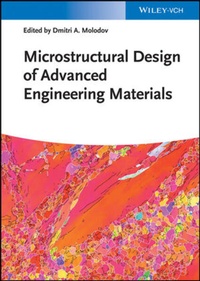
Microstructural Design of Advanced Engineering Materials
1st Edition
Published on 17. July 2013
530 pages
978-3-527-65284-6 (ISBN)
Description

The choice of a material for a certain application is made taking into account its properties. If, for example one would like to produce a table, a hard material is needed to guarantee the stability of the product, but the material should not be too hard so that manufacturing is still as easy as possible - in this simple example wood might be the material of choice. When coming to more advanced applications the required properties are becoming more complex and the manufacturer`s desire is to tailor the properties of the material to fit the needs. To let this dream come true, insights into the microstructure of materials is crucial to finally control the properties of the materials because the microstructure determines its properties.
Written by leading scientists in the field of microstructural design of engineering materials, this book focuses on the evolution and behavior of granular microstructures of various advanced materials during plastic deformation and treatment at elevated temperatures. These topics provide essential background and practical information for materials scientists, metallurgists and solid state physicists.
Written by leading scientists in the field of microstructural design of engineering materials, this book focuses on the evolution and behavior of granular microstructures of various advanced materials during plastic deformation and treatment at elevated temperatures. These topics provide essential background and practical information for materials scientists, metallurgists and solid state physicists.
More details
Other editions
Additional editions
Dmitri A. Molodov
Microstructural Design of Advanced Engineering Materials
Book
08/2013
1st Edition
Wiley-VCH
€165.00
Article exhausted; check different version
Software
07/2013
Wiley-VCH
€231.31
No shipping information available
Person
Dmitri A. Molodov is a Professor at the Institute of Physical Metallurgy and Metal Physics at the RWTH Aachen University. He earned his Doctorate at the Institute of Solid State Physics of the Russian Academy of Sciences in 1985. After several years of postdoctoral research positions, he came to the Institute of Physical Metallurgy and Metal Physics at the RWTH Aachen as an Alexander-von-Humboldt fellow and became full Professor in 2006. He has so far published over 100 publications in international scientific journals and contributed to about 70 conferences. His research interests include characterization and control of microstructure and texture evolution in metal and alloys, as well as dynamics of interfaces in solids.
Content
PREFACE
PART I: Materials Modeling and Simulation: Crystal Plasticity, Deformation, and Recrystallization
THROUGH-PROCESS MODELING OF MATERIALS FABRICATION: PHILOSOPHY, CURRENT STATE, AND FUTURE DIRECTIONS
Introduction
Microstructure Evolution
Microstructural Processes
Through-Process Modeling
Future Directions
APPLICATION OF THE GENERALIZED SCHMID LAW IN MULTISCALE MODELS: OPPORTUNITIES AND LIMITATIONS
Introduction
Crystal Plasticity
Polycrystal Plasticity Models for Single-Phase Materials
Plastic Anisotropy of Polycrystalline Materials
Experimental Validation
Conclusions
CRYSTAL PLASTICITY MODELING
Introduction
Fundamentals
Application Examples
Conclusions and Outlook
MODELING OF SEVERE PLASTIC DEFORMATION: TIME-PROVEN RECIPES AND NEW RESULTS
Introduction
One-Internal Variable Models
Two-Internal Variable Models
Three-Internal Variable Models
Numerical Simulations of SPD Processes
Concluding Remarks
PLASTIC ANISOTROPY IN MAGNESIUM ALLOYS - PHENOMENA AND MODELING
Deformation Modes and Textures
Anisotropy of Stress and Strain
Modeling Anisotropic Stress and Strain
Concluding Remarks
APPLICATION OF STOCHASTIC GEOMETRY TO NUCLEATION AND GROWTH TRANSFORMATIONS
Introduction
Mathematical Background and Basic Notation
Revisiting JMAK
Nucleation in Clusters
Nucleation on Lower Dimensional Surfaces
Analytical Expressions for Transformations Nucleated on Random Planes
Random Velocity
Simultaneous and Sequential Transformations
Final Remarks
IMPLEMENTATION OF ANISOTROPIC GRAIN BOUNDARY PROPERTIES IN MESOSCOPIC SIMULATIONS
Introduction
Overview of Simulation Methods
Anisotropy of Grain Boundaries
Simulation Approaches
Summary
PART II: Interfacial Phenomena and their Role in Microstructure Control
GRAIN BOUNDARY JUNCTIONS: THEIR EFFECT ON INTERFACIAL PHENOMENA
Introduction
Experimental Measurement of Grain Boundary Triple Line Energy
Impact of Triple Line Tension on the Thermodynamics and Kinetics in Solids
Why do Crystalline Nanoparticles Agglomerate with Low Misorientations?
Concluding Remarks
PLASTIC DEFORMATION BY GRAIN BOUNDARY MOTION: EXPERIMENTS AND SIMULATIONS
Introduction
What is the Coupled Grain Boundary Motion?
Computer Simulation Methodology
Experimental Methodology
Multiplicity of Coupling Factors
Dynamics of Coupled GB Motion
Coupled Motion of Asymmetrical Grain Boundaries
Coupled Grain Boundary Motion and Grain Rotation
Concluding Remarks
GRAIN BOUNDARY MIGRATION INDUCED BY A MAGNETIC FIELD: FUNDAMENTALS AND IMPLICATIONS FOR MICROSTRUCTURE EVOLUTION
Introduction
Driving Forces for Grain Boundary Migration
Magnetically Driven Grain Boundary Motion in Bicrystals
Selective Grain Growth in Locally Deformed Zn Single Crystals under a Magnetic Driving Force
Impact of a Magnetic Driving Force on Texture and Grain Structure Development in Magnetically Anisotropic Polycrystals
Magnetic Field Influence on Texture and Microstructure Evolution in Polycrystals Due to Enhanced Grain Boundary Motion
INTERFACE SEGREGATION IN ADVANCED STEELS STUDIED AT THE ATOMIC SCALE
Motivation for Analyzing Grain and Phase Boundaries in High-Strength Steels
Theory of Equilibrium Grain Boundary Segregation
Atom Probe Tomography and Correlated Electron Microscopy on Interfaces in Steels
Atomic-Scale Experimental Observation of Grain Boundary Segregation in the Ferrite Phase of Pearlitic Steel
Phase Transformation and Nucleation on Chemically Decorated Grain Boundaries
Conclusions and Outlook
INTERFACE STRUCTURE-DEPENDENT GRAIN GROWTH BEHAVIOR IN POLYCRYSTALS
Introduction
Fundamentals: Equilibrium Shape of the Interface
Grain Growth in Solid - Liquid Two-Phase Systems
Grain Growth in Solid-State Single-Phase Systems
Concluding Remarks
CAPILLARY-MEDIATED INTERFACE ENERGY FIELDS: DETERMINISTIC DENDRITIC BRANCHING
Introduction
Capillary Energy Fields
Capillarity-Mediated Branching
Branching
Dynamic Solver Results
Conclusions
PART III: Advanced Experimental Approaches
PART I: Materials Modeling and Simulation: Crystal Plasticity, Deformation, and Recrystallization
THROUGH-PROCESS MODELING OF MATERIALS FABRICATION: PHILOSOPHY, CURRENT STATE, AND FUTURE DIRECTIONS
Introduction
Microstructure Evolution
Microstructural Processes
Through-Process Modeling
Future Directions
APPLICATION OF THE GENERALIZED SCHMID LAW IN MULTISCALE MODELS: OPPORTUNITIES AND LIMITATIONS
Introduction
Crystal Plasticity
Polycrystal Plasticity Models for Single-Phase Materials
Plastic Anisotropy of Polycrystalline Materials
Experimental Validation
Conclusions
CRYSTAL PLASTICITY MODELING
Introduction
Fundamentals
Application Examples
Conclusions and Outlook
MODELING OF SEVERE PLASTIC DEFORMATION: TIME-PROVEN RECIPES AND NEW RESULTS
Introduction
One-Internal Variable Models
Two-Internal Variable Models
Three-Internal Variable Models
Numerical Simulations of SPD Processes
Concluding Remarks
PLASTIC ANISOTROPY IN MAGNESIUM ALLOYS - PHENOMENA AND MODELING
Deformation Modes and Textures
Anisotropy of Stress and Strain
Modeling Anisotropic Stress and Strain
Concluding Remarks
APPLICATION OF STOCHASTIC GEOMETRY TO NUCLEATION AND GROWTH TRANSFORMATIONS
Introduction
Mathematical Background and Basic Notation
Revisiting JMAK
Nucleation in Clusters
Nucleation on Lower Dimensional Surfaces
Analytical Expressions for Transformations Nucleated on Random Planes
Random Velocity
Simultaneous and Sequential Transformations
Final Remarks
IMPLEMENTATION OF ANISOTROPIC GRAIN BOUNDARY PROPERTIES IN MESOSCOPIC SIMULATIONS
Introduction
Overview of Simulation Methods
Anisotropy of Grain Boundaries
Simulation Approaches
Summary
PART II: Interfacial Phenomena and their Role in Microstructure Control
GRAIN BOUNDARY JUNCTIONS: THEIR EFFECT ON INTERFACIAL PHENOMENA
Introduction
Experimental Measurement of Grain Boundary Triple Line Energy
Impact of Triple Line Tension on the Thermodynamics and Kinetics in Solids
Why do Crystalline Nanoparticles Agglomerate with Low Misorientations?
Concluding Remarks
PLASTIC DEFORMATION BY GRAIN BOUNDARY MOTION: EXPERIMENTS AND SIMULATIONS
Introduction
What is the Coupled Grain Boundary Motion?
Computer Simulation Methodology
Experimental Methodology
Multiplicity of Coupling Factors
Dynamics of Coupled GB Motion
Coupled Motion of Asymmetrical Grain Boundaries
Coupled Grain Boundary Motion and Grain Rotation
Concluding Remarks
GRAIN BOUNDARY MIGRATION INDUCED BY A MAGNETIC FIELD: FUNDAMENTALS AND IMPLICATIONS FOR MICROSTRUCTURE EVOLUTION
Introduction
Driving Forces for Grain Boundary Migration
Magnetically Driven Grain Boundary Motion in Bicrystals
Selective Grain Growth in Locally Deformed Zn Single Crystals under a Magnetic Driving Force
Impact of a Magnetic Driving Force on Texture and Grain Structure Development in Magnetically Anisotropic Polycrystals
Magnetic Field Influence on Texture and Microstructure Evolution in Polycrystals Due to Enhanced Grain Boundary Motion
INTERFACE SEGREGATION IN ADVANCED STEELS STUDIED AT THE ATOMIC SCALE
Motivation for Analyzing Grain and Phase Boundaries in High-Strength Steels
Theory of Equilibrium Grain Boundary Segregation
Atom Probe Tomography and Correlated Electron Microscopy on Interfaces in Steels
Atomic-Scale Experimental Observation of Grain Boundary Segregation in the Ferrite Phase of Pearlitic Steel
Phase Transformation and Nucleation on Chemically Decorated Grain Boundaries
Conclusions and Outlook
INTERFACE STRUCTURE-DEPENDENT GRAIN GROWTH BEHAVIOR IN POLYCRYSTALS
Introduction
Fundamentals: Equilibrium Shape of the Interface
Grain Growth in Solid - Liquid Two-Phase Systems
Grain Growth in Solid-State Single-Phase Systems
Concluding Remarks
CAPILLARY-MEDIATED INTERFACE ENERGY FIELDS: DETERMINISTIC DENDRITIC BRANCHING
Introduction
Capillary Energy Fields
Capillarity-Mediated Branching
Branching
Dynamic Solver Results
Conclusions
PART III: Advanced Experimental Approaches
