

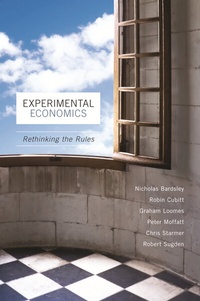
Experimental Economics
Rethinking the Rules
1st Edition
Published on 12. October 2009
384 pages
978-1-4008-3143-2 (ISBN)
Description

Since the 1980s, there has been explosive growth in the use of experimental methods in economics, leading to exciting developments in economic theory and policy. Despite this, the status of experimental economics remains controversial. In Experimental Economics, the authors draw on their experience and expertise in experimental economics, economic theory, the methodology of economics, philosophy of science, and the econometrics of experimental data to offer a balanced and integrated look at the nature and reliability of claims based on experimental research.
The authors explore the history of experiments in economics, provide examples of different types of experiments, and show that the growing use of experimental methods is transforming economics into a genuinely empirical science. They explain that progress is being held back by an uncritical acceptance of folk wisdom regarding how experiments should be conducted, a failure to acknowledge that different objectives call for different approaches to experimental design, and a misplaced assumption that principles of good practice in theoretical modeling can be transferred directly to experimental design. Experimental Economics debates how such limitations might be overcome, and will interest practicing experimental economists, nonexperimental economists wanting to interpret experimental research, and philosophers of science concerned with the status of knowledge claims in economics.
The authors explore the history of experiments in economics, provide examples of different types of experiments, and show that the growing use of experimental methods is transforming economics into a genuinely empirical science. They explain that progress is being held back by an uncritical acceptance of folk wisdom regarding how experiments should be conducted, a failure to acknowledge that different objectives call for different approaches to experimental design, and a misplaced assumption that principles of good practice in theoretical modeling can be transferred directly to experimental design. Experimental Economics debates how such limitations might be overcome, and will interest practicing experimental economists, nonexperimental economists wanting to interpret experimental research, and philosophers of science concerned with the status of knowledge claims in economics.
All prices
More details
Other editions
Additional editions
Book
05/2020
Princeton University Press
€69.00
Shipment within 10-20 days
Book
11/2009
Princeton University Press
€100.50
Shipment within 10-20 days
Persons
Nicholas Bardsley is senior research fellow at the National Centre for Research Methods, University of Southampton. Robin Cubitt is professor of economics and decision research at the University of Nottingham. Graham Loomes is professor of economic behavior and decision theory at the University of East Anglia. Peter Moffatt is reader in econometrics at the University of East Anglia. Chris Starmer is professor of experimental economics at the University of Nottingham. Robert Sugden is professor of economics at the University of East Anglia.
Content
Preface vii
Chapter 1: Introduction 1
1.1 Experiments in Economics 1
1.2 Does Economics Need Experiments? 4
1.3 The Practice of Experimental Economics 11
1.4 The Illustrations and the Structure of the Book 23
1.5 Methods, Methodology, and Philosophy of Science 36
Chapter 2: Theory Testing and the Domain of Economic Theory 46
2.1 Domain Restrictions: Economic Theory and the Laboratory 46
2.2 Generality and External Validity 49
2.3 The Blame-the-Theory Argument 54
2.4 The Concept of Domain 56
2.5 The Laboratory and the Three Senses of Domain 64
2.6 Application to Experimental Tests of Choice Theory 71
2.7 Application to Experimental Tests of Equilibrium Predictions 85
2.8 Conclusions 92
Chapter 3: Experimental Testing in Practice 95
3.1 Preliminaries 95
3.2 Experimental Testing and the Duhem-Quine Thesis 95
3.3 On the Significance of the DQT for Testing 106
3.4 On Testing Game Theory 114
3.5 Hard Cores, Progress, and Experiments 128
3.6 Conclusion 138
Chapter 4: Experiments and Inductive Generalization 141
4.1 Preliminaries 141
4.2 Deduction versus Induction 142
4.3 How Inductive Investigation Works 145
4.4 Experiments as Tests 150
4.5 Exhibits 156
4.6 Why Be Interested in Exhibits? 160
4.7 Do Exhibits Need to Be Explained? 166
4.8 Multiple Causation 169
4.9 Explaining Exhibits Inductively 172
4.10 Investigating Exhibits without Trying to Explain Them 184
4.11 Experiments as Models 189
4.12 Conclusion 194
Chapter 5: External Validity 196
5.1 Introduction 196
5.2 Are Economics Experiments Models? 197
5.3 Tests of Applied Economics Theories 204
5.4 Types of Artificiality Criticism 214
5.5 Alteration Contrasted with Omission and Contamination 228
5.6 Evaluating Alteration Criticisms 233
5.7 Field Experiments 237
5.8 Conclusions 242
Chapter 6: Incentives in Experiments 244
6.1 Preliminaries 244
6.2 Incentives, Design, and Control 246
6.3 Incentives in Experimental Economics: Convention in Action 248
6.4 Three Perspectives on the Effect of Incentives on Behavior 250
6.5 Incentive Mechanisms 264
6.6 Conclusion 284
Chapter 7: Noise and Variability in Experimental Data 286
7.1 "Noise" in Economics and in Experimental Economics 286
7.2 "Noise" in Individual Decision Experiments 289
7.3 "Noise" in Experimental Games 306
7.4 Exploring Different Stochastic Specifications 322
7.5 Concluding Remarks 329
Chapter 8: Conclusion 331
8.1 How Successful Has Experimental Economics Been in Developing a Sound Methodology? 332
8.2 How Successful Has Experimental Economics Been in Increasing Understanding of Economic Behavior? 338
8.3 Has Experimental Economics Had a Positive Impact on Wider Economics? 342
References 347
Index 369
Chapter 1: Introduction 1
1.1 Experiments in Economics 1
1.2 Does Economics Need Experiments? 4
1.3 The Practice of Experimental Economics 11
1.4 The Illustrations and the Structure of the Book 23
1.5 Methods, Methodology, and Philosophy of Science 36
Chapter 2: Theory Testing and the Domain of Economic Theory 46
2.1 Domain Restrictions: Economic Theory and the Laboratory 46
2.2 Generality and External Validity 49
2.3 The Blame-the-Theory Argument 54
2.4 The Concept of Domain 56
2.5 The Laboratory and the Three Senses of Domain 64
2.6 Application to Experimental Tests of Choice Theory 71
2.7 Application to Experimental Tests of Equilibrium Predictions 85
2.8 Conclusions 92
Chapter 3: Experimental Testing in Practice 95
3.1 Preliminaries 95
3.2 Experimental Testing and the Duhem-Quine Thesis 95
3.3 On the Significance of the DQT for Testing 106
3.4 On Testing Game Theory 114
3.5 Hard Cores, Progress, and Experiments 128
3.6 Conclusion 138
Chapter 4: Experiments and Inductive Generalization 141
4.1 Preliminaries 141
4.2 Deduction versus Induction 142
4.3 How Inductive Investigation Works 145
4.4 Experiments as Tests 150
4.5 Exhibits 156
4.6 Why Be Interested in Exhibits? 160
4.7 Do Exhibits Need to Be Explained? 166
4.8 Multiple Causation 169
4.9 Explaining Exhibits Inductively 172
4.10 Investigating Exhibits without Trying to Explain Them 184
4.11 Experiments as Models 189
4.12 Conclusion 194
Chapter 5: External Validity 196
5.1 Introduction 196
5.2 Are Economics Experiments Models? 197
5.3 Tests of Applied Economics Theories 204
5.4 Types of Artificiality Criticism 214
5.5 Alteration Contrasted with Omission and Contamination 228
5.6 Evaluating Alteration Criticisms 233
5.7 Field Experiments 237
5.8 Conclusions 242
Chapter 6: Incentives in Experiments 244
6.1 Preliminaries 244
6.2 Incentives, Design, and Control 246
6.3 Incentives in Experimental Economics: Convention in Action 248
6.4 Three Perspectives on the Effect of Incentives on Behavior 250
6.5 Incentive Mechanisms 264
6.6 Conclusion 284
Chapter 7: Noise and Variability in Experimental Data 286
7.1 "Noise" in Economics and in Experimental Economics 286
7.2 "Noise" in Individual Decision Experiments 289
7.3 "Noise" in Experimental Games 306
7.4 Exploring Different Stochastic Specifications 322
7.5 Concluding Remarks 329
Chapter 8: Conclusion 331
8.1 How Successful Has Experimental Economics Been in Developing a Sound Methodology? 332
8.2 How Successful Has Experimental Economics Been in Increasing Understanding of Economic Behavior? 338
8.3 Has Experimental Economics Had a Positive Impact on Wider Economics? 342
References 347
Index 369

