

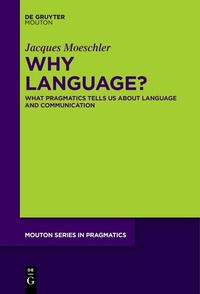
Why Language?
Description

There is, at present, no book introducing the general issue of why language is specific to human beings, how it works, why language is not communication and communication is not language, why languages vary and how they evolved.
Based on the most recent works in linguistics and pragmatics,
Why Language?
addresses many questions that everyone has about language.
Starting from false claims about language and languages, showing that language is not communication and communication is not language, the first part (Language and Communication) ends by proposing a difference between linguistic rules and communicative principles. The second part (Language, Society, Discourse) includes domains of language and language uses which are generally taken as extrinsic to language, such as language variety, discourse and non-ordinary (literary) usages. Special attention is given to figures of discourse (metaphor, metonymy, irony) and literary usages such as narration and free indirect style.
The reader, either specialist or amateur in language science, will find a first and unique synthesis about what we know today about language and what we have yet to learn, sketching what could be the future of linguistics in the next decades.
More details
Other editions
Additional editions


Person
Content
- Intro
- Foreword
- Acknowledgments
- Caveats
- Contents
- Introduction
- Part I: Language and communication
- Introduction
- Chapter 1 Eight commonplace assumptions about language
- Chapter 2 Why is language not communication, and why is communication not language?
- Chapter 3 Language structure and usage
- Part II: Language, society, and discourse
- Introduction
- Chapter 4 The social dimension of language
- Chapter 5 Language and discourse
- Chapter 6 Ordinary and non-ordinary usages of language
- Chapter 7 Superpragmatics
- Conclusion: What we do and still do not know about language
- Afterword
- Glossary
- References
- Name index
- Subject index
