

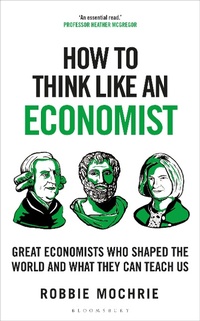
How to Think Like an Economist
Great Economists Who Shaped the World and What They Can Teach Us
1st Edition
Published on 9. May 2024
288 pages
978-1-3994-0865-3 (ISBN)
Description

Capturing the essence of history's most influential economists in enjoyable and illuminating biographical sketches, this book shows how the great economic thinkers are still relevant today.
We live in the economy - and we are part of it. Living through a pandemic, governments had to work out how to put economies into a deep freeze without destroying them. Avoiding climate catastrophe means changing economies so that they don't bake the world.
In explaining how economic thinking is indispensable to tackling these huge problems, this book is a sure-footed guide, spanning Aristotle's ideas about restraining consumption, Adam Smith's thinking about the importance of moral character for sustained economic development, and Esther Duflo's ongoing work to help the world's poorest communities lift themselves out of poverty. It shows how the greatest economic thinkers - Karl Marx, Maynard Keynes, and Friedrich Hayek, among many others - have enabled us to see the world differently, and how we can make it better.
It shows that economic thinking emerged, long before there were economists - and that good economics is about much more than the economy, so everyone should understand these vital ideas.
Along the way, the book quietly subverts what you think you know about economics, especially by showing how women found a place in the development of ideas even when discrimination denied them any formal role.
We live in the economy - and we are part of it. Living through a pandemic, governments had to work out how to put economies into a deep freeze without destroying them. Avoiding climate catastrophe means changing economies so that they don't bake the world.
In explaining how economic thinking is indispensable to tackling these huge problems, this book is a sure-footed guide, spanning Aristotle's ideas about restraining consumption, Adam Smith's thinking about the importance of moral character for sustained economic development, and Esther Duflo's ongoing work to help the world's poorest communities lift themselves out of poverty. It shows how the greatest economic thinkers - Karl Marx, Maynard Keynes, and Friedrich Hayek, among many others - have enabled us to see the world differently, and how we can make it better.
It shows that economic thinking emerged, long before there were economists - and that good economics is about much more than the economy, so everyone should understand these vital ideas.
Along the way, the book quietly subverts what you think you know about economics, especially by showing how women found a place in the development of ideas even when discrimination denied them any formal role.
More details
Series
Edition
1. Auflage
Language
English
Place of publication
London
United Kingdom
Publishing group
Bloomsbury Publishing PLC
ISBN-13
978-1-3994-0865-3 (9781399408653)
Copyright in bibliographic data and cover images is held by Nielsen Book Services Limited or by the publishers or by their respective licensors: all rights reserved.
Schweitzer Classification
Other editions
Additional editions
Robbie Mochrie
How to Think Like an Economist
Great Economists Who Shaped the World and What They Can Teach Us
Book
11/2025
Bloomsbury Continuum
€14.00
Available immediately
Person
Dr Robbie Mochrie is an economics teacher with over 30 years of experience. Adept at equipping undergraduates with new skills, but comfortable working with business and political leaders, he has written a regular economics commentary for The National, while working closely with churches and credit unions.
Content
Foreword
1. Aristotle - The Philosopher
2. Thomas Aquinas - The Angelic Doctor
3. Adam Smith - The Founder
4. Robert Malthus and David Ricardo - The Realist and the Theorist
5. John Stuart Mill - The Classical Liberal
6. Karl Marx - The Communist Visionary
7. William Stanley Jevons, Carl Menger and Léon Walras - Three Quiet Revolutionaries
8. Alfred Marshall - The Frail Master Craftsman
9. Joseph Schumpeter - Creator and Destroyer
10. John Maynard Keynes - The Last Amateur
11. Friedrich Hayek - A Very Different Type of Liberal
12. John von Neumann - The Most Brilliant Mathematician
13. Ronald Coase - The Placid Observer
14. Milton Friedman - The Monetarist
15. Paul Samuelson - The American Keynes?
16. Herbert Simon - The Social Scientific Realist
17. Thomas Schelling - The Storyteller
18. Robert Solow - Craftsman and Builder
19. Gary Becker - The Unwavering Imperialist
20. Elinor Ostrom - The Political Scientist
21. Daniel Kahneman and Amos Tversky - Two Psychologists
22. Robert Lucas - The Idealist
23. George Akerlof - The Borrower
24. Esther Duflo - The Experimenter
Afterword
Index
1. Aristotle - The Philosopher
2. Thomas Aquinas - The Angelic Doctor
3. Adam Smith - The Founder
4. Robert Malthus and David Ricardo - The Realist and the Theorist
5. John Stuart Mill - The Classical Liberal
6. Karl Marx - The Communist Visionary
7. William Stanley Jevons, Carl Menger and Léon Walras - Three Quiet Revolutionaries
8. Alfred Marshall - The Frail Master Craftsman
9. Joseph Schumpeter - Creator and Destroyer
10. John Maynard Keynes - The Last Amateur
11. Friedrich Hayek - A Very Different Type of Liberal
12. John von Neumann - The Most Brilliant Mathematician
13. Ronald Coase - The Placid Observer
14. Milton Friedman - The Monetarist
15. Paul Samuelson - The American Keynes?
16. Herbert Simon - The Social Scientific Realist
17. Thomas Schelling - The Storyteller
18. Robert Solow - Craftsman and Builder
19. Gary Becker - The Unwavering Imperialist
20. Elinor Ostrom - The Political Scientist
21. Daniel Kahneman and Amos Tversky - Two Psychologists
22. Robert Lucas - The Idealist
23. George Akerlof - The Borrower
24. Esther Duflo - The Experimenter
Afterword
Index
