

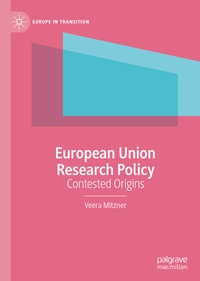
European Union Research Policy
Description

This book describes the emergence of research policy as a key competence of the European Union (EU). It shows how the European Community (EC, the predecessor of the EU), which initially had very limited legal competence in the field, progressively developed a solid policy framework presenting science and research as indispensable tools for European economic competitiveness and growth. In the late 20th century Western Europe, hungry for growth, concerned about the American technological lead, and keen to compete in the increasingly open international markets, the argument for a joint European effort in science and technology seemed plausible. However, the EC was building its new functions in an already crowded field of European research collaboration and in a shifting political context marked by austerity, national rivalries, new societal and environmental challenges, and emerging ambivalence about science. This book conveys the contested history of one of the EU's most successful policies. It is a story of struggle and frustration but also of a great institutional and intellectual continuity. The ideational edifice for the EC/EU research policy that was put in place during the 1960s and 1970s years proved remarkably robust. Its durability enabled the rapid takeoff of the European Commission's initiatives in the more favorable political atmosphere of the early 1980s and the subsequent expansion of the EU research funding instruments and programs that permanently transformed the European research landscape.
Reviews / Votes
"Based on extensive archival research, Mitzner's book understandably gives priority to the three powerhouses of European science (France, Germany, and the UK) . . Elegantly written and clearly structured, Mitzner's book is fundamental reading for all those interested in science diplomacy and in the history of European integration." (Francesco Cassata, ARO - Annali Rezensionen Online, Issue 6, January, 2023)More details
Other editions
Additional editions
Person
Veera Mitzner is the Future Earth Network Lead at the Sustainability Innovation Lab at Colorado, the University of Colorado Boulder, USA, where she designs and leads global efforts to strengthen sustainability science and knowledge-based decision-making. She holds a PhD in History and Civilization from the European University Institute, Italy.
